About Slitherlink
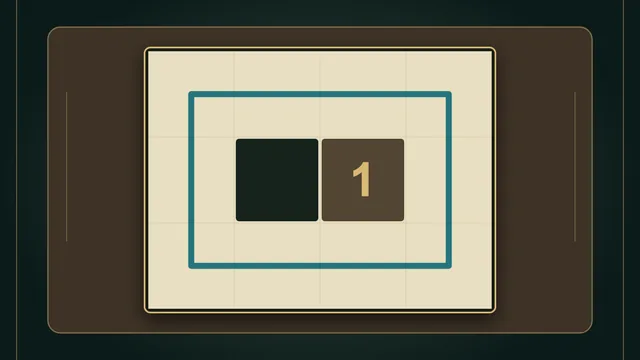
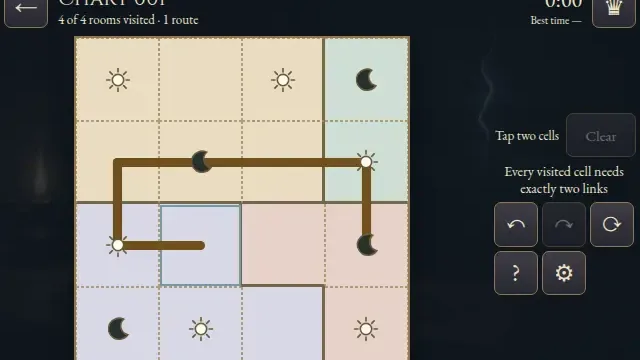
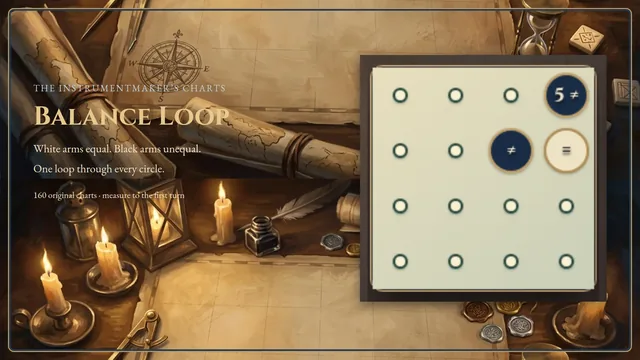
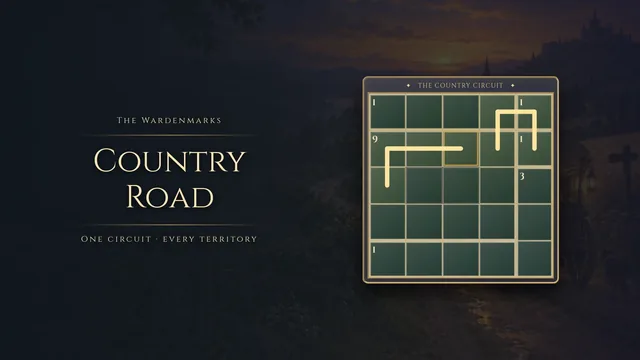
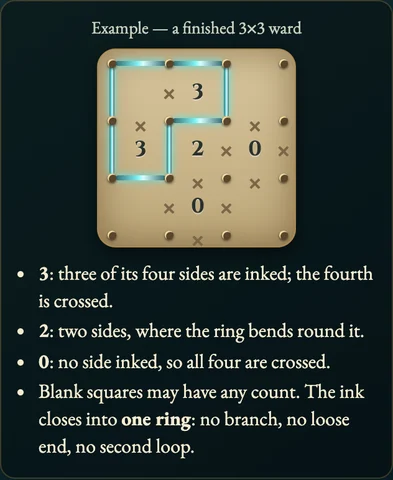
Draw one closed loop between grid points. Each number tells you how many of its four surrounding edges belong to the loop. It cannot branch or cross itself.
How to play
- Goal
- Draw one closed loop along the pins that every number agrees with.
- How it ends
- A map is solved when the single loop satisfies every number. There is no way to lose.
- Record
- The fastest first solve of each map, with its holder's name.
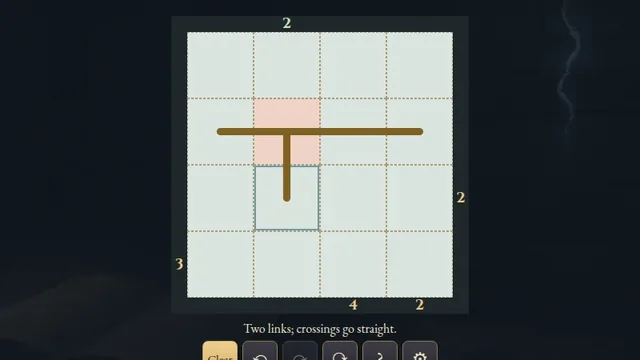
- Draw one closed loop along the brass pins.
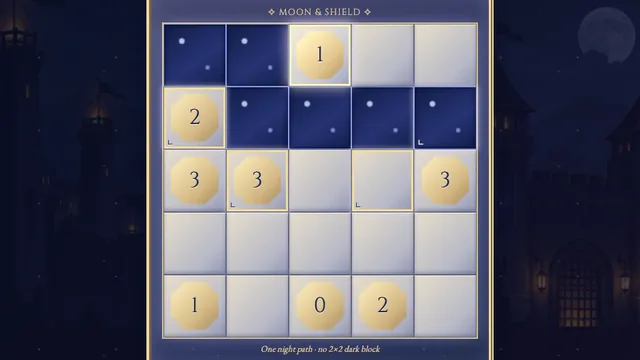
- A numbered seal says exactly how many of its four bordering edges are part of the loop.
- Use crosses to mark edges you know are empty; undo and restart are always available.
Controls
| Input | Action |
|---|---|
| Tap / left click | Cycle an edge through line, cross, and empty |
| Right click / X | Mark an edge with a cross |
| Arrow keys | Move between edges |
| Space / Enter | Cycle the focused edge |
| Z / R / Escape | Undo, restart, or open all maps |
Good to know
All 120 maps are deterministic, open, exactly-one-solution checked, and deduction-solved. Named time records, completion, current practice map, sound and reduced-motion preference persist in this browser.
Watch how to play
Did you know?
Japanese fans also call Slitherlink “Sli-Lin”. The whole puzzle is built from just four possible clue numbers: 0, 1, 2 and 3.
Source: Nikoli: Slitherlink