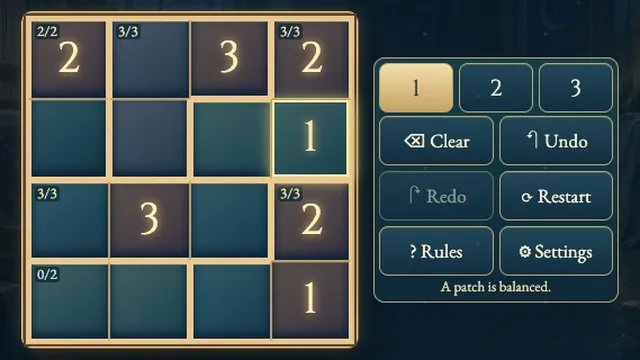
About Calcudoku
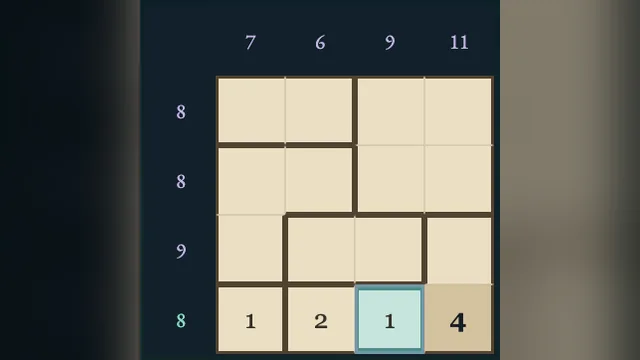
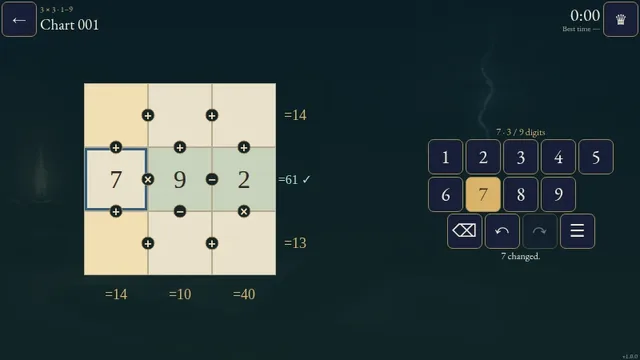
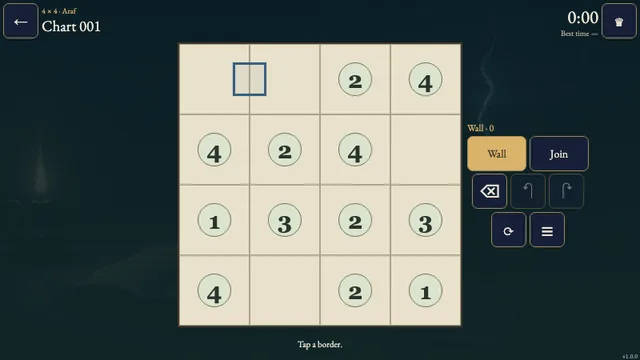
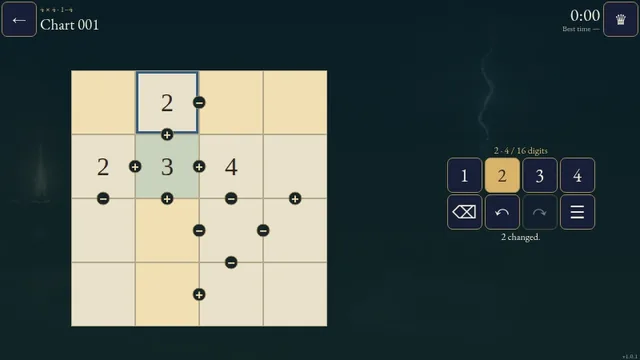
Fill each row and column with every digit once. Outlined cages add an arithmetic target: combine their digits with the printed operation to reach it. Use pencil notes to track possibilities.
How to play
- Goal
- Fill the plate so every row and column holds each number once and every mould makes its target.
- How it ends
- A plate is solved when every cell is struck by those rules. There is no way to lose.
- Record
- The fastest first solve of each plate, with its holder's name.
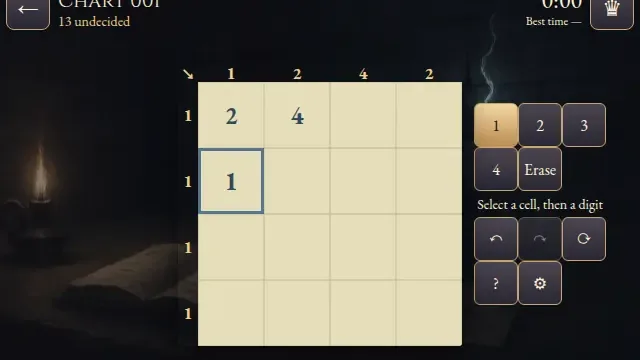
- Tap a cell, then a number: every row and column holds 1 to n once.
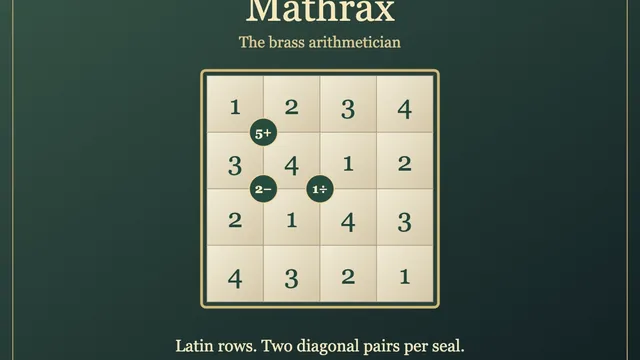
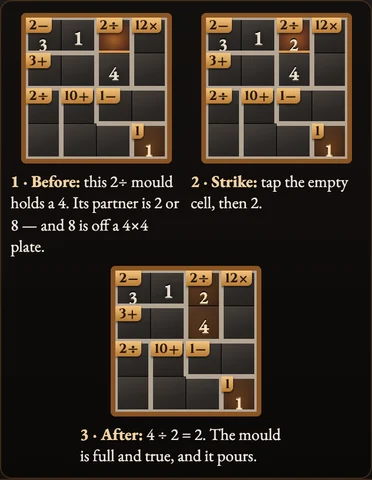
- Each mould's numbers must make its target with its sign: add (+), multiply (×), differ (−) or divide (÷). A − or ÷ mould has two cells: the larger number minus, or divided by, the smaller.
- Switch to Notes to chalk candidates; a struck number wipes itself from the notes in its row and column.
Controls
| Input | Action |
|---|---|
| Tap / click | Select a cell |
| Number pad / 1–9 | Strike a number (again to take it out) |
| Notes / Shift+number | Write a chalk note |
| N / S | Notes mode, strike mode |
| Delete / 0 | Clear the cell |
| Z / Escape | Undo, or return to the plates |
Good to know
All 240 plates are open, deterministic, proved to need no guess and independently counted to one answer. No hints or mistake checks are available. Named fastest times, kept attempts, notes, sound and reduced-motion preference persist in this browser.
Watch how to play
Did you know?
The related arithmetic puzzle KenKen began in a classroom. Maths teacher Tetsuya Miyamoto developed it in 2004 to help students practise maths and think independently.
Source: KenKen: the puzzle’s origins