About Hex Logic
In a moonlit observatory, each reliquary hides a constellation of gems beneath a small hexagonal chart. Bronze seals and moon-road counts turn every mark into a deduction.
All numbers are visible from the start. Eighty charts have 19 hexes and eighty have 37; each has one solution and a route that needs no guess.
Your first solve time and false-seal count are saved per chart. A live first solve may claim separate named records for speed and accuracy.
How to play
- Goal
- Deduce which covered hexes hold moon gems from the six-neighbour seals, the row totals, and the total gem count.
- How it ends
- The reliquary opens when every covered hex is classified and every public count agrees; a false full-board seal counts as a mistake, but a chart cannot be lost.
- Record
- Each chart keeps the fastest first solve and fewest false seals as separate records, with their holders' names.
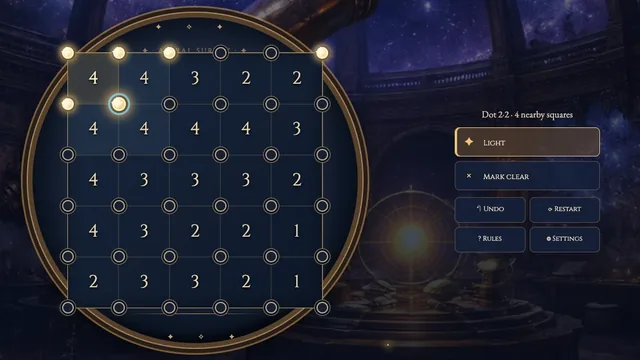
- A bronze seal is an empty hex whose number counts gems in its touching hexes. A number beside a horizontal moon road counts gems anywhere on that row. The gem dial gives the chart total. Tap a number to light exactly the hexes it counts.
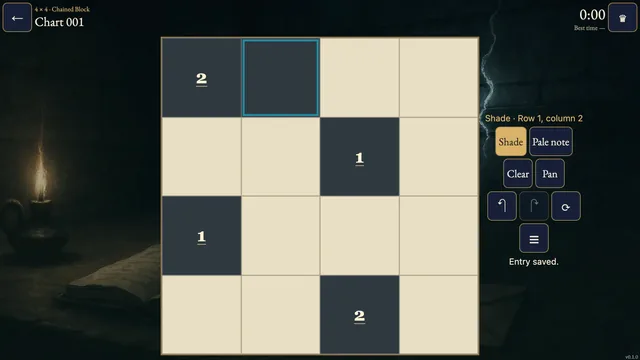
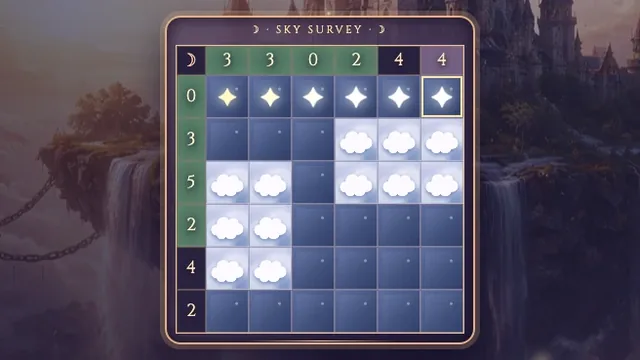
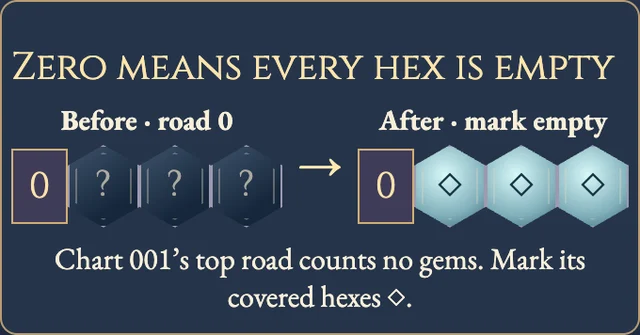
- Tap a covered hex to cycle unknown, gem, empty, unknown. The worked picture shows Chart 001’s zero top road: every covered hex in it must be empty. The picture stops before the full answer.
- When every covered hex is marked, press Seal chart. A false seal highlights only the public counts that disagree and adds one false seal; fix any marks and try again. Undo and Restart keep the first clock, which starts on opening. Replays are untimed practice; returning through the folio keeps a first attempt, while a reload makes unfinished progress local only.
Controls
| Input | Action |
|---|---|
| Tap / click a hex | Cycle unknown → gem → empty → unknown |
| Right click a hex | Cycle in reverse |
| Tap a number | Light exactly the hexes it counts |
| Arrow keys | Move the selected hex |
| G / C / Backspace | Mark gem / empty / unknown |
| Undo / Z | Restore the previous mark |
| Restart | Clear marks without resetting the first clock or false seals |
| Escape | Close a panel or return to the chart folio |
Good to know
A false seal reports public count conflicts only, never hidden answers. Progress saves in this browser; sound follows the shared arcade setting.