About Gyokuseki
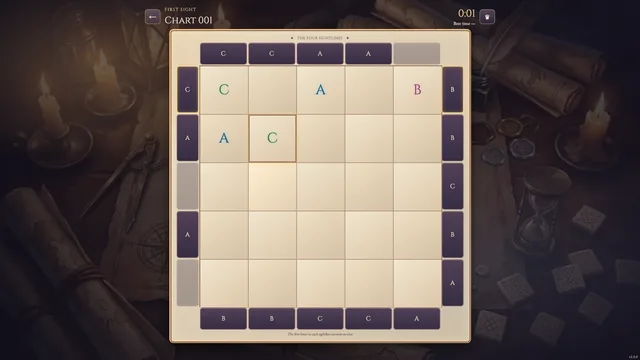
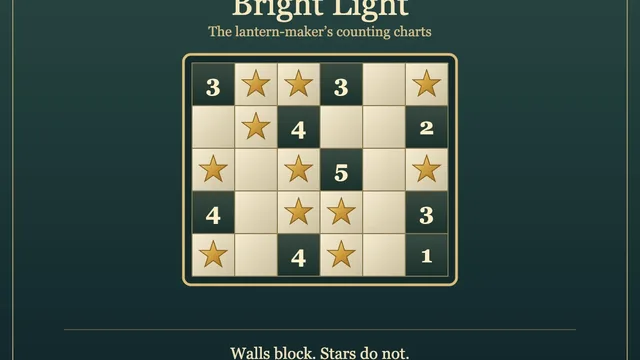
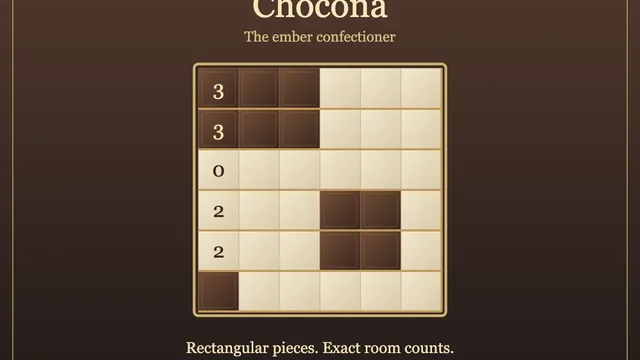
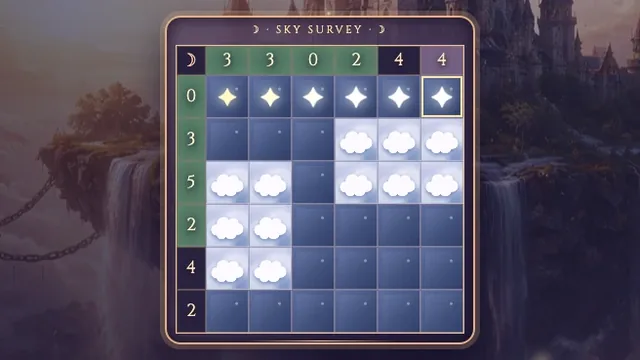
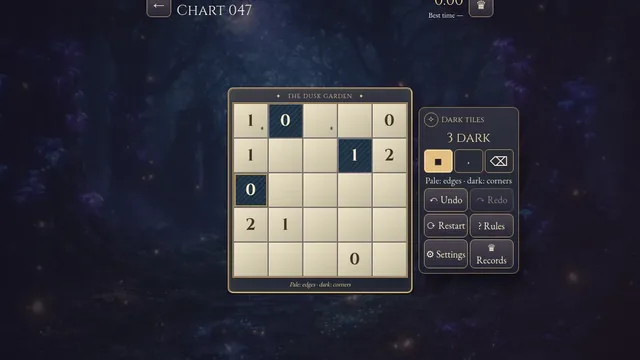
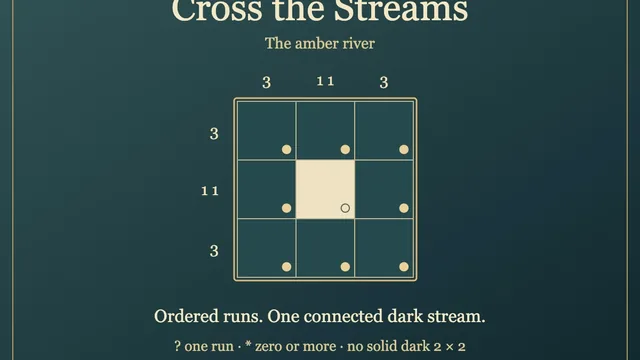
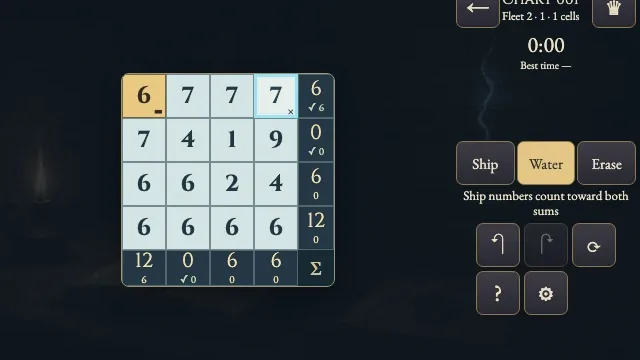
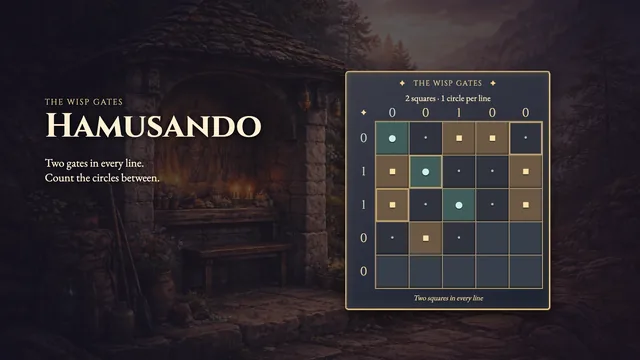
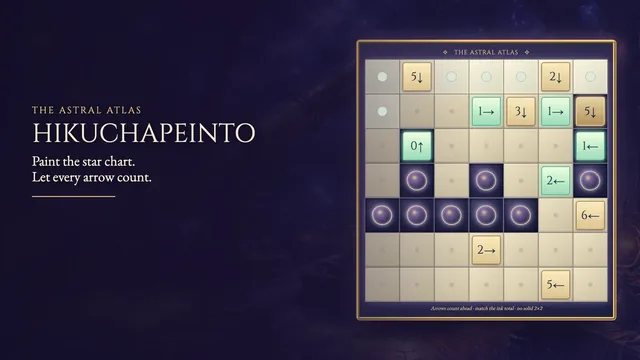
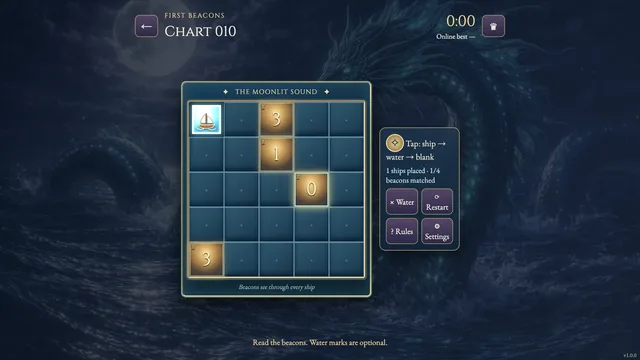
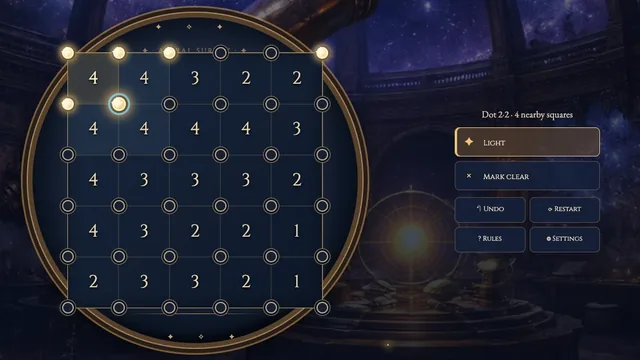
At an Orenvalt lapidary, dark star gems hide among pale river stones on a velvet cutting table. Each row and column holds exactly one gem. The brass numbers on all four edges count circles through the first gem they meet.
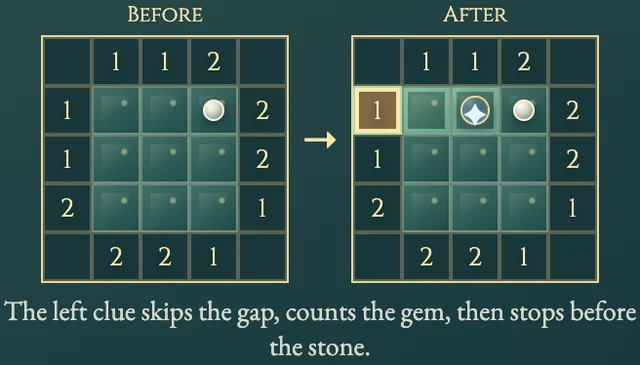
Explore 180 original charts: sixty each at 4×4, 5×5 and 6×6. Every chart has one checked arrangement. An edge number of one can have empty cells before its gem; the worked example shows why.
The clock starts when a chart opens. Your first solve time stays in this browser, and an uninterrupted, unaided first solve can set the verified best shown on its card and beside the clock.
How to play
- Goal
- Place one dark gem in every row and column, then place pale stones so each edge number counts the circles up to and including its gem.
- How it ends
- A chart is complete when all four sides' counts and the one-gem-per-line rule agree; there is no loss.
- Record
- Your first solve time is kept per chart, and the fastest verified first solve appears with its holder.
- Put one dark gem in every row and column. Pale stones may fill other cells; empty cells are allowed. A number at an edge counts occupied circles from that side through the first gem, including the gem. Empty cells do not count, and circles beyond that gem are hidden from that clue.
- Choose Gem or Stone. Repeated taps cycle through both marks and empty, starting with the selected mark: Gem → Stone → empty, or Stone → Gem → empty. Clear erases directly. Drag paints one mark across cells. Tap an edge number to trace the portion of its line visible through the first gem you have placed.
- Undo reverses one painted stroke. Restart clears marks but keeps the clock running. Check reports rule conflicts and makes that attempt local-only. There is no loss; a chart ends when all four sides and one-gem-per-line agree.
Controls
| Input | Action |
|---|---|
| Tap / click a cell | Cycle Gem → Stone → empty, or Stone → Gem → empty, based on the selected brush |
| Drag across cells | Paint a stroke; Undo reverses it together |
| Tap an edge number | Trace that clue's sightline and current count |
| Right click a cell | Clear it |
| Arrow keys | Move among cells |
| 1 / 2 / 0 | Select Gem / Stone / Clear |
| Space / Enter | Use the selected brush |
| Backspace / Delete | Clear the selected cell |
| Z | Undo the last stroke |
| Escape | Close a panel or return to the chart atlas |
Good to know
First-solve records exclude resumed and checked attempts. Progress and reduced motion save; sound follows the shared site setting.