About Kurodoko
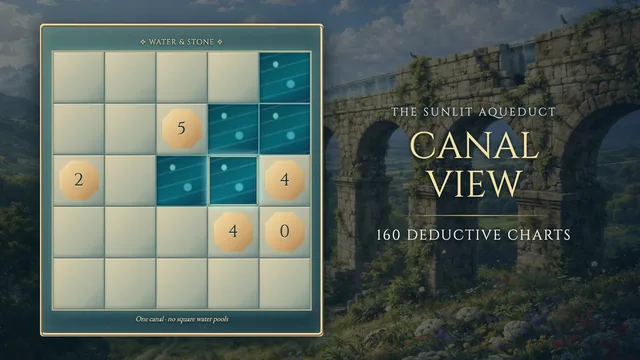
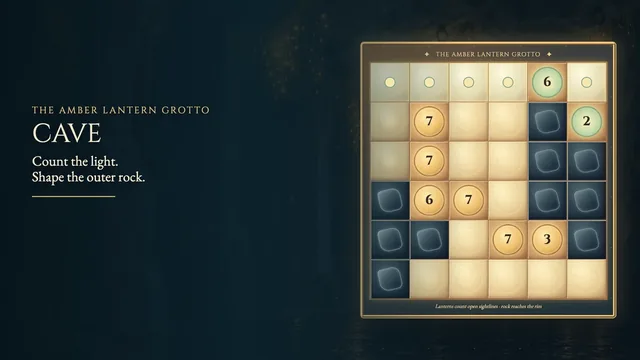
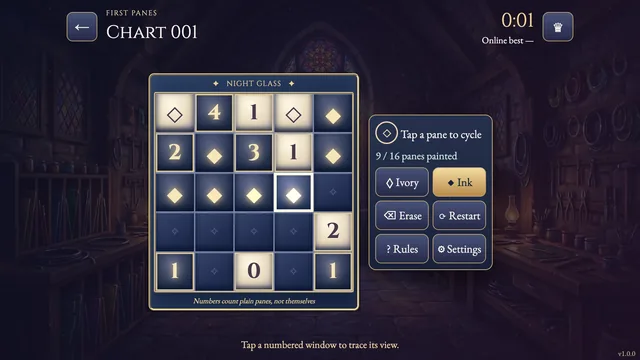
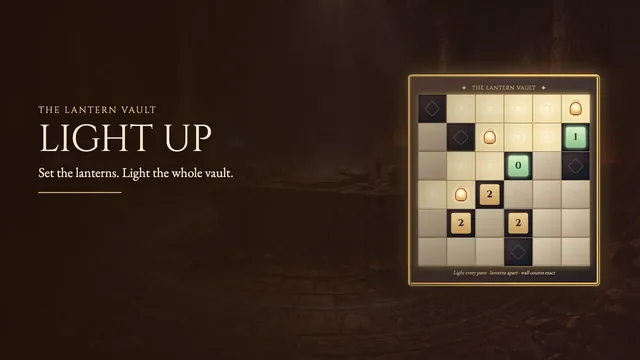
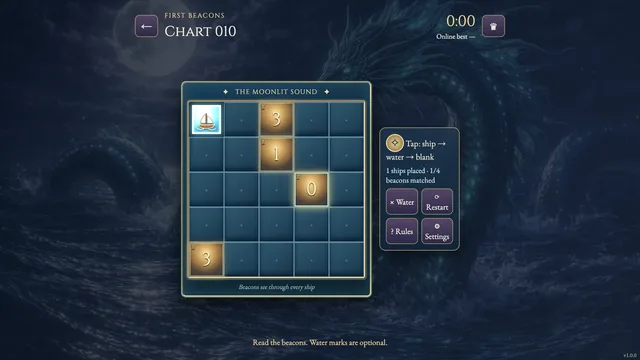
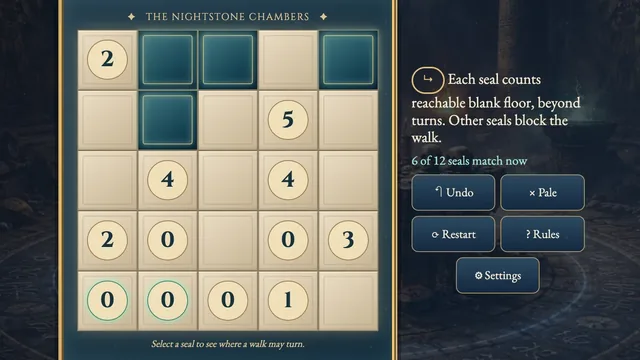
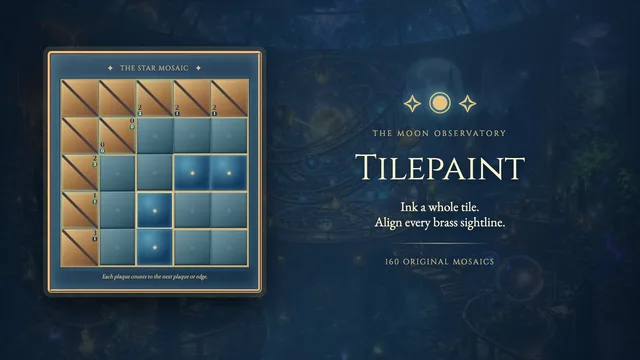
In a star-lit observatory, each brass lens counts the pale panes it can see along its row and column. Dark amethyst shutters stop its view.
Across 160 original charts and four open shelves, every answer is checked unique. The two colour rules make more than a decorative difference.
Your first solve time remains in this browser. An uninterrupted first solve can claim the verified best shown beside the clock and on each chart card.
How to play
- Goal
- Shade cells so every number sees exactly that many pale cells in straight lines, dark cells do not share an edge, and all pale cells connect.
- How it ends
- A chart is solved when every numbered sightline and both colour rules agree; there is no loss state.
- Record
- The fastest first solve of each chart is kept as a record, with its holder's name.
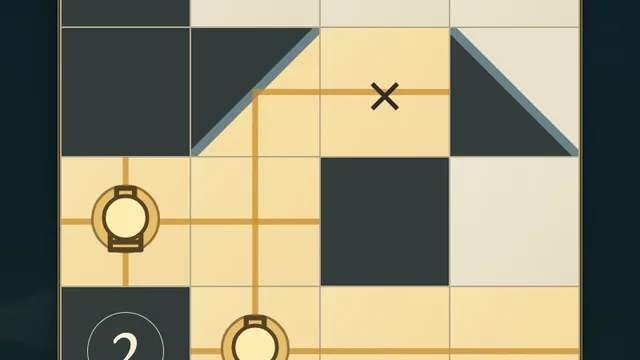
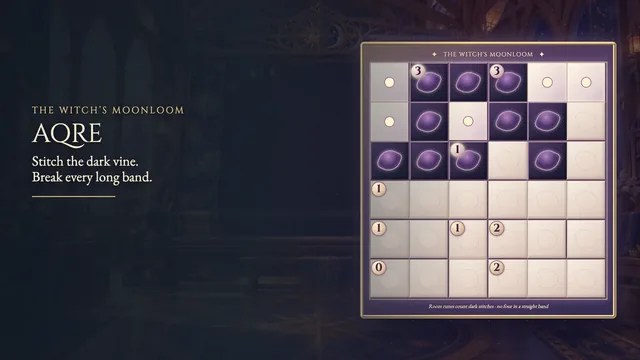
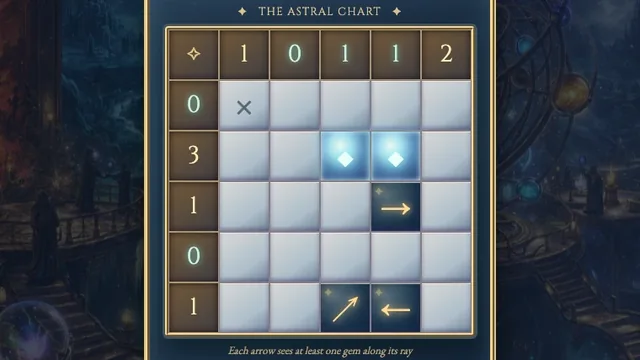
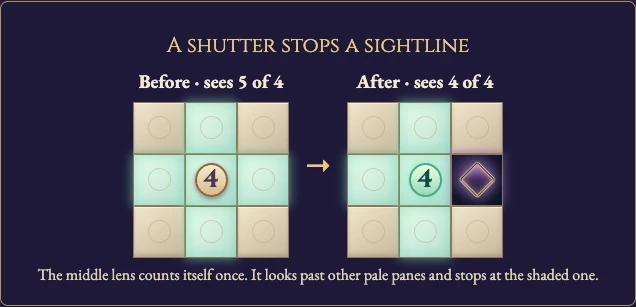
- Tap a pale pane to shade it as a dark shutter; tap it again to clear it. Each numbered lens must see exactly its number of pale panes: count the lens itself once, then look in four straight directions until a dark shutter or the edge. Sightlines pass through other lenses. The worked example closes one shutter so a lens sees four instead of five.
- Dark shutters may touch diagonally, but never share an edge. All pale panes must form one edge-connected area. The brass lens glows when its sightline is exact; tap a lens to illuminate what it currently sees. Unmarked panes are pale, so no X marks are needed.
- Undo restores the previous shutter. Restart clears marks while the first-opening clock keeps running. A chart completes automatically when every rule agrees; there is no loss state. Replays are untimed practice. Resuming an unfinished chart keeps its marks and clock, but its first time remains local and cannot claim a record.
Controls
| Input | Action |
|---|---|
| Tap / click a blank pane | Shade or clear one shutter |
| Tap / click a numbered lens | Illuminate its current sightline |
| Arrow keys | Move focus through the chart |
| Space / Enter | Toggle the focused blank pane |
| Undo / Z | Restore the previous shade |
| Escape | Close a panel or return to the atlas |
Good to know
Every chart has one solution. Removing no-touch or pale-connectivity from the other rules makes each chart ambiguous. Progress saves in this browser; sound follows the shared site setting.