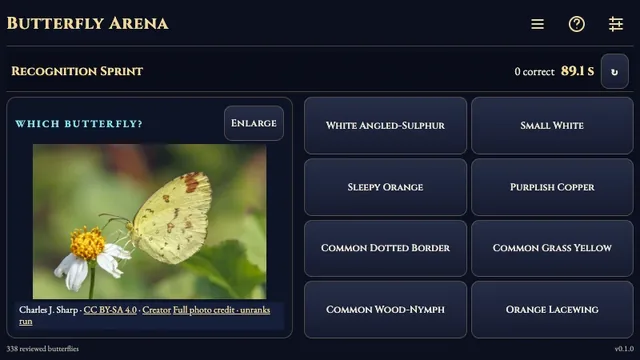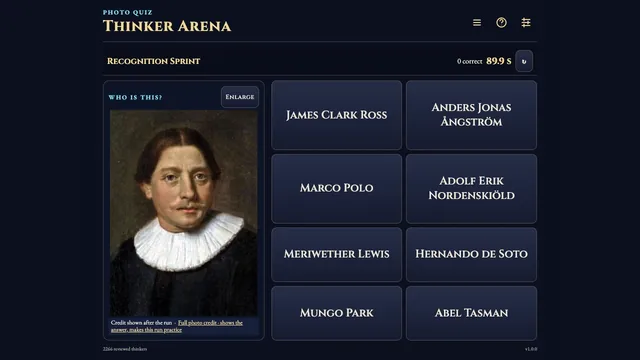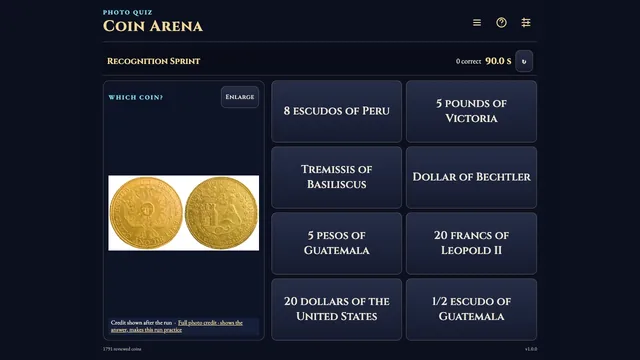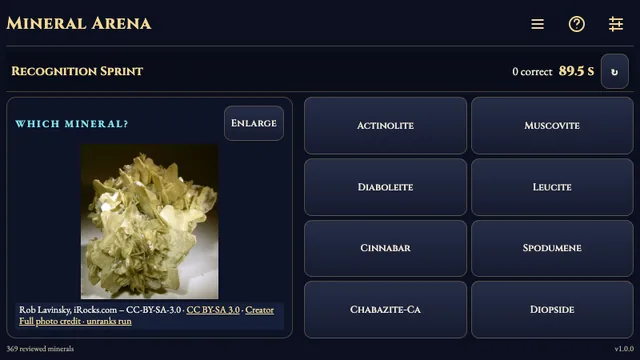
About Space Arena
Eight competitions use real, individually reviewed photographs from NASA, ESA, ESO, NOIRLab and astronomers. Name an object, choose its catalogue number or constellation, name the world a moon or crater belongs to, estimate its distance in light-years, enter a spacecraft’s launch year, or match ten photographs and names.
The library holds 442 objects: planets and moons, asteroids and comets, surface features, nebulae, galaxies, star clusters and spacecraft. Play familiar objects, one collection or all of them. Every quiz fact is confirmed by two independent sources.
How to play
- Goal
- Recognize planets, moons, nebulae, galaxies, star clusters and spacecraft, and learn their catalogue numbers, constellations, home worlds, distances and launch years.
- How it ends
- Finish ten questions or ten pairs, exhaust the sprint clock, or make one sprint mistake.
- Record
- Best score, highest distance or launch reserve, or fastest matching finish, with time and the player’s name.
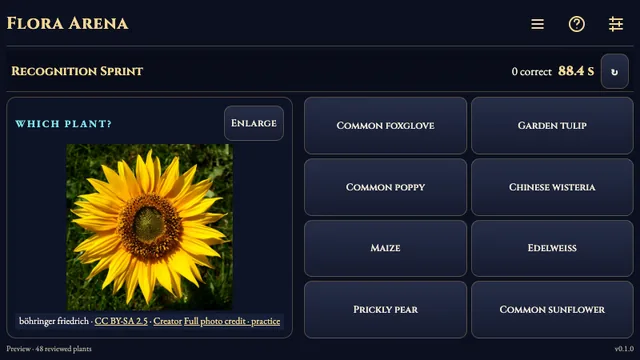
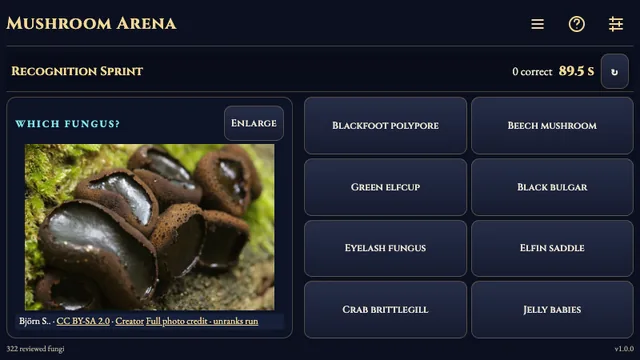
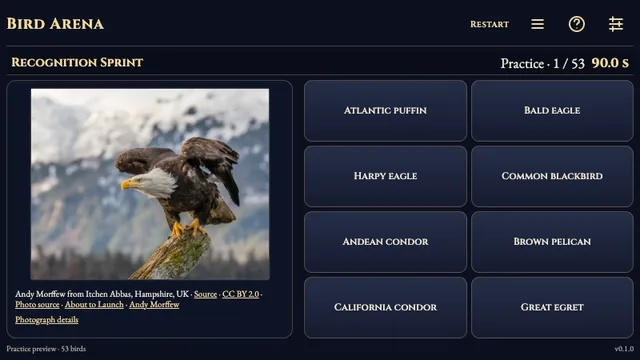
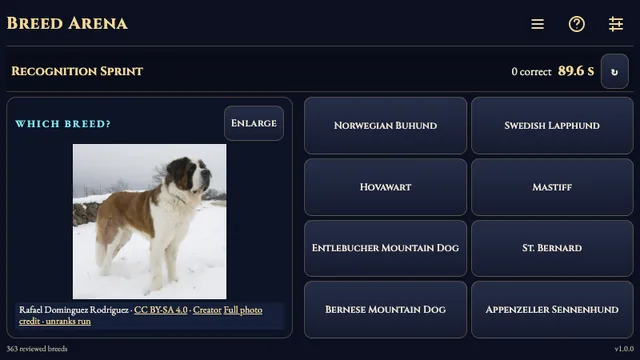
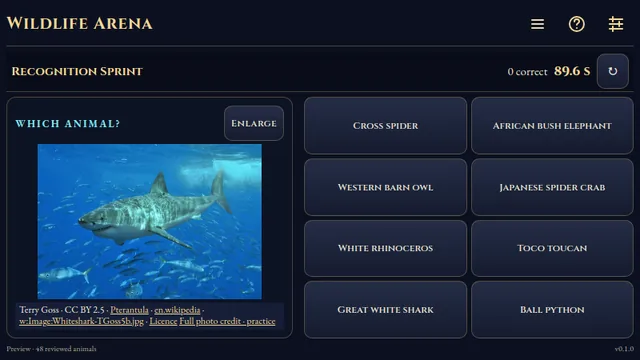
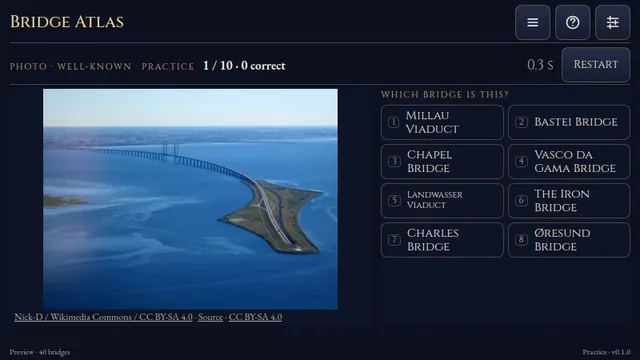
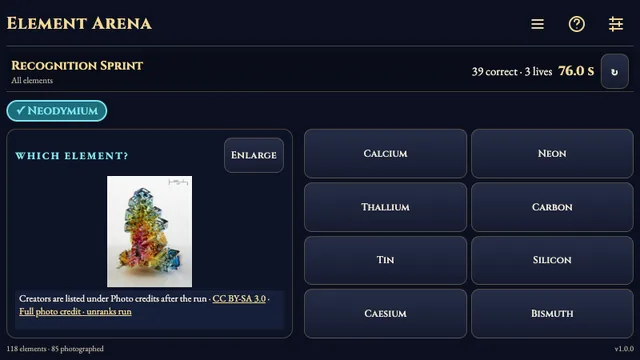
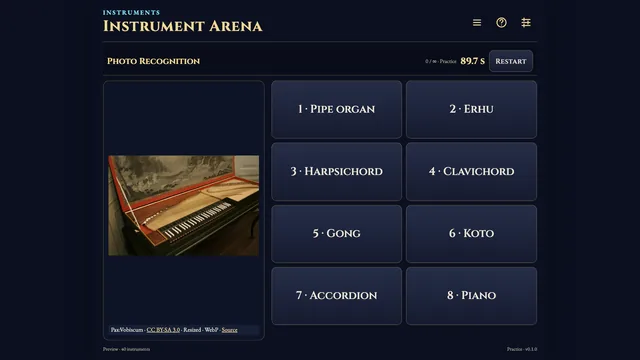
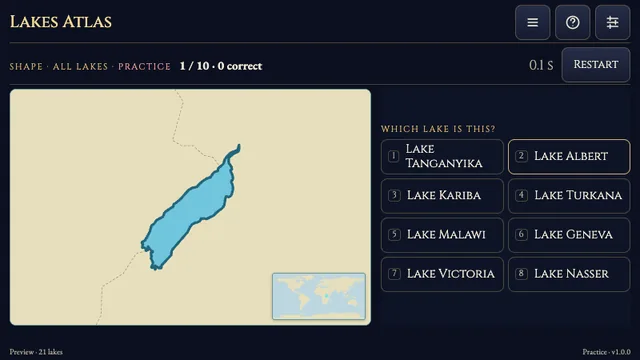
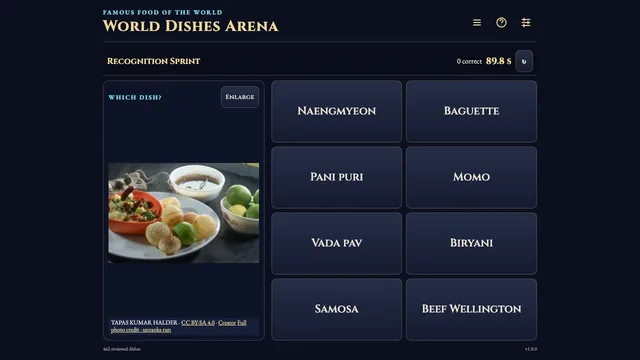
- Recognition Sprint: choose the pictured object from eight names. You have 90 continuously running seconds; one wrong answer ends the run. Most correct answers wins, with time of the last correct answer breaking ties.
- Catalogue Numbers: ten photographs with their names; choose the Messier, NGC, comet or minor-planet designation from eight, mostly from the same catalogue. A wrong answer scores nothing but the run continues. Most correct answers wins, then the faster total time.
- Name Search: identify ten photographs. Type part of a name, another name or a catalogue number, ignoring case, and choose the exact object from the filtered list.
- Constellation: a nebula, galaxy or star cluster with its label; choose the constellation it lies in from eight, by the official IAU boundaries. When the name gives the constellation away, the label is its catalogue number instead.
- Home World: shown by name and kind only, without a photograph; choose the planet or dwarf planet a moon orbits, or the world a crater, mountain, plain or storm is on. The photograph appears after your answer.
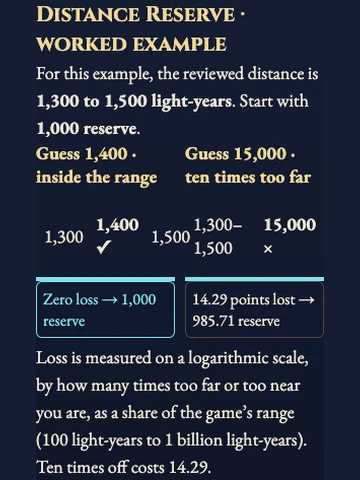
- Distance Reserve: estimate the distance from Earth in whole light-years. You start with 1,000 reserve. Estimates inside the reviewed range cost zero. Outside it, lose 100 × ln(times off) ÷ ln(10,000,000), at most 100 per guess. Ten estimates; highest reserve wins, with time breaking ties.
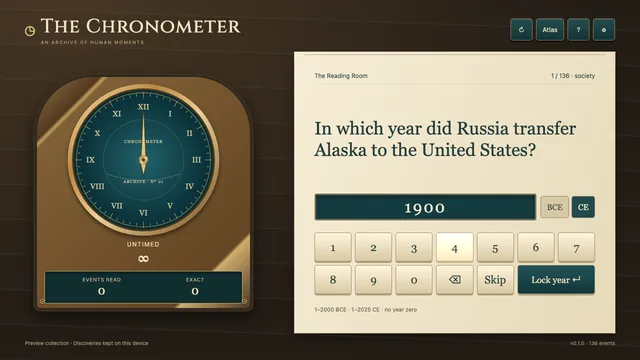
- Launch Year: ten spacecraft, rockets or stations; enter the year of the first launch. Each year off costs 2 reserve points, at most 100. Highest reserve wins, with time breaking ties.
- Matching Table: select or drag a photograph onto its name. Match all ten pairs. Each wrong pair adds three seconds; fastest adjusted finish wins.
Controls
| Input | Action |
|---|---|
| Tap / click | Choose answers, constellations, worlds and matching pairs; double-click or double-tap an answer to confirm it at once |
| Drag | Drag either side of the Matching Table onto its partner to make a pair |
| Type a name or catalogue number | Filter names; Enter chooses a unique result |
| Distance or year estimate | Enter a whole number; a number pad supports controllers |
| Enlarge · Zoom in · Fit photo | Inspect the photograph while the clock keeps running |
| 1–8 | Choose an answer |
| Standard controller | D-pad navigates controls; A selects, Y opens Rules |
Tips
- Read the shape Spiral arms mean a galaxy; a tight ball of stars a globular cluster; glowing gas with dark lanes a nebula.
- Think in powers of ten Nebulae and clusters in our galaxy sit at hundreds to tens of thousands of light-years; other galaxies at millions.
- Rockets come before probes A rocket’s first flight usually precedes the famous missions it launched.
Good to know
Every photograph retains its creator, chosen licence, original title and source links. Creator credits appear beside the photograph; Full photo credit opens the complete attribution and sources. Opening help, rules or full credits during a ranked question, leaving the tab or restoring an unfinished run makes that attempt practice. Distances are reviewed ranges, not exact values.
Watch how to play
Questions
Why do some objects appear in fewer competitions?
A photograph proves no distance, constellation or launch year. An object joins those competitions only when two independent sources agree on the fact.
Where do distances come from?
From published values in SIMBAD and from NASA, ESA and ESO pages; the accepted range spans the agreeing sources.
Why is Home World played without photographs?
A picture of a crater or moon usually shows the world it belongs to.