About Thinker Arena
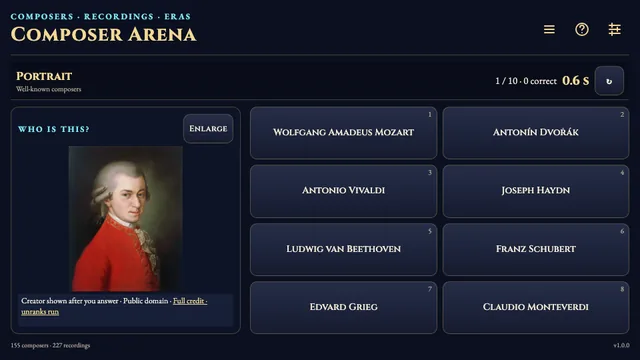
Six competitions use real, individually reviewed portraits of thinkers: painted, engraved, sculpted or photographed. Name a thinker, choose their field, pick their famous work, enter the year they were born, or match ten portraits and names.
The library spans every region, from Britain and the Ancient world to the Islamic world, East Asia and the Americas. Play famous thinkers, one region or all of them. Fields, works and birth years are confirmed against a printed reference work.
How to play
- Goal
- Recognize the scientists, philosophers, writers, explorers and inventors of history from their portraits, and learn their fields, their famous works and when they were born.
- How it ends
- Finish ten questions or ten pairs, exhaust the sprint clock, or make one sprint mistake.
- Record
- Best score, highest birth-year reserve, or fastest matching finish, with time and the player’s name.
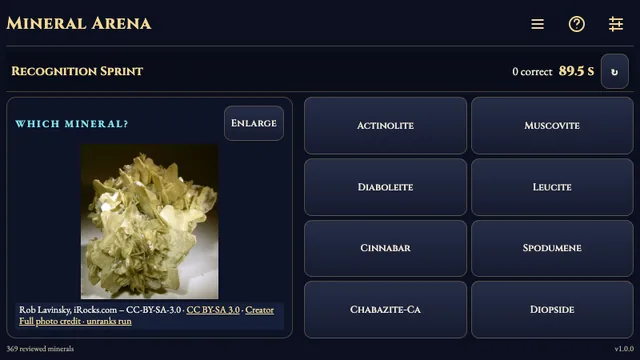
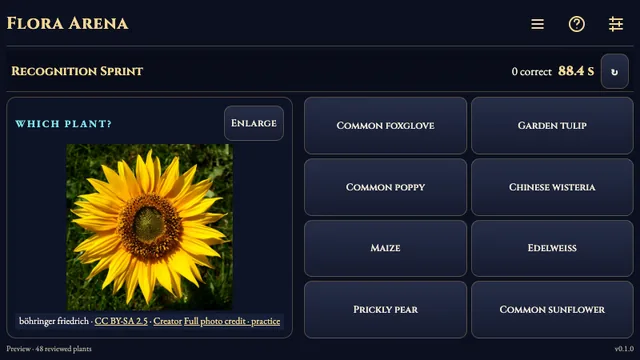
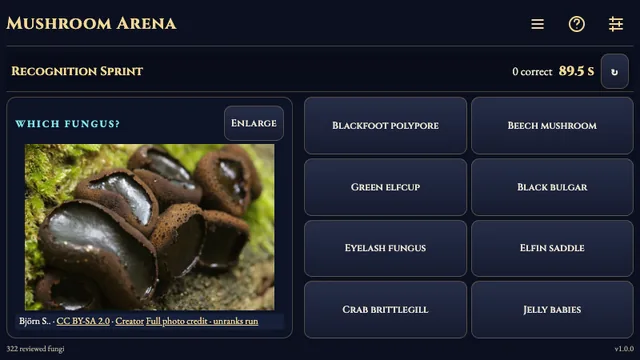
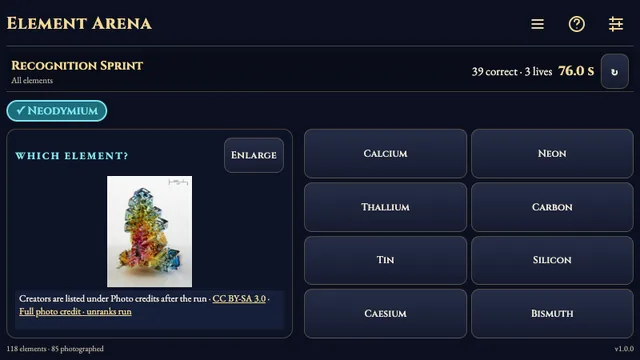
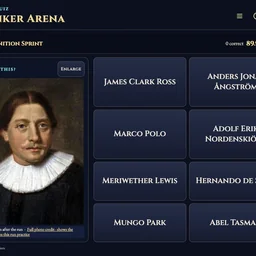
- Recognition Sprint: choose the pictured thinker from eight names. You have 90 continuously running seconds; one wrong answer ends the run. Most correct answers wins, with time of the last correct answer breaking ties.
- Name Search: identify ten portraits. Type part of a name or another name, ignoring case and accents, and choose the exact thinker from the filtered list.
- Field: a portrait with the thinker's name; choose their field from eight. Any reviewed field of the thinker is right, and fields they also worked in are never offered as wrong. A wrong answer scores nothing but the run continues. Most correct answers wins, then the faster total time.
- Famous Work: a portrait with the thinker's name; choose the book, play, poem or treatise they wrote from eight; the other seven are works by people of the same field and era. Most correct answers wins, then the faster total time.
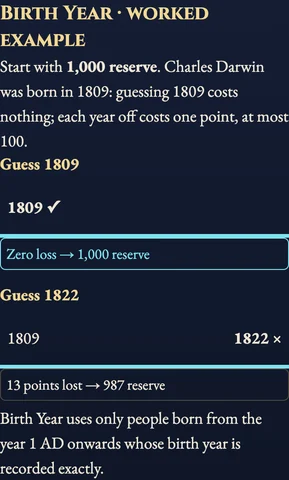
- Birth Year: enter one calendar year. Each year off costs one reserve point, at most 100, from a 1,000 reserve. Highest reserve wins, with time breaking ties.
- Matching: select or drag a portrait onto its name. Match all ten pairs. Each wrong pair adds three seconds; fastest adjusted finish wins.
Controls
| Input | Action |
|---|---|
| Tap / click | Choose answers, fields, works and matching pairs; double-click or double-tap an answer to confirm it at once |
| Drag | Drag either side of the Matching table onto its partner to make a pair |
| Type a name | Filter names; Enter chooses a unique result |
| Year estimate | Enter a whole year; a number pad supports controllers |
| Enlarge · Zoom in · Fit photo | Inspect the photograph while the clock keeps running |
| 1–8 | Choose an answer |
| Standard controller | D-pad navigates controls; A selects, Y opens Rules |
Tips
- Read the medium A photograph means the 19th century; an engraving or woodcut points earlier, a marble bust to antiquity.
- Dress dates a face Ruffs, periwigs and cravats narrow a birth year to a few decades before the face does.
- Works follow the field Treatises belong to philosophers and scientists, plays and poems to writers; rule out the wrong field first.
Good to know
Every portrait retains its creator, chosen licence, original title and source links. Creator credits appear beside the portrait; Full photo credit opens the complete attribution and sources. Opening help, rules or full credits during a ranked question, leaving the tab or restoring an unfinished run makes that attempt practice.
Watch how to play
Questions
Why do some thinkers appear in fewer competitions?
A portrait proves no field, work or birth year. A thinker joins those competitions only when Wikidata and a printed reference work agree on the fact.
Why is there no Birth Year for ancient thinkers?
Births before AD 1, and births dated only to a decade or century, stay out because they are uncertain.
Why is the name shown in Field, Famous Work and Birth Year?
Those competitions test what the thinker did, not whether you recognise the face.