About Castle Arena
Seven competitions use real, individually reviewed photographs of castles, palaces, fortresses and citadels. Name a castle, choose the country it stands in, pin it on a zoomable world map, enter a year of its building period, pick who built or owned it, or match ten photographs and names.
The library holds 1,230 places across ten regions: Britain and Ireland, France, Iberia, Italy, the German lands, Central Europe, the Nordic countries, Eastern Europe, Asia, and the Middle East, Africa and the Americas. Play familiar castles, one region or all of them. Building years and builders are confirmed by two different publishers.
How to play
- Goal
- Recognize famous castles, palaces and fortresses of the world, and learn their names, countries, places on the map, building years and the people who designed, built or owned them.
- How it ends
- Finish ten questions or ten pairs, exhaust the sprint clock, or make one sprint mistake.
- Record
- Best score, highest map or building reserve, or fastest matching finish, with time and the player’s name.
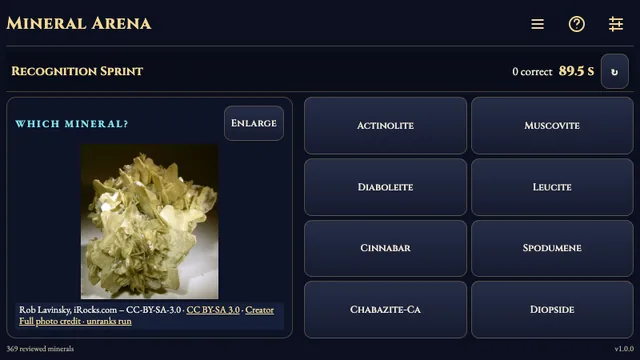
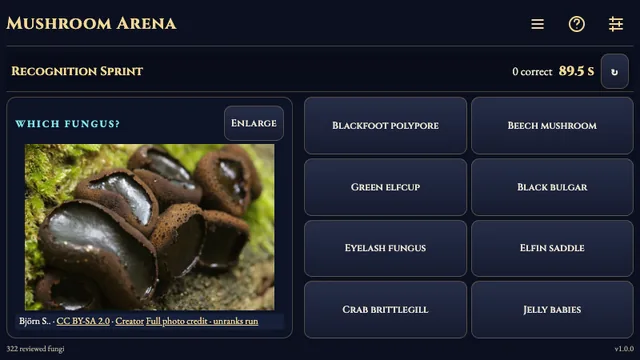
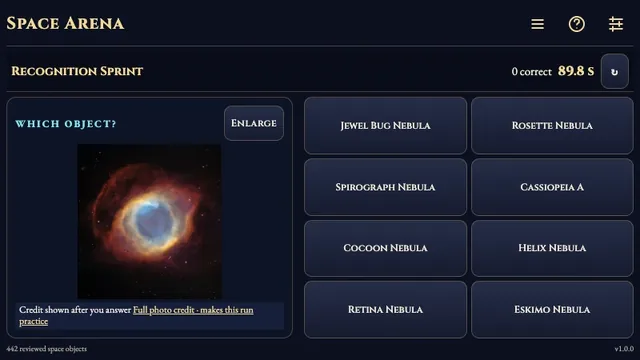
- Recognition Sprint: choose the pictured castle from eight names. You have 90 continuously running seconds; one wrong answer ends the run. Most correct answers wins, with time of the last correct answer breaking ties.
- Name Search: identify ten photographs. Type part of a name or another name, ignoring case and accents, and choose the exact castle from the filtered list.
- Country: a photograph with the castle’s name; choose the country it stands in today from eight; the other seven are the countries with a castle nearest to it. Castles whose names give away the country or town stay out of this competition. A wrong answer scores nothing but the run continues. Most correct answers wins, then the faster total time.
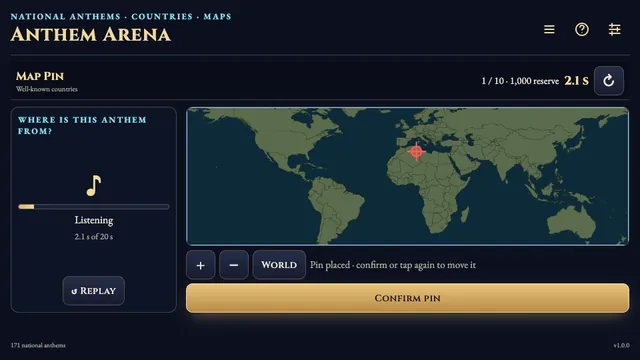
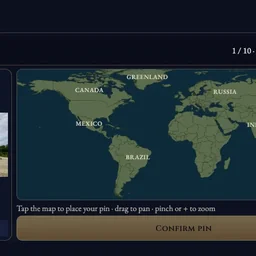
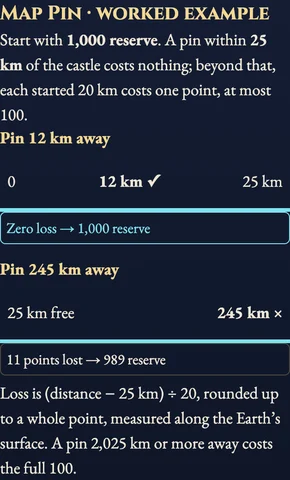
- Map Pin: tap the world map where the castle stands, zooming in as close as you like, then confirm. You start with 1,000 reserve. A pin within 25 km costs nothing; beyond that each started 20 km costs one point, at most 100. Highest reserve wins, with time breaking ties.
- Building Years: enter one calendar year. Any year inside the reviewed building period costs zero; outside it, each year off costs one reserve point, at most 100. Where only the year building began is known, a guess from that year to 30 years later costs zero. Highest reserve wins, with time breaking ties.
- Builders & Owners: choose the one person or family of eight (the others come from castles of other countries, mostly of the same region) who designed, built, commissioned or owned the castle. Most correct answers wins, then the faster total time.
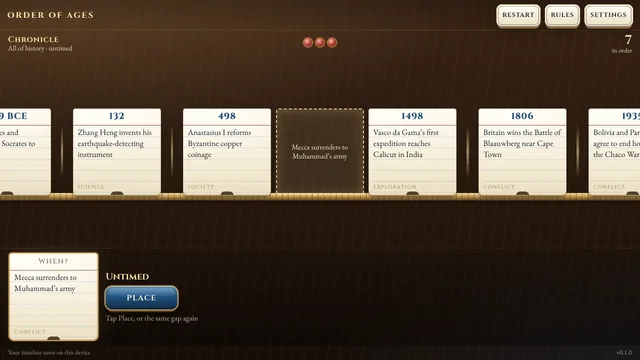
- Matching: select or drag a photograph onto its name. Match all ten pairs. Each wrong pair adds three seconds; fastest adjusted finish wins.
Controls
| Input | Action |
|---|---|
| Tap / click | Choose answers, countries, people and matching pairs; double-click or double-tap an answer to confirm it at once |
| Drag | Drag either side of the Matching table onto its partner to make a pair; drag the map to pan |
| Pinch / wheel | Zoom the Map Pin map |
| Type a name | Filter names; Enter chooses a unique result |
| Year estimate | Enter a whole year; a number pad supports controllers |
| Enlarge · Zoom in · Fit photo | Inspect the photograph while the clock keeps running |
| 1–8 | Choose an answer |
| Standard controller | D-pad navigates controls; A selects, Y opens Rules |
Tips
- Read the stone Brick Gothic points to the Baltic, white walls and square keeps to Iberia, curved tiled roofs to East Asia.
- Zoom before you pin A pin inside 25 km is free; zooming to the right valley or coast saves more than a fast answer.
- Building means the castle as it stands Many sites are older, but the period counts the main surviving structure.
Good to know
Every photograph retains its creator, chosen licence, original title and source links. Creator credits appear beside the photograph; Full photo credit opens the complete attribution and sources. Opening help, rules or full credits during a ranked question, leaving the tab or restoring an unfinished run makes that attempt practice. Building periods are reviewed ranges, not exact dates.
Watch how to play
Questions
Why do some castles appear in fewer competitions?
A photograph proves no building year or owner. A castle joins those competitions only when two different publishers agree on the fact.
Where do countries and map positions come from?
The country is the one the castle stands in today, confirmed by its coordinates; each position is confirmed by a second map source within 3 km.
Why is the name shown in Country and Map Pin?
Those competitions test where the castle is, not whether you recognise it.