About Ruler Arena
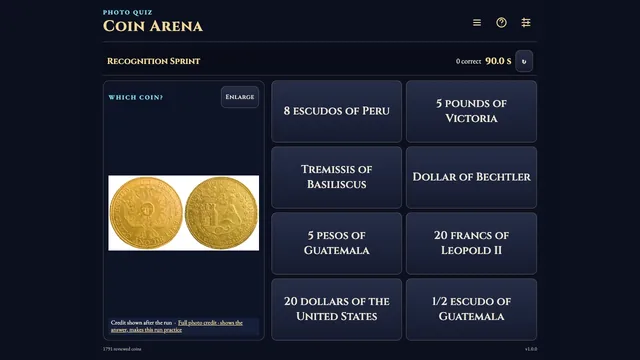
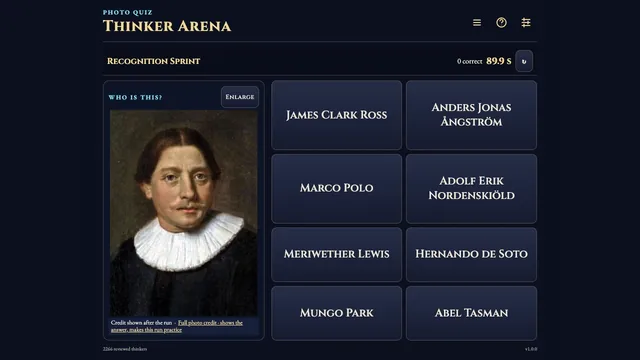
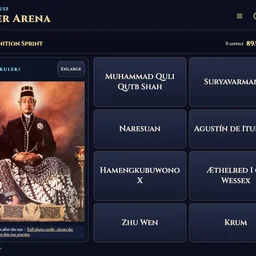
Six competitions use real, individually reviewed portraits of rulers: painted, sculpted, photographed or struck on coins. Name a ruler, choose the realm they reigned over, pick their dynasty or royal house, enter a year of their reign, or match ten portraits and names.
The library spans eleven regions, from Britain and Ireland to the Ancient world, the Islamic empires and East Asia. Play famous rulers, one region or all of them. Realms, reigns and dynasties are confirmed against a printed reference work.
How to play
- Goal
- Recognize kings, queens, emperors, sultans and pharaohs of the world from their portraits, and learn the realms they ruled, the houses they belonged to and when they reigned.
- How it ends
- Finish ten questions or ten pairs, exhaust the sprint clock, or make one sprint mistake.
- Record
- Best score, highest reign reserve, or fastest matching finish, with time and the player’s name.
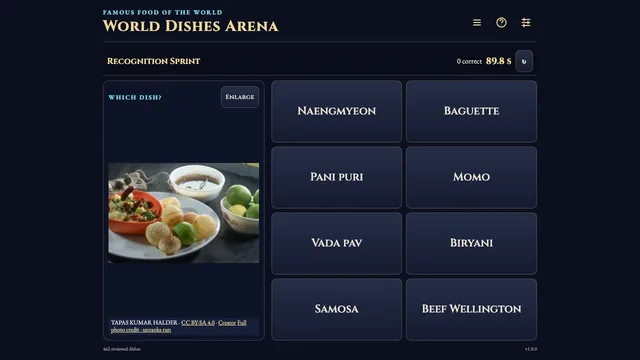
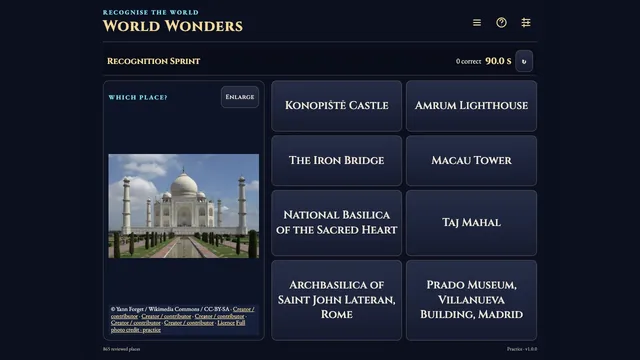
- Recognition Sprint: choose the pictured ruler from eight names. You have 90 continuously running seconds; one wrong answer ends the run. Most correct answers wins, with time of the last correct answer breaking ties.
- Name Search: identify ten portraits. Type part of a name or another name, ignoring case and accents, and choose the exact ruler from the filtered list.
- Realm: a portrait with the ruler's regnal name; choose the realm they reigned over from eight; the other seven are the realms nearest in region and time. A ruler who held several of the listed realms is right with any of them. Rulers whose names give the realm away stay out. A wrong answer scores nothing but the run continues. Most correct answers wins, then the faster total time.
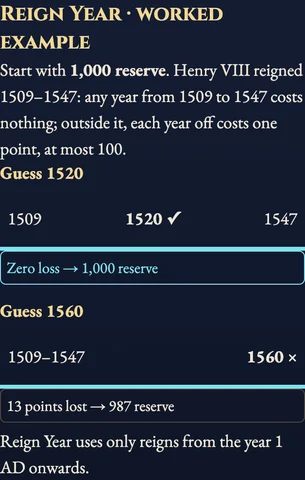
- Reign Year: enter one calendar year. Any year inside the reviewed reign, both ends included, costs zero; outside it, each year off costs one reserve point, at most 100, from a 1,000 reserve. Highest reserve wins, with time breaking ties.
- Dynasty: choose the ruler's dynasty or royal house from eight; the other seven are houses nearest in region and time. Rulers whose names contain their house stay out. Most correct answers wins, then the faster total time.
- Matching: select or drag a portrait onto its name. Match all ten pairs. Each wrong pair adds three seconds; fastest adjusted finish wins.
Controls
| Input | Action |
|---|---|
| Tap / click | Choose answers, realms, dynasties and matching pairs; double-click or double-tap an answer to confirm it at once |
| Drag | Drag either side of the Matching table onto its partner to make a pair |
| Type a name | Filter names; Enter chooses a unique result |
| Year estimate | Enter a whole year; a number pad supports controllers |
| Enlarge · Zoom in · Fit photo | Inspect the photograph while the clock keeps running |
| 1–8 | Choose an answer |
| Standard controller | D-pad navigates controls; A selects, Y opens Rules |
Tips
- Read the dress Crowns, armour, turbans and robes point to a region and an age before the face does.
- Reigns are ranges Any year of the reign counts; a year near the middle of a long reign is the safest guess.
- Same name, different realm Several rulers share a regnal name; the realm is the one the portrait's ruler reigned over.
Good to know
Every portrait retains its creator, chosen licence, original title and source links. Creator credits appear beside the portrait; Full photo credit opens the complete attribution and sources. Opening help, rules or full credits during a ranked question, leaving the tab or restoring an unfinished run makes that attempt practice. Reign years are reviewed ranges, not exact dates.
Watch how to play
Questions
Why do some rulers appear in fewer competitions?
A portrait proves no realm, house or reign. A ruler joins those competitions only when Wikidata and a printed reference work agree on the fact.
Why is there no Reign Year for ancient rulers?
Reigns that start before AD 1 stay out because their chronologies are contested.
Why is the name shown in Realm and Dynasty?
Those competitions test what the ruler ruled, not whether you recognise the face.