About Breed Arena
Eight competitions use real, individually reviewed photographs of dog, cat and horse breeds. Identify each by its English name or the name it has in its home country, choose its country of origin, estimate its height at the withers, match ten photographs and names, or spot a famous breed from a close-up that widens with every wrong pick.
The library holds 247 dog breeds in seven groups that follow the FCI breed nomenclature, 52 cat breeds and 64 horse and pony breeds. Origin uses 220 countries of origin, Native Names 90 native breed names and Height 227 height ranges, each read from a breed standard or breed society by two researchers independently; only facts both agree on are played.
How to play
- Goal
- Recognize dog, cat and horse breeds and learn their native names, countries of origin and heights.
- How it ends
- Finish ten questions, ten pairs or five hidden names, exhaust the sprint clock, or make one sprint mistake.
- Record
- Best score, highest height reserve, fastest matching finish or fewest wrong letters, with time and the player’s name.
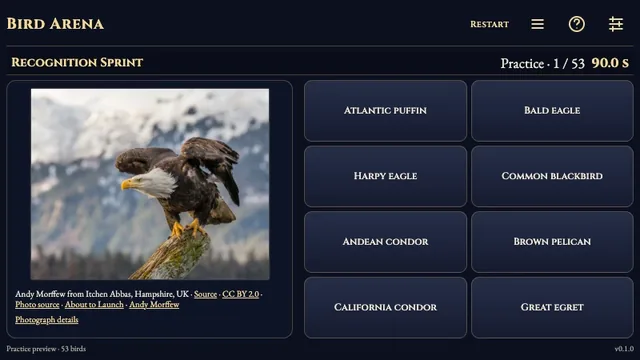
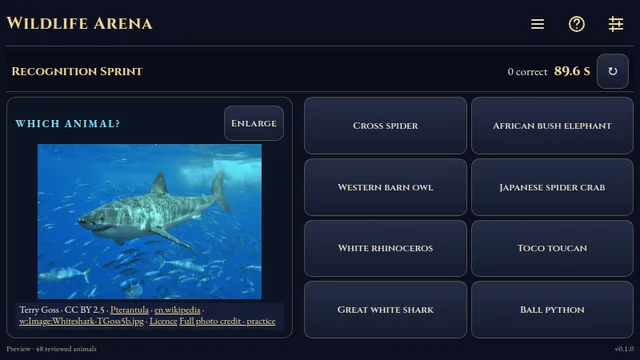
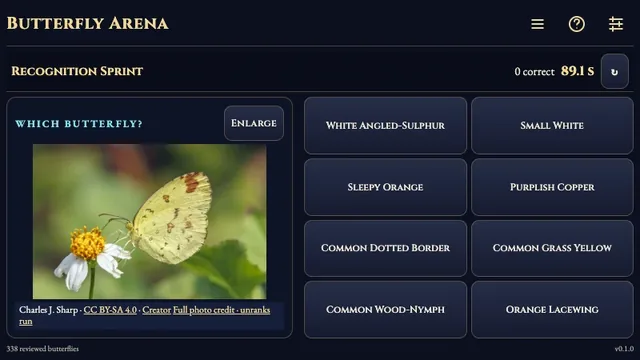
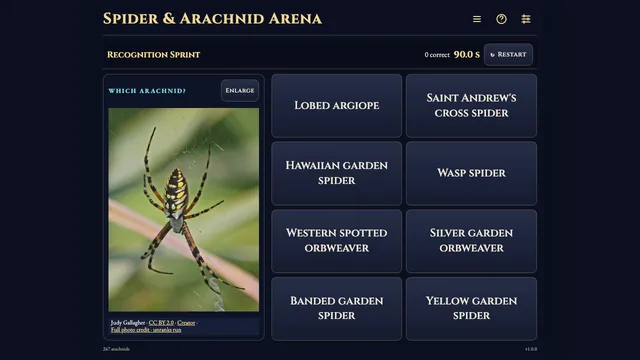
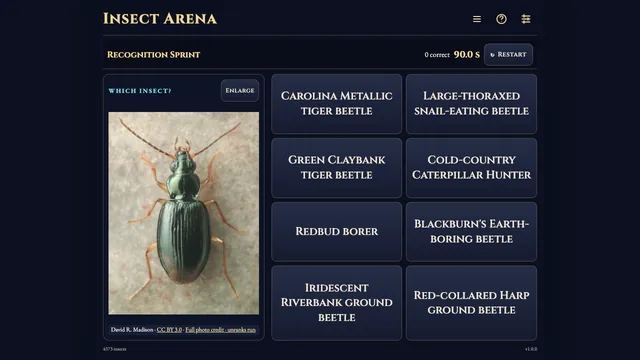
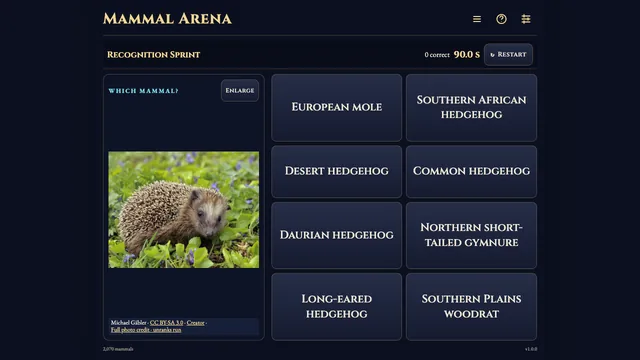
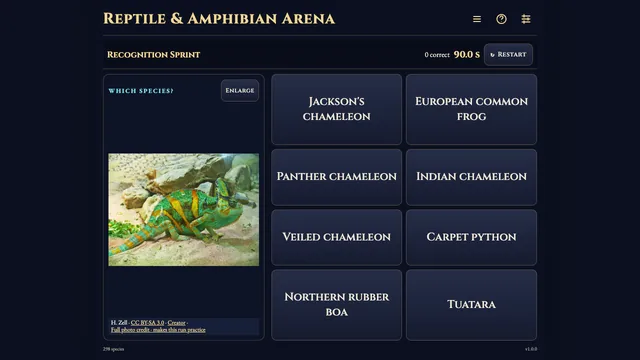
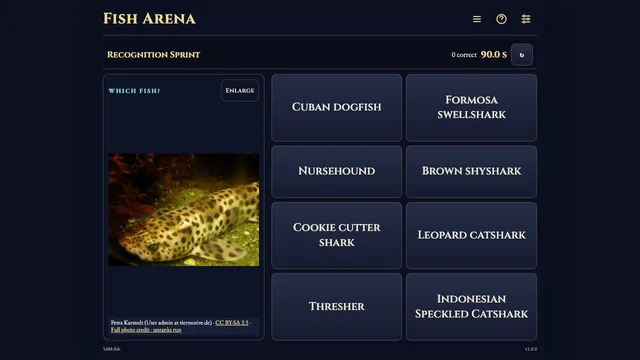
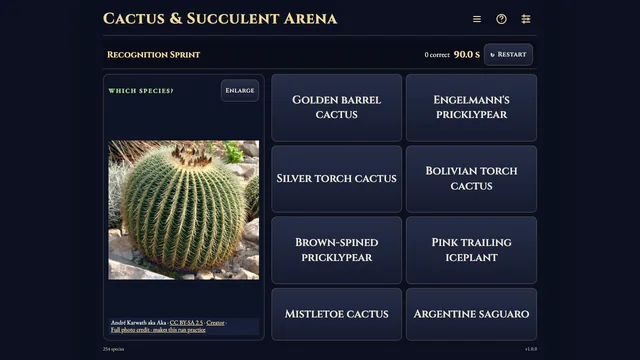
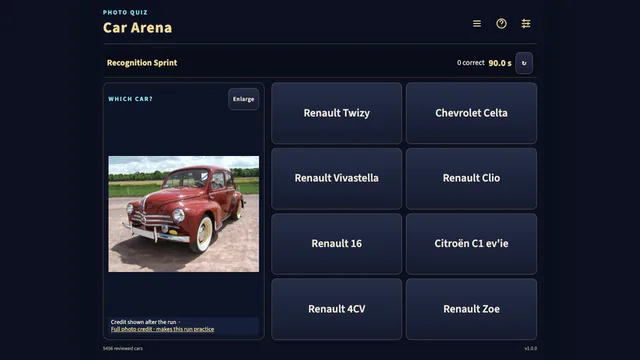
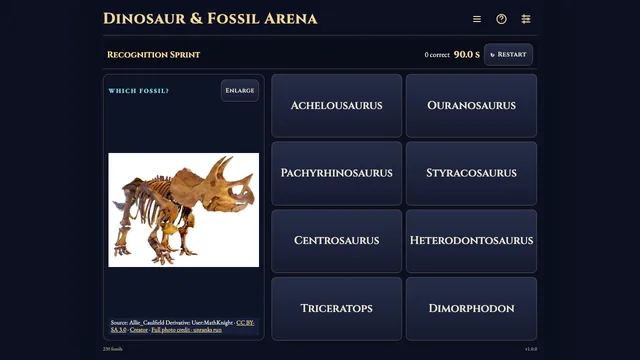
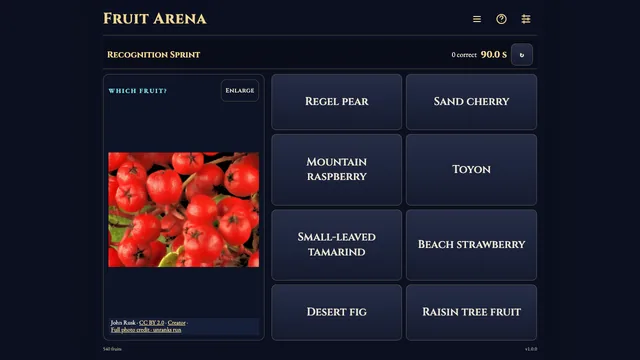
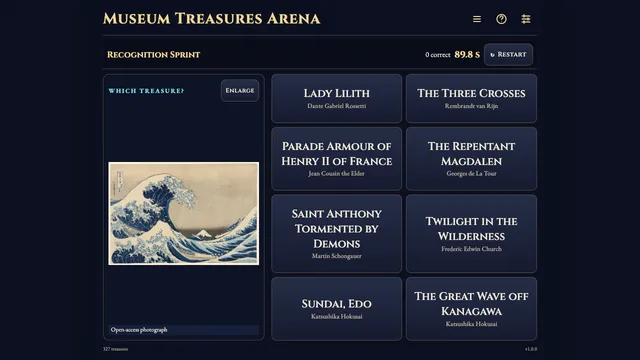
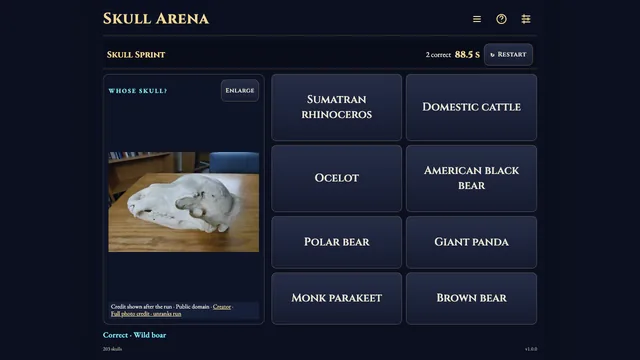
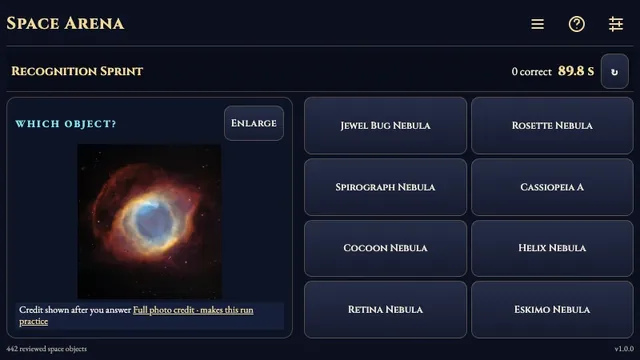
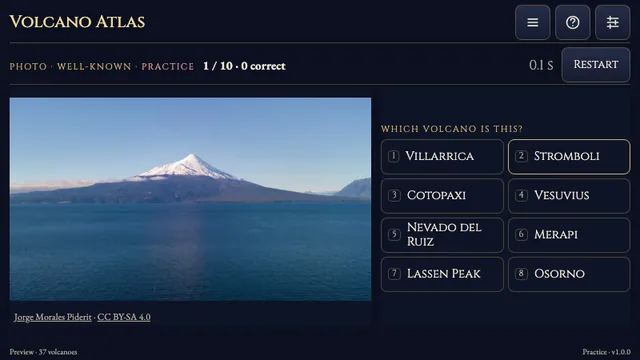
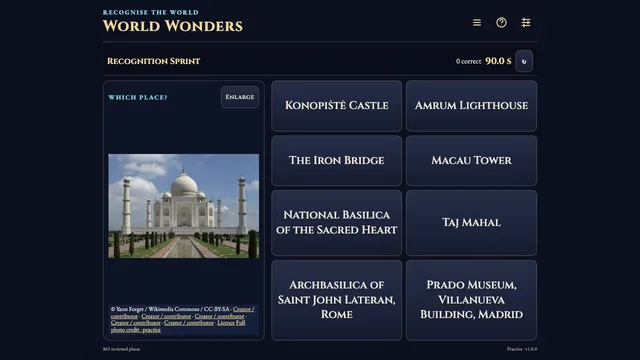
- Recognition Sprint: choose the pictured breed from eight names, mostly look-alike breeds of the same animal. You have 90 continuously running seconds; one wrong answer ends the run. Most correct answers wins, with time of the last correct answer breaking ties.
- Native Names: choose the breed's name in the language of its country of origin, such as Deutscher Schäferhund for the German Shepherd, from eight. Ten photographs; a wrong answer scores nothing but the run continues. Most correct answers wins, then the faster total time. The clock pauses while each answer is revealed.
- Name Search: identify ten photographs. Type part of an English or native breed name, ignoring case and accents, and choose the exact breed from the filtered list. Correct answers rank first, then faster time.
- Origin: choose the country where the named breed was developed, from eight. When sources name more than one country, any of them earns the point. Countries are today's: a Scottish breed is from the United Kingdom. Complete ten questions.
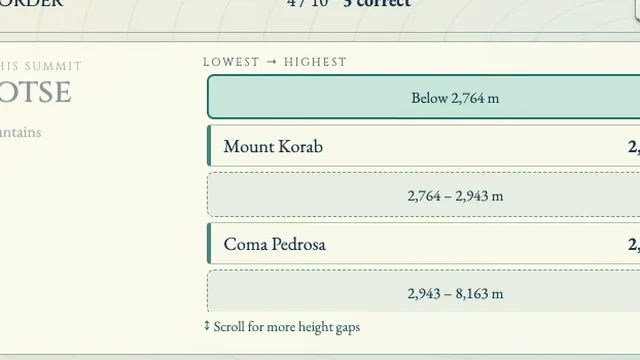
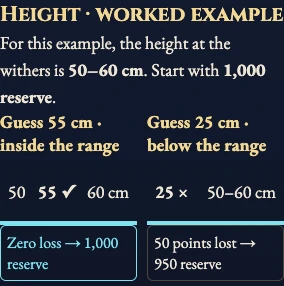
- Height: estimate the adult height at the withers of a dog or horse in centimetres. You start with 1,000 reserve. Estimates inside the reviewed range cost zero. Outside it, lose the distance to the nearest end as a share of the game's range of 18–198.2 cm (100 × distance ÷ 180.2), at most 100 per guess. Complete ten estimates; highest reserve wins, with time breaking ties.
- Matching Table: select a photograph, then its breed name. Match all ten pairs. Each wrong pair adds three seconds; fastest adjusted finish wins.
- Letter Hunt: guess letters to uncover five hidden breed names; right letters are free, each wrong letter counts. A solved name shows its photograph. Fewest wrong letters wins, then time.
Controls
| Input | Action |
|---|---|
| Tap / click | Choose answers, countries and matching pairs; double-click a country to confirm it at once |
| Drag | Drag either side of the Matching Table onto its partner to make a pair |
| Type a breed name | Filter names; Enter chooses a unique result |
| Height estimate · cm | Enter an estimate; a number pad supports controllers |
| Enlarge · Zoom in · Fit photo | Inspect the photograph while the clock keeps running |
| 1–8 | Choose a Recognition Sprint or Native Names answer |
| Standard controller | D-pad navigates controls; A selects, Y opens Rules |
Tips
- Check the telling feature Recognition offers look-alikes from the same group: ears, coat texture and tail often decide between, say, a Norwich and a Norfolk Terrier.
- Native names translate Schäferhund is shepherd dog; Ovčar and Pastor mean shepherd, Galgo greyhound. Many native names are the English name in another language.
- Hands to centimetres Horse heights are often quoted in hands: one hand is 10.16 cm, so 15 hands is about 152 cm and a pony under 14.2 hands is under 147 cm.
Good to know
Every photograph retains its creator, chosen licence, original title and source links. Creator credits appear beside the photograph; Full photo credit opens the complete attribution and sources. Opening full credits during a question, leaving the tab, restoring an unfinished run or a mid-run photo-loading interruption makes that attempt practice. Reviewed heights are breed-standard ranges, not limits for every animal.
Watch how to play
Questions
Why do some breeds appear in fewer competitions?
A breed joins Origin, Native Names or Height only when two researchers independently read the same fact from a breed standard or breed society. Standards that give only a weight, only a minimum, or a range spanning several size varieties are left out of Height.
Which countries count for Origin?
Today's sovereign countries. A breed from Scotland, England or Wales counts as the United Kingdom; a Tibetan breed as China. The reveal keeps the source's own wording. Breeds whose sources name only a region spanning several countries stay out. Breeds whose English name already states the country, such as the Turkish Van or German Shepherd, are left out of Origin.
Why are some breed varieties separate and others not?
Dogs follow the FCI breed list. Where the UK or US kennel clubs treat a distinct-looking FCI variety as its own breed (Pomeranian, Keeshond, the Belgian Shepherd varieties) it has its own entry; size varieties of one breed (Poodle, Dachshund) are one entry.