About Scrying Orb
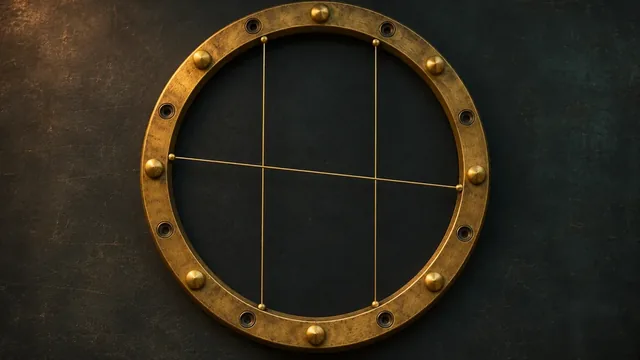
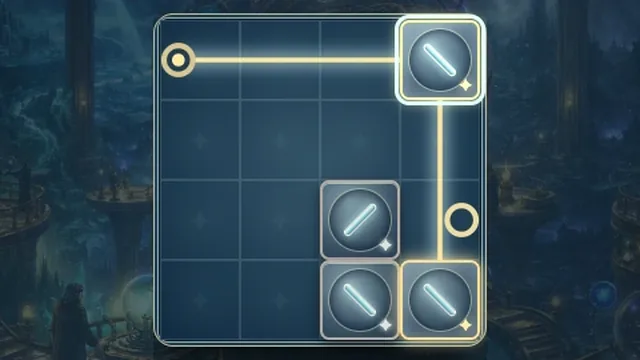
In a moonlit observatory, light enters a sealed sapphire chamber through brass ports. Hidden moonstones absorb rays or bend them toward another edge. Read the rim to discover where they lie.
There are 160 original chambers. Apprentice lenses begin with two stones in a 5×5 field; later wards hold three or four in 6×6. Fire as many rays as you need. The full set of clues identifies exactly one arrangement.
Your first solve time stays in this browser. An uninterrupted first finish can claim the named best shown beside the clock and on every chamber card.
How to play
- Goal
- Locate every hidden moonstone by probing the chamber's edge and marking its cells.
- How it ends
- The chamber lights when exactly the shown number of stones is marked in the unique layout that fits every possible ray; there is no loss.
- Record
- Your first solve time is kept for each chamber, and the fastest verified first solve appears with its holder.
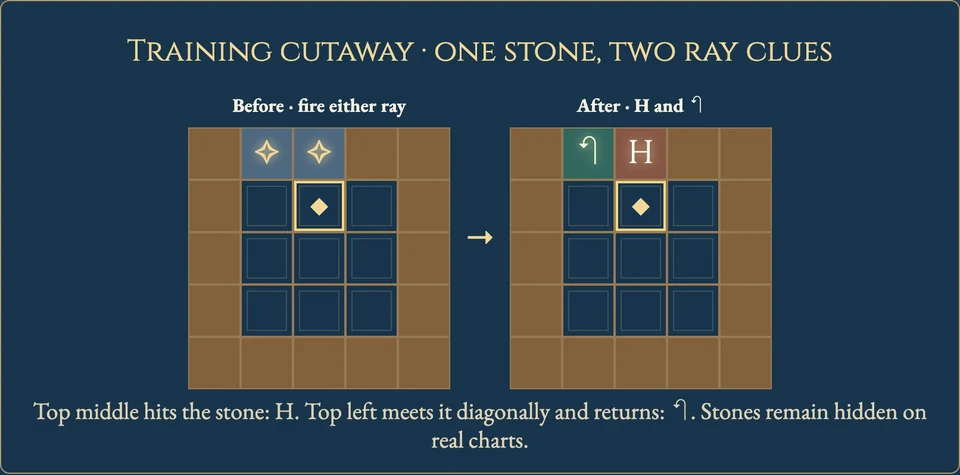
- Tap an edge star to send a ray into the chamber. H means the ray struck a moonstone directly. ↶ means it returned to the same port. Matching numbers mark the two ends of a ray that entered one port and left another. A stone diagonally ahead bends the ray 90° away before the next cell; two such stones turn it around.
- The worked training cutaway has one visible stone. Fire from the top middle and the ray hits it: H. Fire from the top left and the same stone sits diagonally ahead, so the ray returns: ↶. The stone is shown only for explanation; real chambers keep theirs hidden.
- Tap a cell to cycle unmarked, stone, empty and back, or choose Stone, Empty or Erase for direct marks. You can fire more rays whenever your deductions need evidence. Mark exactly the displayed number of stones in the layout that fits every ray to seal the chamber. Undo and Redo restore marks or observations; Restart clears both while the first clock keeps running. There is no loss, and replays are untimed practice.
Controls
| Input | Action |
|---|---|
| Tap / click a rim star | Fire a ray, or highlight its known result |
| Tap / click a cell | Cycle unmarked → stone → empty → unmarked |
| Cycle / Stone / Empty / Erase | Choose how a cell tap marks |
| Arrow keys | Move focus through the chamber |
| Enter / Space | Cycle the focused cell or fire the focused port |
| S / E / Backspace | Mark stone, mark empty, or erase the focused cell |
| Undo / Z | Restore the previous mark or ray observation |
| Redo / Y | Restore an undone action |
| Restart / R | Clear marks and rays without restarting the first clock |
| Escape | Close a panel or return to the chamber atlas |
Good to know
A player can always fire more rays; the complete ring uniquely determines the stones. Progress saves in this browser; only the site-wide sound preference is shared.