About Tetromino
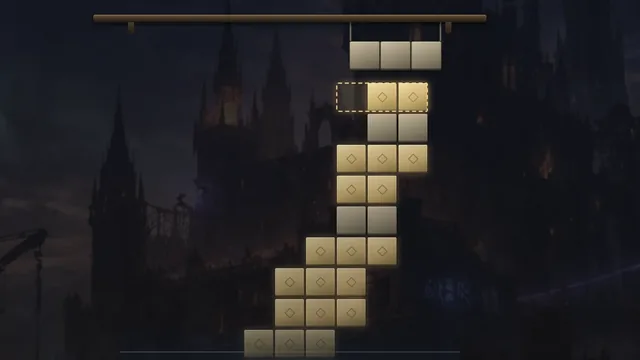
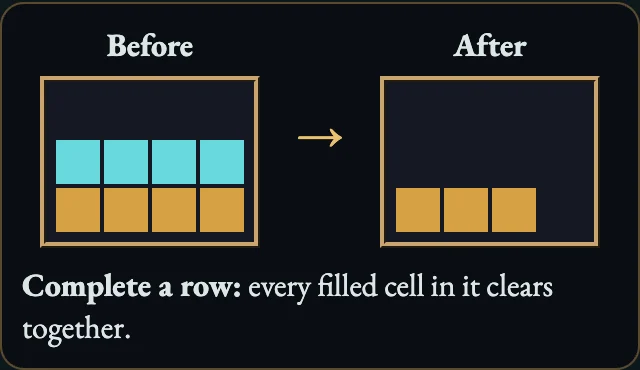
Turn and drop seven falling shapes into a ten-column shaft. Complete a row to clear it, use the preview to plan ahead and hold a piece for later.
How to play
- Goal
- Fill whole rows to clear them before the shaft fills.
- How it ends
- Marathon ends when a stone has no room to arrive; Sprint when forty rows are cleared; Ultra after two minutes.
- Record
- The ten best runs in each mode: highest score, or fastest time in Sprint.
- Fill a row across the shaft and it settles and goes; four at once is a seal, and pays the most.
- Keep a stone back in the hold slot for the gap you are saving, and read the five shapes waiting.
- The run ends when a stone has nowhere left to arrive. Every finished run is offered to the Ten — unless you paused it.
Controls
| Input | Action |
|---|---|
| Drag on the shaft | Slide the stone under your thumb |
| Tap | Turn it |
| Flick down / swipe up | Drop it / put it in hold |
| Arrow keys | Move and soft drop |
| X / Z / A | Turn, turn back, half turn |
| Space | Hard drop |
| Shift or C | Hold |
| Esc | Pause — which gives up the run's place |
| R · Restart | Start the run again |
Good to know
The ten best runs in each mode are kept, and each one keeps its replay. A paused run keeps out of them. Settings are saved in this browser.
Watch how to play
Did you know?
Alexey Pajitnov created Tetris in 1984 on an Electronika 60 computer. The falling-block idea became a classic long before it reached modern phones and browsers.
Source: Tetris: official history