How to play
- Goal
- Glide to the lit deck and stop on it.
- How it ends
- A flight is won when the glider touches down gently, nose near level, and stops before the deck ends. It is lost when it hits rock, runs off the deck or leaves the sky; start again at once.
- Record
- The fastest landing and the fewest moves for each deck.
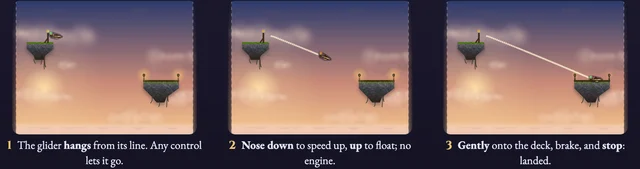
- The glider hangs from its launch line until you press a control; the clock starts then. It has no engine: Up and Down move the nose a notch (5°) at a tap, and keep moving it while held. Nose down to go faster and come down steeper; nose up to float farther and slower. Under 1.15 on the Speed gauge the wing stalls, loses its lift and drops its nose until the speed comes back.
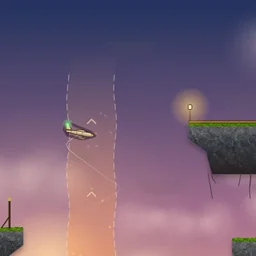
- Turn turns the glider about to face the other way; it takes half a second and costs some speed and height. Hold Brake to open the airbrake: the glider slows and comes down more steeply, and on the deck it stops much sooner. Warm air rises in the shimmering columns, so fly slowly through one and turn about at its edge to climb; the streamers show each band of wind.
- Land on the lit deck sinking no faster than 0.9, the nose within 10° of level, and not in a turn, then stop before the deck ends; the gauges and the lamp on the fin turn green when a touchdown would hold. Any other touch of rock is a crash, and so are running off the deck and leaving the sky; R flies again at once. A move is a notch of the nose, a turn or opening the airbrake, and every landing counts for both tables, but a paused flight's time does not.
Controls
| Up · Down | Move the nose a notch at a tap, and on while held |
|---|---|
| Turn | Turn about to face the other way |
| Hold Brake | Open the airbrake: slower, steeper, a shorter stop |
| Up · W · Down · S | Nose up · nose down |
| Left · A · Right · D | Turn about toward that side |
| Space · Shift (held) | Airbrake |
| Enter | Let go of the line |
| R | Fly again |
| Escape | Pause (the flight's time then no longer counts for a record) |
The rock, moss and oak textures, the title backdrop and the sounds come from the Morass warehouse; the sky, the clouds, the islands' shapes, the wind, the warm air and the glider are drawn by the game. A flight is sent as its moves alone, and the records worker flies it again with the same core before it ranks the result. Your progress stays in this browser under morass.glider.v1. No ads or analytics run inside the game.
About Glider
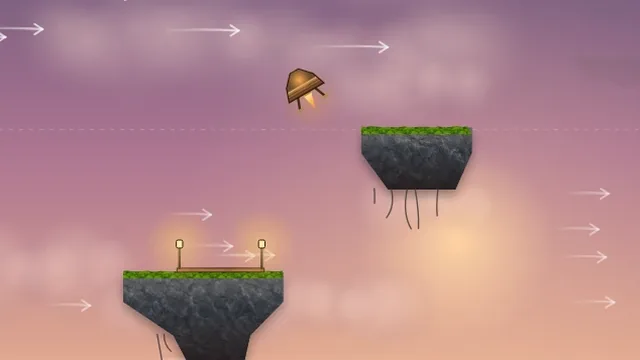
A soaring game over the Drift, islands of rock and moss floating above a sea of cloud at dusk. A small canvas glider hangs from a launch line on a high island; a lantern deck waits on another across the gap. There is no engine: height is all the glider has. Nose down and it goes faster and comes down steeper; nose up and it floats farther, more slowly, until it is too slow and the wing stalls.
Warm air rises in shimmering columns: fly slowly through one, turning about at its edge, and the glider climbs. Wind blows across in bands of sky, a headwind stealing distance and a tailwind giving it. Touch down on the deck gently with the nose near level, open the airbrake, and stop before the planks run out. The whole sky is always on screen, and gauges show the speed with its stall line, the sink and the nose.
There are 120 decks in eight drifts: first glides, warm air, wind, overhanging islands, gusts, decks behind the launch, narrow channels and the storm. Every deck was landed by human-paced pilots before it shipped. Each keeps a Top 10 for the fastest landing and one for the fewest moves, and every flight is the same to the last bit in every browser, so the site flies a record run again before it keeps a place.