About Match Three
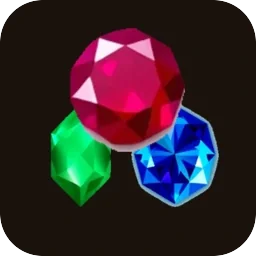
Swap two touching stones to line up three or more of a kind. They flare, shatter and go; the column falls, the chutes feed it, and whatever that makes goes too. Seven cut stones on an eight-by-eight bench in a Korthen guild workshop, and nothing on the screen that a player has to be taught.
The one thing it does that the games it comes from do not: above every column, the next three stones are shown. The oldest complaint in this genre is that the cascade did the scoring, not the player — a good run and a careless one look the same. Here the refill is information. Each column has its own supply, so clearing one never changes what another is about to drop, and a cascade three moves deep is something you set up rather than something you were handed.
Four in a line leaves a Burst, which takes the eight stones around it. An L or a T leaves a Star, which sweeps its whole row and column. Five leaves a Prism: put it on any stone and every stone of that kind leaves the bench. Swap two of those together and the workshop shakes.
Endless runs until the bench has no swap left and your three shuffles are spent. One Minute is sixty seconds from the moment the bench is laid. Thirty Moves is thirty swaps and no clock, which is the one to play if you want to think. Today's Bench is the same thirty swaps on the board everyone else gets today.
The ten best runs on each bench are kept, with the name of whoever set them, and every one of them is a replay you can watch. A score is never taken on trust: a finished run is sent as the run itself, and the site plays it again to work out what it was worth.
How to play
- Tap a stone and then its neighbour, or drag one at the other. A swap that makes no line springs back and costs nothing.
- Read the chutes above the board — the stone you can see coming is the one that finishes the line you are about to open.
- Each step of a cascade is worth more than the one before, up to eight times. A run that is paused or left keeps its score and loses its place.
Controls
| Tap, tap | Pick a stone, then its neighbour |
|---|---|
| Drag | Push a stone at the one beside it |
| Arrow keys | Move the cursor |
| Space | Pick the stone up; an arrow then pushes it |
| Esc | Put it down — or pause, which gives up the run's place |
The ten best runs on each bench are kept, and each one keeps its replay. A paused run keeps out of them. Settings are saved in this browser.