About Cactus & Succulent Arena
Seven competitions on photographs of 3,067 cacti and succulents: pincushions, barrels, columnar cacti, prickly pears, forest cacti, stonecrops, echeverias, ice plants and living stones, aloes, agaves, spurges and stapeliads. Many have no English name and appear under their scientific name.
Play the 283 best-known species, everything at once or one of twelve groups. Names, authors, years and native ranges follow Kew's World Checklist of Vascular Plants; English names come from iNaturalist and Wikidata. Photographs come from Wikimedia Commons and iNaturalist, each credited.
How to play
- Goal
- Recognize the world’s cacti and succulents from their photographs and learn their names, Latin names, native regions, genera and the year they were named.
- How it ends
- Finish ten questions or ten pairs, exhaust the sprint clock, or make one sprint mistake.
- Record
- Best score, highest Year Reserve or fastest Matching finish, with time and the player’s name.
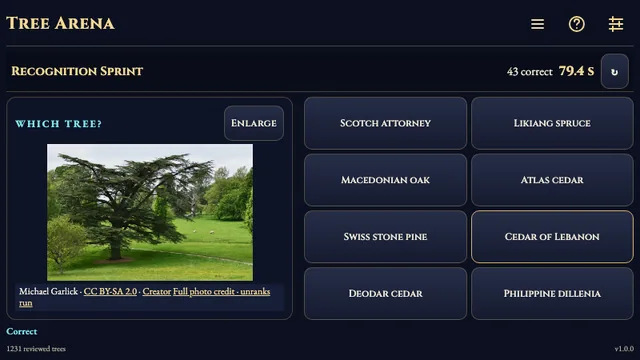
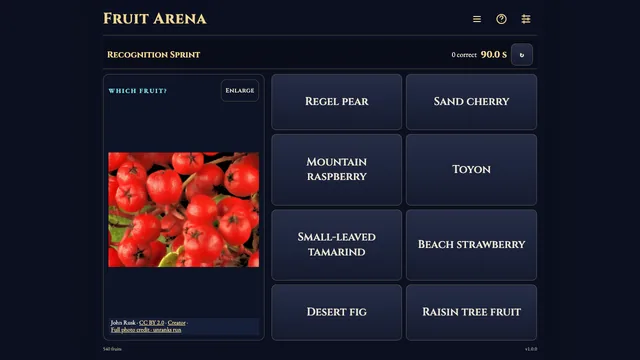
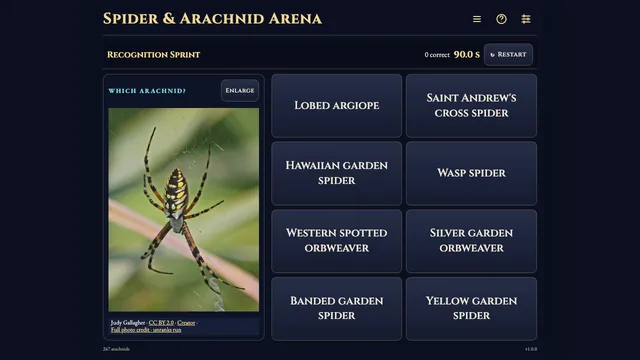
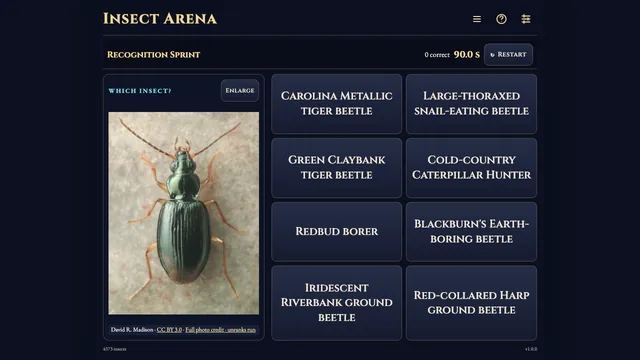
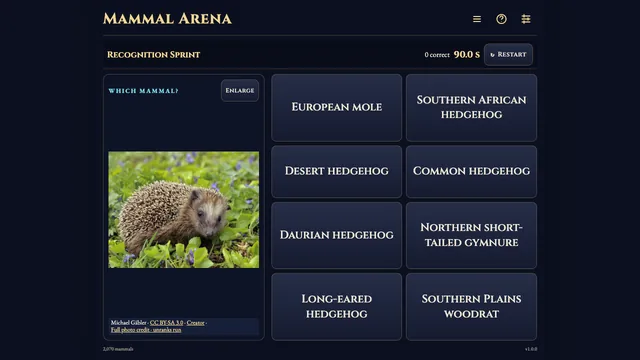
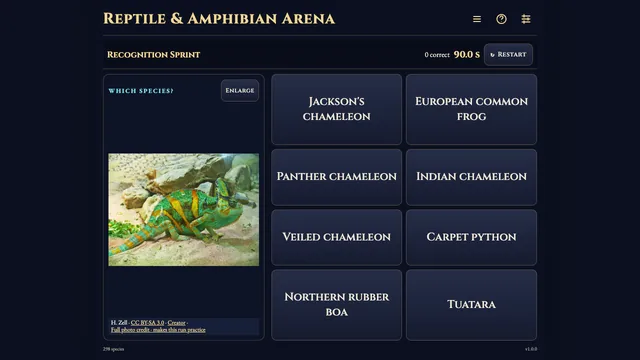
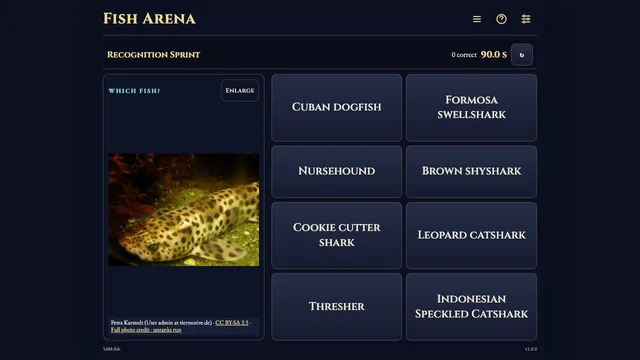
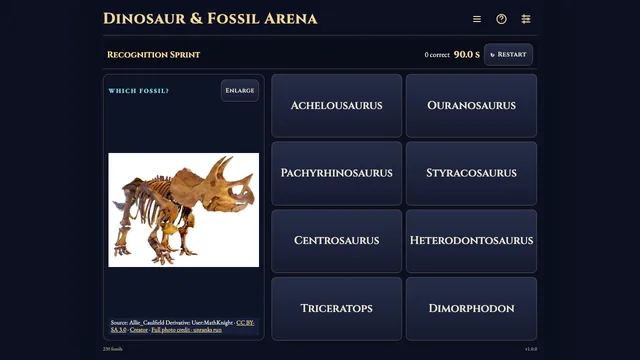
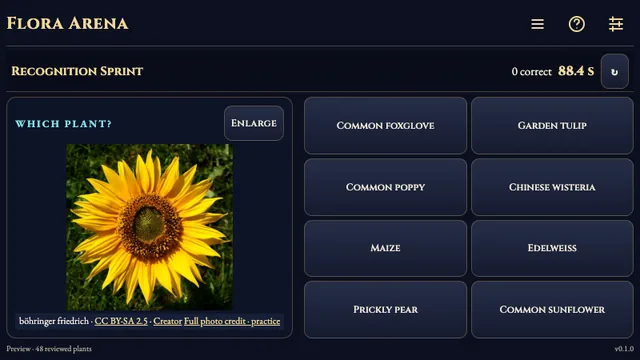
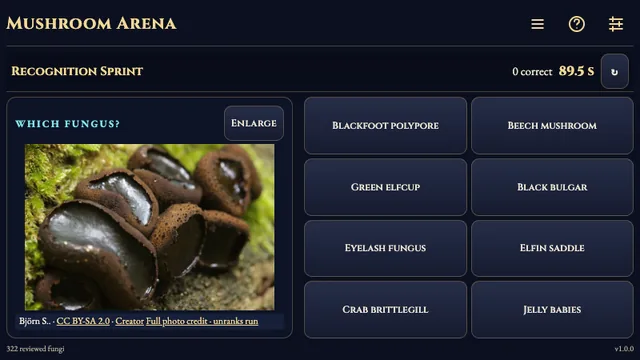
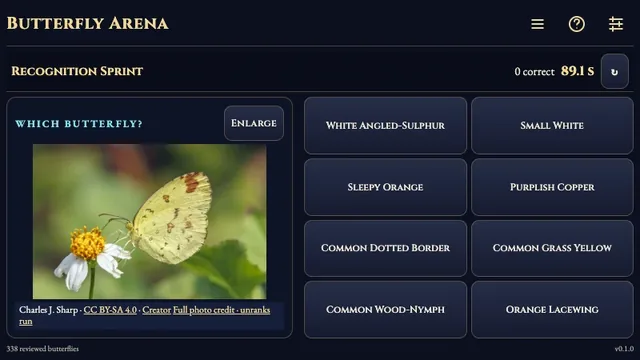
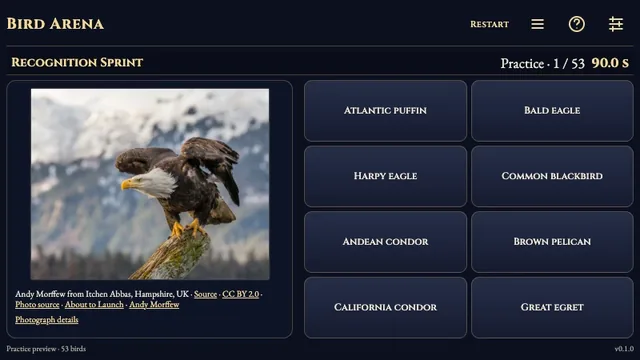
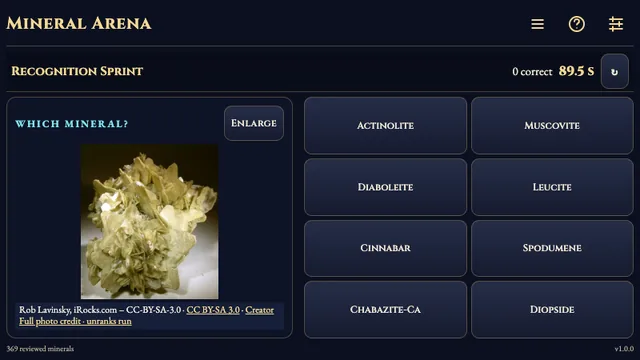
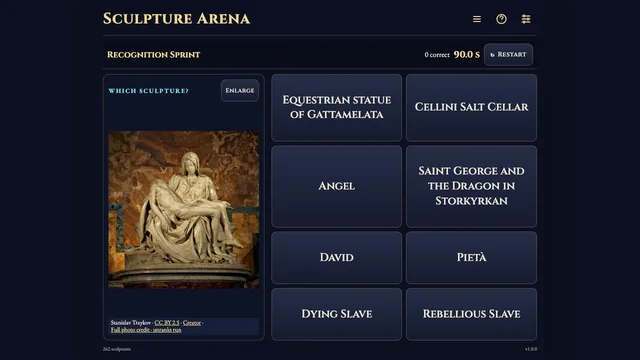
- Recognition Sprint: choose the pictured species from eight English names, mostly relatives from the same genus or family. You have 90 seconds and one wrong answer ends the run. Most correct answers wins; the time of the last one breaks ties.
- Latin Names: name ten photographs from eight scientific names, mostly of related species. Most correct answers wins, then time.
- Name Search: identify ten photographs. Type part of a common, scientific or former name and pick from the list; close spellings are offered. A lesser-known species of the same genus also counts. Correct answers rank first, then faster time.
- Native Range: each of ten named species comes with six of the world's botanical regions. Exactly one is part of its native range; Kew's checklist records it in none of the other five. Most correct answers wins, then time.
- Genus: choose the genus of ten species named in English from eight, each genus shown with two of its best-known species. Most correct answers wins, then time.
- Year Reserve: guess the year each of ten species was first scientifically described. You start with 1,000; a guess within ten years is free, beyond that each year further off costs a point, up to 100 per species. Highest reserve wins, then time.
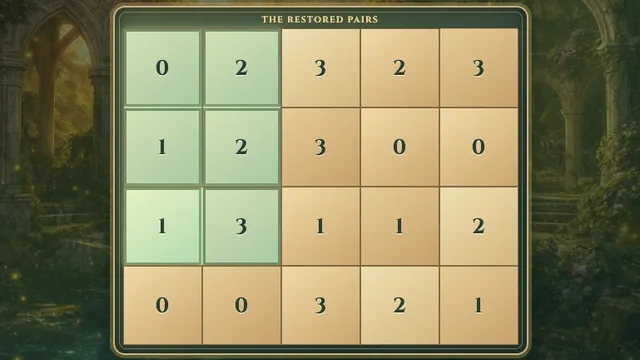
- Matching: select a photograph, then its name, or drag one onto its partner. Match all ten pairs. Each wrong pair adds three seconds; fastest adjusted finish wins.

Controls
| Input | Action |
|---|---|
| Tap / click | Choose answers, regions, genera and matching pairs |
| Drag | Drag either side of Matching onto its partner to make a pair |
| Type a species name | Filter the Name Search list; Enter chooses a unique result |
| Year guess | Enter a year from 1753 to 2025; a number pad supports controllers |
| Enlarge | Inspect the photograph while the clock keeps running |
| 1–8 | Choose an answer in the pick-one competitions |
| Standard controller | D-pad navigates controls; A selects, Y opens Rules; in the Name Search list, left and right jump between first letters |
Tips
- Spines or leaves Areoles, the felted cushions spines grow from, mark a true cactus. Fleshy leaves in a rosette point to the stonecrops, aloes or agaves instead.
- The year is the first name Many cacti were first described in another genus. Year Reserve asks for the oldest valid name, which is often decades before today's.
- Old World or New Cacti are native to the Americas, except one mistletoe cactus. Aloes, ice plants and living stones are mostly African.
Good to know
Every photograph retains its creator, chosen licence, original title and source links. Creator credits appear beside the photograph; Full photo credit opens the complete attribution and sources. Leaving the tab during a ranked run makes that attempt practice. Many photographs show plants in gardens; a photograph is never evidence of where a species grows wild.
Watch how to play
Questions
Is there a question on which plants are edible or poisonous?
No. This is a quiz, and an edibility or toxicity question would read as advice. Nothing in the game is advice on identifying, growing, collecting or using plants.
Why do some species appear only under a Latin name?
Most cacti and succulents have no English name. They are named by their scientific name, and Recognition Sprint, Matching and Genus use only species with an English name.
Where do the facts come from?
Names, authors, years of description and native ranges from Kew's World Checklist of Vascular Plants (Govaerts et al. 2021), in the botanical regions of the TDWG World Geographical Scheme. English names from iNaturalist and Wikidata.