About Museum Treasures Arena
Eight competitions on 7,762 paintings, prints, sculptures, vases, jewels, swords, textiles and other treasures photographed by The Metropolitan Museum of Art, the Rijksmuseum, the Art Institute of Chicago, the Cleveland Museum of Art and the National Gallery of Art. Name a treasure, choose its title, search for it, tell the culture that made it or the material it is made of, date it, match it to its museum, or match photographs to titles.
Play the famous treasures, a balanced mix or one of eight collections, from paintings to arms and armour. Every photograph is the museum's own open-access image, and titles, makers, dates, cultures and materials follow the museum's own catalogue record.
How to play
- Goal
- Recognize treasures of the world’s great open-access museums from their photographs and learn their titles, makers, cultures, materials, dates and the museums that hold them.
- How it ends
- Finish ten questions or ten pairs, exhaust the sprint clock, or make one sprint mistake.
- Record
- Best score, highest Year Reserve or fastest Matching Table or Museum Match finish, with time and the player’s name.
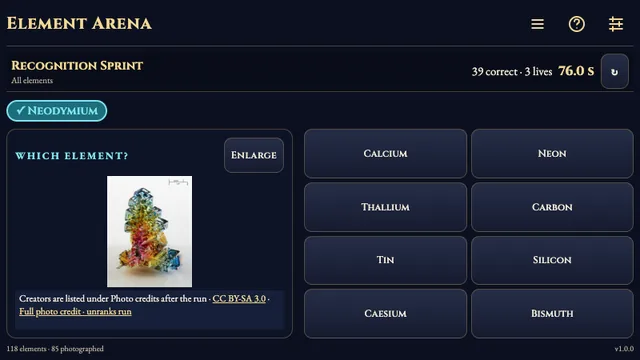
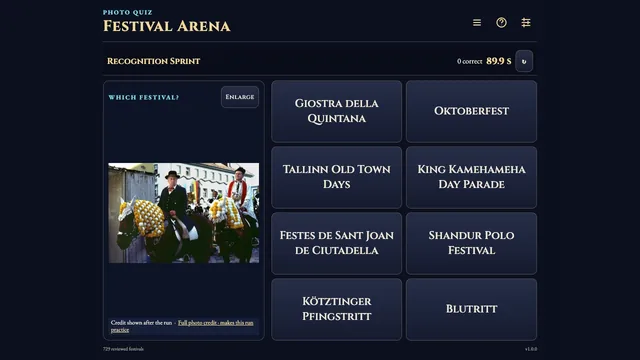
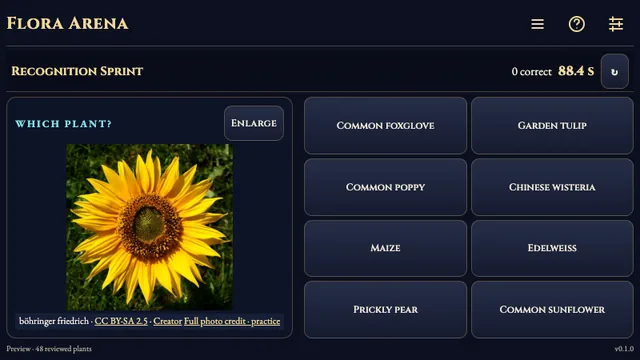
- Recognition Sprint: a photograph and eight titles, each with its maker; 90 seconds continuously running; one wrong answer ends the run. Famous treasures come first, then the deep collection. Most correct answers wins; the time of the last one breaks ties.
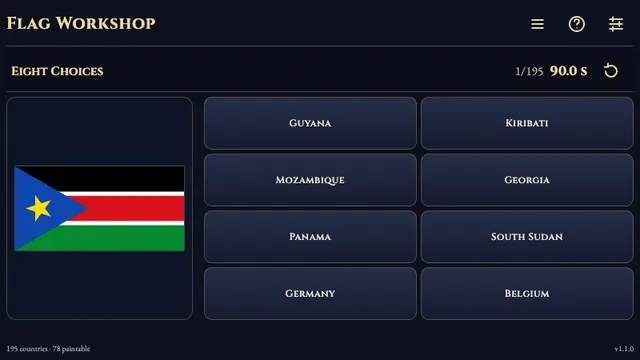
- Title Round: ten photos, each with eight titles. A wrong answer scores nothing but the run continues. Most correct answers wins; total time breaks ties.
- Name Search: ten photos. Type part of a title, a maker or another name the treasure is known by, then select an answer. Another photograph of the same object, or of its pair, also counts. Correct answers rank first, then faster time.
- Culture: ten photographs, each with eight cultures of the world; choose the one that made it. Most correct answers wins, then time.
- Material: ten photographs, each with six materials; choose one the treasure is made of. Materials that look alike in a photograph are never offered against each other. Most correct answers wins, then time.
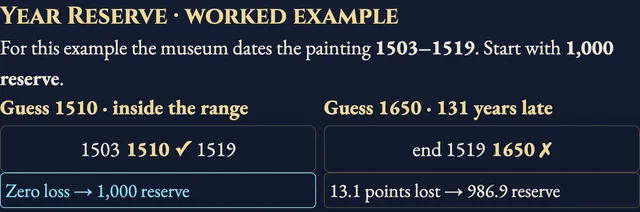
- Year Reserve: ten named treasures; type the year it was made and choose AD or BC. Start with 1,000 reserve. A guess inside the museum's date range costs nothing; outside it, lose one point per ten years off, up to 100 per treasure. Highest remaining reserve wins, then time.
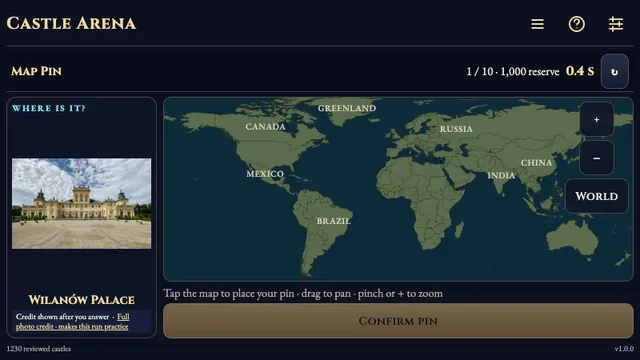
- Museum Match: match ten photographs to ten museum cards, one card for each photograph. Several cards may name the same museum; any of them fits. Each wrong match adds three seconds; fastest adjusted finish wins.
- Matching Table: select a photograph, then its title, or drag one onto its partner. Complete ten pairs. Each wrong pair adds three seconds; fastest adjusted finish wins.
Controls
| Input | Action |
|---|---|
| Tap / click | Choose answers, cultures, materials, museums and matching pairs |
| Drag | Drag either side of Museum Match or Matching Table onto its partner to make a pair |
| Type a title or maker | Filter the Name Search list; Enter chooses a unique result |
| Year estimate | Type a year and choose AD or BC; a number pad supports controllers |
| Enlarge | Inspect the photograph while the clock keeps running |
| 1–8 | Choose an answer in the pick-one competitions |
| Enter / Space | Continue from a reveal |
| Standard controller | D-pad navigates controls; A selects, Y opens Rules |
Tips
- Read the brushwork and the frame Dutch panels, Japanese prints and Italian altarpieces each have a look that narrows the title before the subject does.
- Date by the style, not the subject A Greek hero on a Roman copy or a neoclassical statue is centuries later than the story it tells.
- Each museum has a strength The Rijksmuseum leads in Dutch art, the Met in antiquities and arms and armour, Chicago in French painting.
Good to know
Every photograph is the holding museum's own open-access image, with a link to the object's page on the museum's website. Opening full credits during a question, leaving the tab, restoring an unfinished run or a mid-run photo-loading interruption makes that attempt practice.
Questions
Why are there no treasures from the Louvre or the British Museum?
Only museums that release their photographs under an open licence (CC0 or public domain) can appear. The five museums here publish hundreds of thousands of such photographs.
Why do fewer treasures appear in some competitions?
Culture asks only treasures whose culture the museum records; Material only treasures with a named material; Year Reserve only treasures dated within 200 years.
Where do the facts come from?
Titles, makers, dates, cultures and materials come from each museum's own catalogue record; well-known titles come from Wikidata and English Wikipedia.