About Skull Arena
Ten competitions on reviewed photographs of 454 animal skulls: museum specimens, skulls found in the field and labelled casts. Name the animal from its skull, choose its Latin name, search for it by any name, pick its skull from four, tell its order and diet, estimate its body mass, match skulls to names, or uncover hidden names letter by letter.
Eight collections run from carnivores, hoofed mammals and primates to whales, seabirds, birds of prey and reptiles. Play the familiar skulls, one collection or a balanced mix. Diets and masses come from COMBINE and AVONET.
How to play
- Goal
- Recognize animals from photographs of their skulls and learn their names, Latin names, orders, diets and body masses.
- How it ends
- Finish ten questions, ten pairs or five hidden names, exhaust the sprint clock, or make one sprint mistake.
- Record
- Best score, highest Mass Reserve, fastest Matching finish or fewest wrong letters, with time and the player’s name.
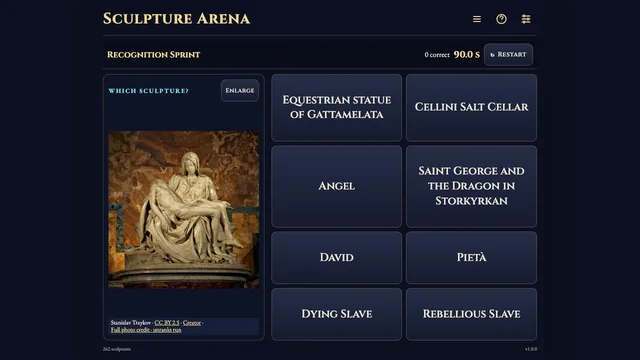
- Skull Sprint: choose the animal from eight names, mostly related animals. You have 90 seconds and one wrong answer ends the run. Most correct answers wins; time breaks ties.
- Latin Names: choose the scientific name of the pictured skull from eight. Ten skulls; a wrong answer scores nothing. Most correct answers wins, then time.
- Name Search: identify ten skulls by typing part of a common, scientific or former name and choosing from the list. A lesser-known animal of the same genus also counts.
- Which Skull: ten named animals, each with four skulls; pick the right one.
- Animal Order: choose the order of the pictured animal from eight, each shown with the same two example animals every time.
- Diet: say whether a mammal or bird mainly ate plants, a mixed diet or other animals.
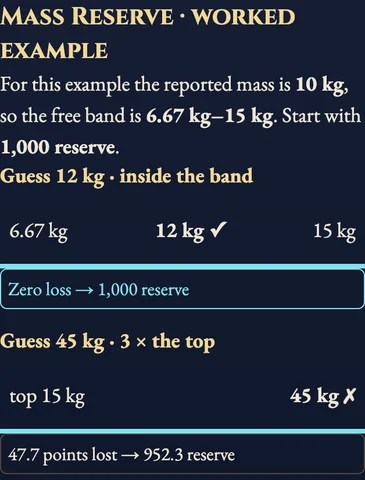
- Mass Reserve: estimate the typical adult body mass. You start with 1,000. A guess within 1.5 times either way costs nothing; outside that band you lose more the further off you are, up to 100 per animal. Highest reserve wins, then time.
- Matching Table: select a skull, then its name, or drag one onto its partner. Match ten pairs; each wrong pair adds three seconds.
- Hidden Name: five hidden animal names, guessed letter by letter; only wrong letters count. Hidden Latin Name hides scientific names. Fewest wrong letters wins, then time.
Controls
| Input | Action |
|---|---|
| Tap / click | Choose answers, skulls, orders, diets and matching pairs |
| Drag | Drag either side of Matching onto its partner to make a pair |
| Type an animal name | Filter the Name Search list; Enter chooses a unique result |
| Mass estimate | Enter a number and switch between grams, kilograms and tonnes |
| Enlarge | Inspect the photograph while the clock keeps running |
| 1–8 | Choose an answer in the pick-one competitions (1–4 in Which Skull, 1–3 in Diet) |
| Standard controller | D-pad navigates controls; A selects, Y opens Rules |
Tips
- Read the teeth Long canines and blade-like cheek teeth mean a meat eater; flat grinding rows mean a plant eater.
- Look at the eye sockets Eyes facing forward belong to hunters and primates; eyes at the sides to animals that watch for them.
- Count the horn cores Bovids keep bony horn cores on the skull; deer skulls show antler bases or none at all.
Good to know
Every photograph retains its creator, chosen licence, original title and source links. Creator credits appear beside the photograph; Full photo credit opens the complete attribution and sources. No human skulls are shown. Opening full credits during a question, leaving the tab, restoring an unfinished run or a mid-run photo-loading interruption makes that attempt practice. This is a quiz: nothing in it is advice on finding, keeping or trading bones.
Watch how to play
Questions
Why do fewer skulls appear in some competitions?
Diet and Mass Reserve ask only mammals and birds with a reported value; Animal Order asks an animal only when two other animals in the game can show its order.
Where do the facts come from?
Names and taxonomy come from iNaturalist. Mammal diets and masses come from COMBINE (Soria et al. 2021), bird diets and masses from AVONET (Tobias et al. 2022).
Why are there no human skulls?
The game shows animals only. Every photograph is of a real skull: a museum specimen or a skull found in the field.