About Sea Life Arena
Eight competitions on photographs of 6,536 marine invertebrates: octopuses, squid and cuttlefish, sea snails and sea slugs, clams and scallops, crabs, lobsters and shrimp, corals and anemones, jellyfish, sea stars, urchins, sea cucumbers, sponges, worms and sea squirts. No fish, mammals or reptiles. Many have no English name and appear under their scientific name.
Play the 246 best-known species, everything at once or one of eleven groups. Names, families and years follow WoRMS, the World Register of Marine Species; native waters and sizes follow SeaLifeBase; English names come from iNaturalist and Wikidata. Photographs come from Wikimedia Commons and iNaturalist, each credited.
How to play
- Goal
- Recognize the world’s sea life without backbones — octopuses, shells, crabs, corals, jellyfish, sea stars and more — from photographs, and learn their names, Latin names, native oceans, families, sizes and the year they were named.
- How it ends
- Finish ten questions or ten pairs, exhaust the sprint clock, or make one sprint mistake.
- Record
- Best score, highest Size or Year Reserve, or fastest Matching finish, with time and the player’s name.
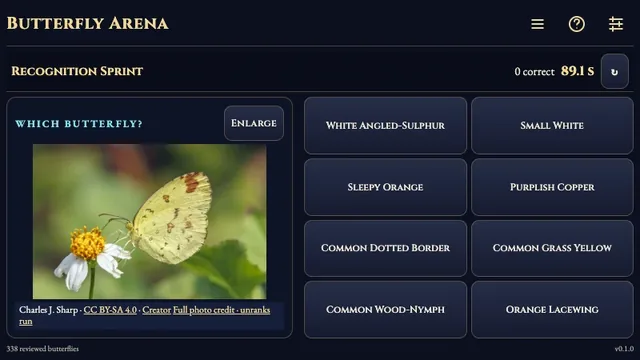
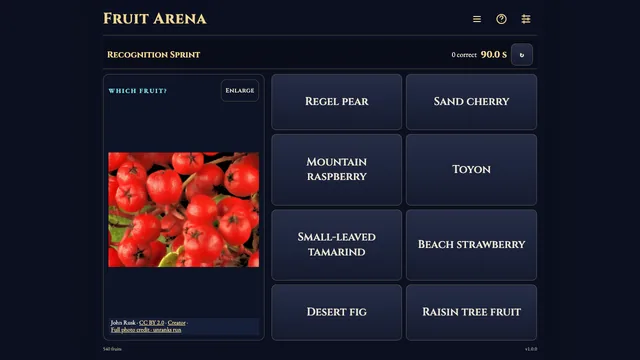
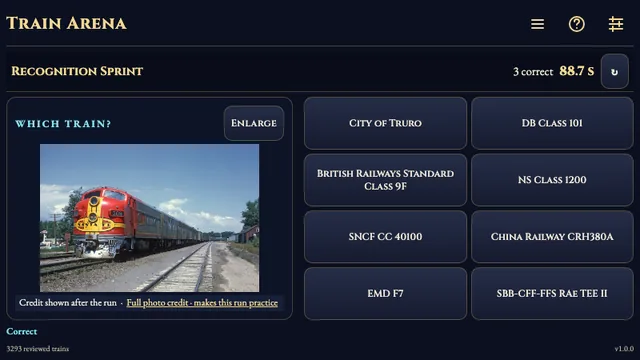
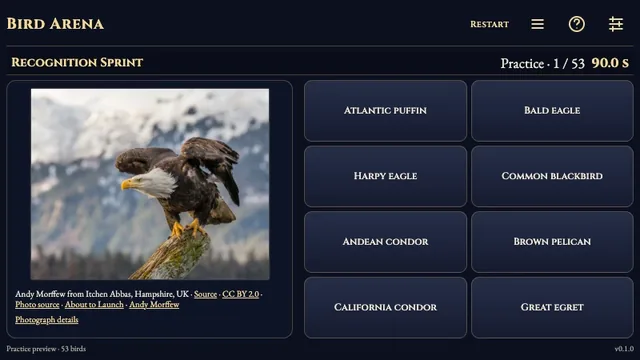
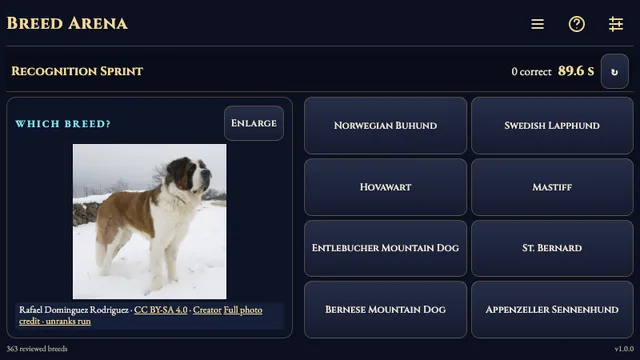
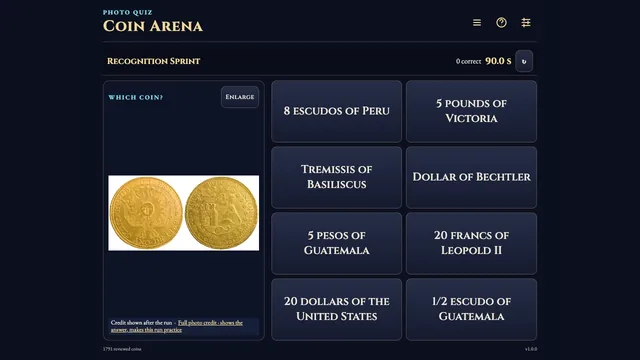
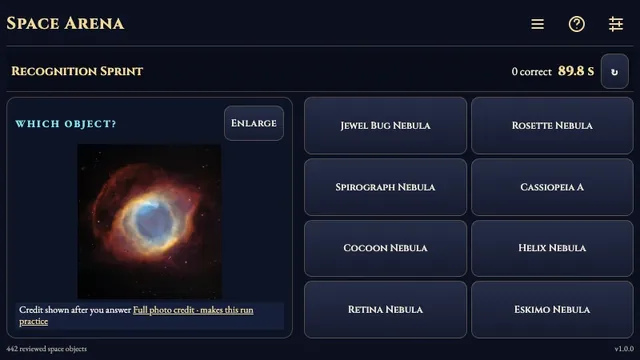
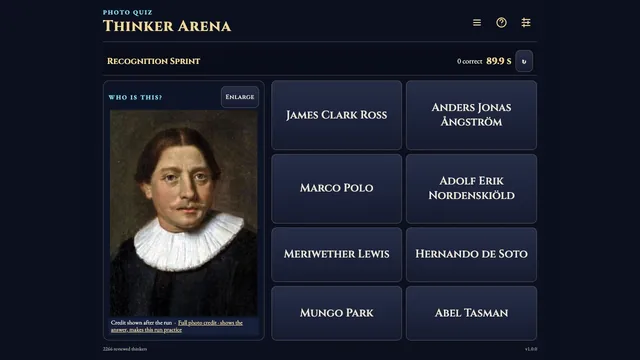
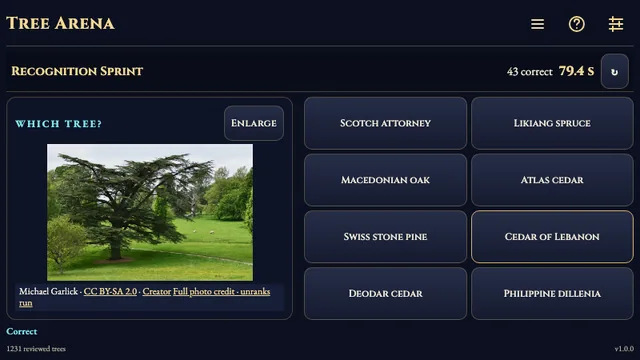
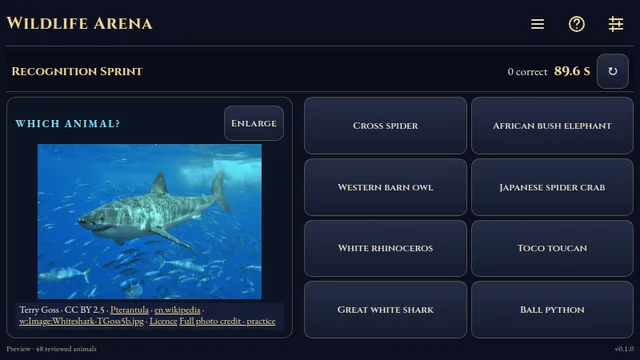
- Recognition Sprint: choose the pictured animal from eight English names, mostly relatives from the same genus or family. You have 90 seconds and one wrong answer ends the run. Most correct answers wins; the time of the last one breaks ties.
- Latin Names: name ten photographs from eight scientific names, mostly of related species. Most correct answers wins, then time.
- Name Search: identify ten photographs. Type part of a common, scientific or former name and pick from the list; close spellings are offered. A lesser-known species of the same genus also counts. Correct answers rank first, then faster time.
- Ocean: each of ten named animals comes with six of the world's 17 oceans and seas. Exactly one is a water where SeaLifeBase records it as native; it is recorded in none of the other five. Most correct answers wins, then time.
- Family: choose the family of ten animals named in English from eight, each family shown with two of its best-known species. Most correct answers wins, then time.
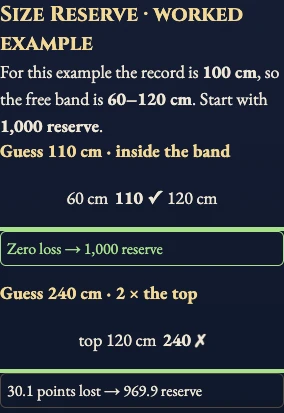
- Size Reserve: guess the largest recorded size of ten animals in centimetres; the question names the measure. You start with 1,000. A guess from 0.6 to 1.2 times the record is free; beyond it you lose more the further off you are, the full 100 at ten times too big or too small. Highest reserve wins, then time.
- Year Reserve: guess the year each of ten species was first scientifically described. You start with 1,000; a guess within ten years is free, beyond that each year further off costs a point, up to 100 per species. Highest reserve wins, then time.
- Matching: select a photograph, then its name, or drag one onto its partner. Match all ten pairs. Each wrong pair adds three seconds; fastest adjusted finish wins.
Controls
| Input | Action |
|---|---|
| Tap / click | Choose answers, oceans, families and matching pairs |
| Drag | Drag either side of Matching onto its partner to make a pair |
| Type a species name | Filter the Name Search list; Enter chooses a unique result |
| Size or year guess | Enter a number; a number pad supports controllers |
| Enlarge | Inspect the photograph while the clock keeps running |
| 1–8 | Choose an answer in the pick-one competitions; in Ocean select a water, then the same number or Enter confirms |
| Standard controller | D-pad navigates controls; A selects, Y opens Rules; in the Name Search list, left and right jump between first letters |
Tips
- Count the arms Eight arms make an octopus, ten a squid or cuttlefish; most sea stars have five, sun stars many more.
- Size is the record Size Reserve asks for the largest size ever recorded, not a typical one, and names the measure: a crab across its shell, a jellyfish across its bell.
- The year is the first name Many species were first described in another genus. Year Reserve asks for the oldest valid name, often a century before today's.
Good to know
Every photograph retains its creator, chosen licence, original title and source links. Creator credits appear beside the photograph; Full photo credit opens the complete attribution and sources. Leaving the tab during a ranked run makes that attempt practice. Many photographs show animals in aquariums, on beaches or as shells; a photograph is never evidence of where a species lives.
Watch how to play
Questions
Is there a question on which animals sting, are venomous or edible?
No. This is a quiz, and such a question would read as advice. Nothing in the game is advice on identifying, collecting, handling, eating or keeping sea life.
Why do some species appear only under a Latin name?
Most sea invertebrates have no English name. They are named by their scientific name, and Recognition Sprint, Family and Matching use only species with an English name.
Where do the facts come from?
Names, authors, families and years of description from WoRMS, the World Register of Marine Species; native waters and maximum sizes from SeaLifeBase, in waters drawn from the FAO major fishing areas. English names from iNaturalist and Wikidata.