About Dinosaur & Fossil Arena
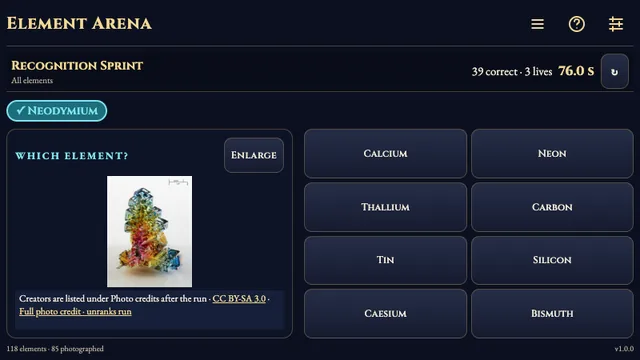
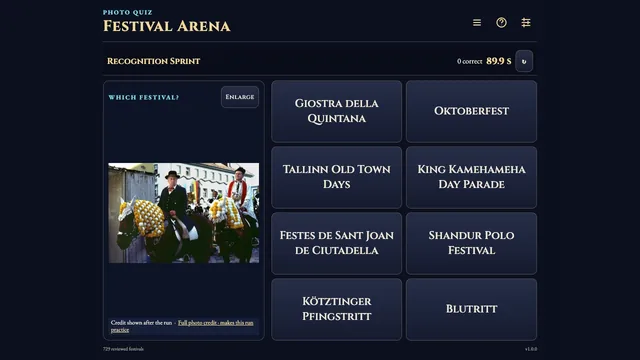
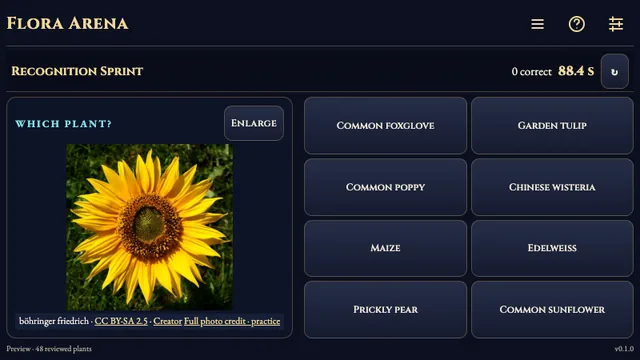
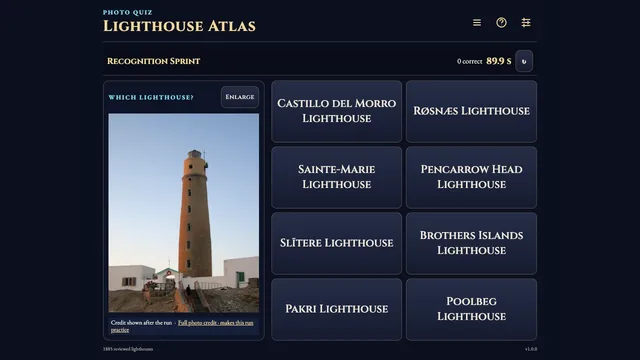
Nine competitions on photographs of real fossils from 2,677 prehistoric genera, from dinosaurs and pterosaurs to early mammals, fish, trilobites, ammonites and fossil plants. Every picture shows a skeleton, skull, bone, shell, imprint or cast, never a reconstruction.
Play the 230 famous fossils, everything at once or one of sixteen groups. Ages, families and finds come from the Paleobiology Database (CC BY 4.0); dinosaur lengths and diets from the Natural History Museum's Dino Directory; photographs from Wikimedia Commons, each credited.
How to play
- Goal
- Recognize prehistoric life from photographs of real fossils and skeletons and learn its names, periods, continents, families, ages and, for dinosaurs, lengths and diets.
- How it ends
- Finish ten questions or ten pairs, exhaust the sprint clock, or make one sprint mistake.
- Record
- Best score, highest Age or Length Reserve or fastest Matching finish, with time and the player’s name.
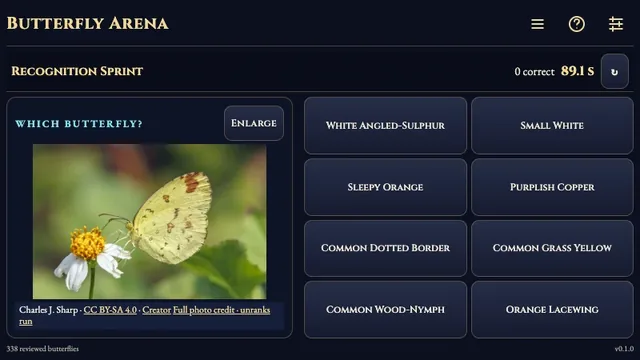
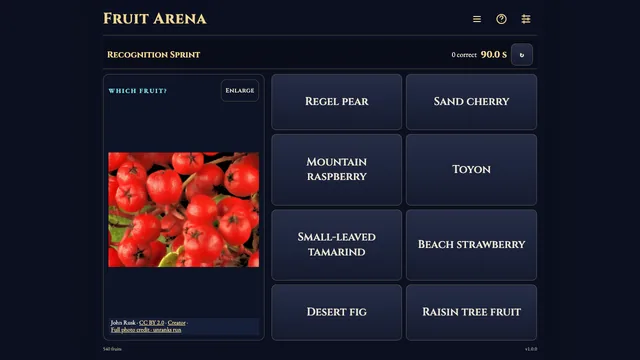
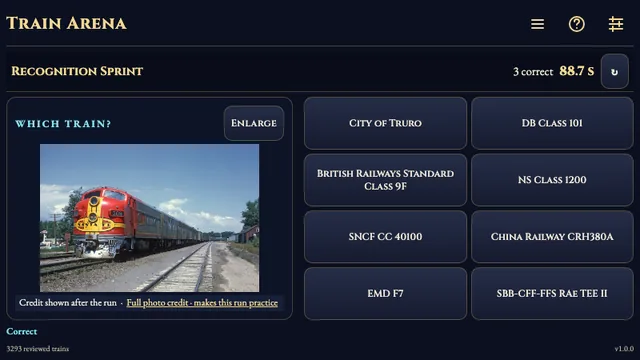
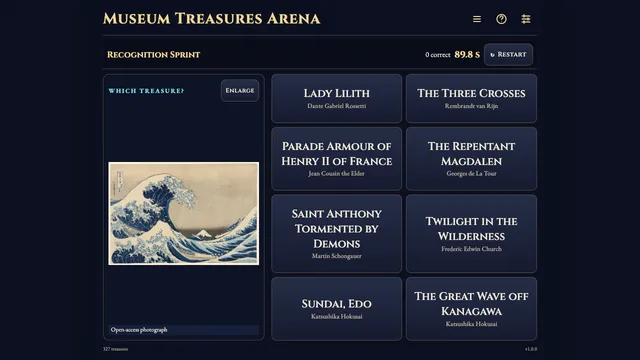
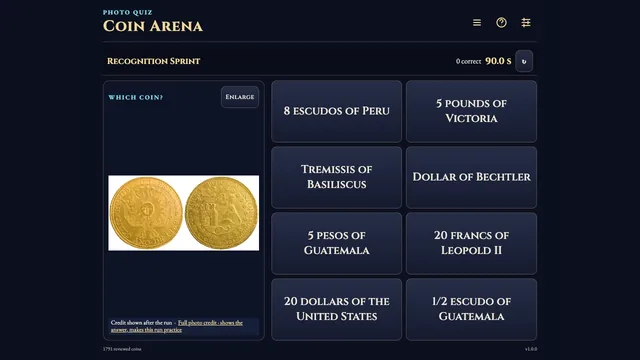
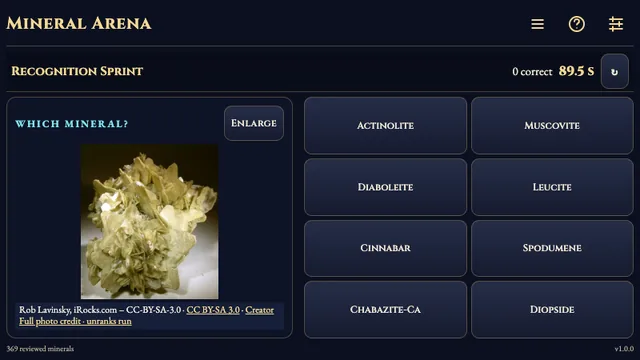
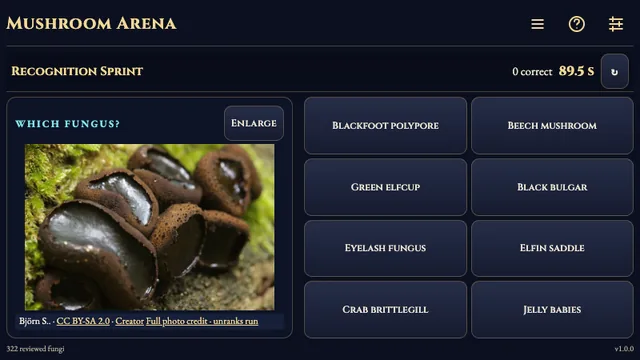
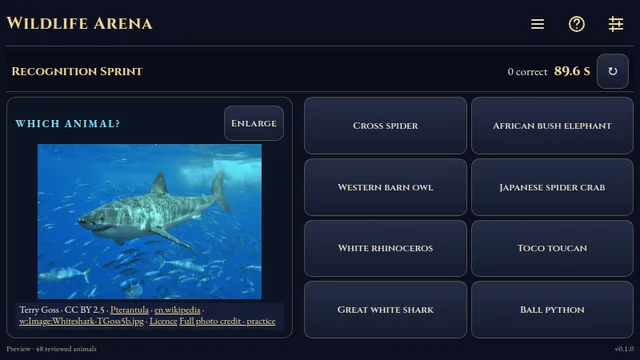
- Recognition Sprint: choose the pictured fossil from eight names, mostly relatives from the same family or order. You have 90 seconds and one wrong answer ends the run. Most correct answers wins; the time of the last one breaks ties.
- Name Search: identify ten photographs. Type part of a name or an alias such as T. rex and pick from the list; close spellings are offered. A lesser-known genus of the same family also counts. Correct answers rank first, then faster time.
- Geological Period: choose a period in which each of ten named fossils lived, from six shown oldest first. The other five lie at least ten million years from its known range. Most correct answers wins, then time.
- Where Found: each of ten named fossils comes with four continents. Exactly one holds real finds of it; the other three hold none. Most correct answers wins, then time.
- Fossil Family: choose the family of ten named fossils from eight, each family shown with two of its best-known members. Most correct answers wins, then time.
- Age Reserve: guess how many million years old each of ten fossils is. You start with 1,000. Any age within its fossil range is free; beyond it you lose more the further off, up to 100 per fossil. Highest reserve wins, then time.
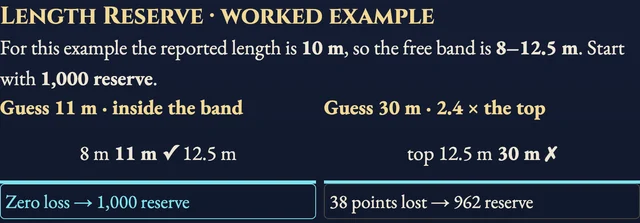
- Length Reserve: estimate the adult length of ten dinosaurs in metres. A guess from 80% to 125% of the reported length is free; beyond that it scores like Age Reserve. Highest reserve wins, then time.
- Plant or Meat Eater: say whether each of ten dinosaurs ate plants, meat or both. Most correct answers wins, then time.
- Matching: select a photograph, then its name, or drag one onto its partner. Match all ten pairs. Each wrong pair adds three seconds; fastest adjusted finish wins.
Controls
| Input | Action |
|---|---|
| Tap / click | Choose answers, periods, continents, families, diets and matching pairs |
| Drag | Drag either side of Matching onto its partner to make a pair |
| Type a fossil name | Filter the Name Search list; Enter chooses a unique result |
| Age or length estimate | Enter a whole number of million years or metres; a number pad supports controllers |
| Enlarge | Inspect the photograph while the clock keeps running |
| 1–8 | Choose an answer in the pick-one competitions |
| Standard controller | D-pad navigates controls; A selects, Y opens Rules; in the Name Search list, left and right jump between first letters |
Tips
- Read the skull Teeth, eye sockets and horns separate meat eaters, plant eaters and their families faster than the size of a mounted skeleton.
- Some fossils date the rock Trilobites lived only in the Palaeozoic, before 252 million years ago; ammonites died out with the non-bird dinosaurs 66 million years ago.
- Dinosaurs were mostly mid-sized Length Reserve's free band is generous; a typical dinosaur is a few metres long, and only sauropods pass 20.
Good to know
Every photograph retains its creator, chosen licence, original title and source links. Creator credits appear beside the photograph; Full photo credit opens the complete attribution and sources. Opening full credits during a question, leaving the tab, restoring an unfinished run or a mid-run photo-loading interruption makes that attempt practice. A museum mount may combine bones of several individuals or casts.
Watch how to play
Questions
Why are some famous fossils missing a photograph of the whole animal?
Only photographs of real fossil material or casts are used: a skull, a bone or a slab is often all that is on display. Artists' reconstructions and models are never shown.
Why do fewer fossils appear in some competitions?
Where Found asks only genera with at least three placed finds; Geological Period and Age Reserve skip genera whose recorded range spans more than 100 million years; Length Reserve and Plant or Meat Eater ask only dinosaurs in the Natural History Museum's Dino Directory.
Where do the facts come from?
Names, families, ages and finds come from the Paleobiology Database (CC BY 4.0); dinosaur lengths and diets from the Natural History Museum's Dino Directory; photographs from Wikimedia Commons.