About Mammal Arena
Seven competitions on reviewed photographs of 2,205 mammal species from every order of mammals. Name a mammal from its photograph, choose its Latin name, search for it by any of its names, pick a region where it lives, tell its family, estimate its adult body mass, or match photographs to names.
Thirteen collections run from mice, squirrels and rabbits through bats, shrews, monkeys, apes and lemurs, carnivores, whales and seals and hoofed mammals to marsupials and monotremes. Play the familiar mammals, one collection or a balanced mix. Families and where each mammal lives come from GBIF; adult body masses are reported values from the COMBINE mammal trait database.
How to play
- Goal
- Recognize the world’s mammals from their photographs and learn their names, Latin names, where they live, families and body masses.
- How it ends
- Finish ten questions or ten pairs, exhaust the sprint clock, or make one sprint mistake.
- Record
- Best score, highest Mass Reserve or fastest Matching finish, with time and the player’s name.
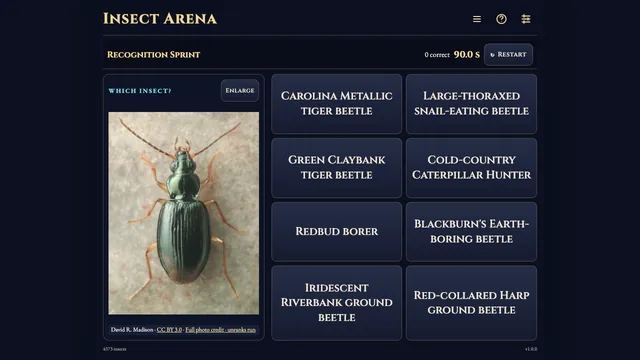
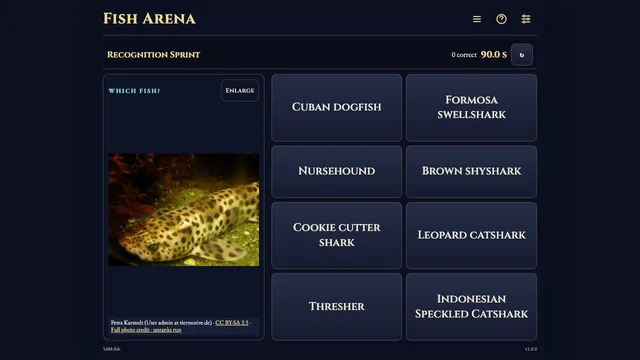
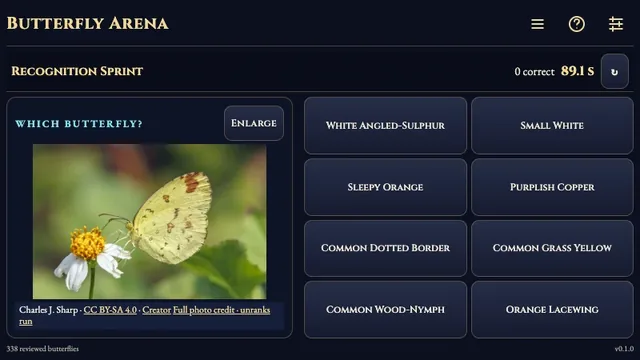
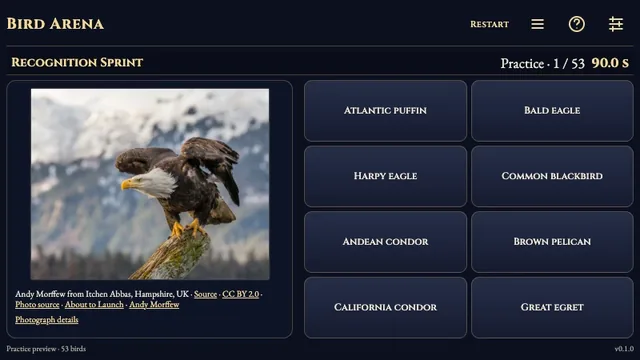
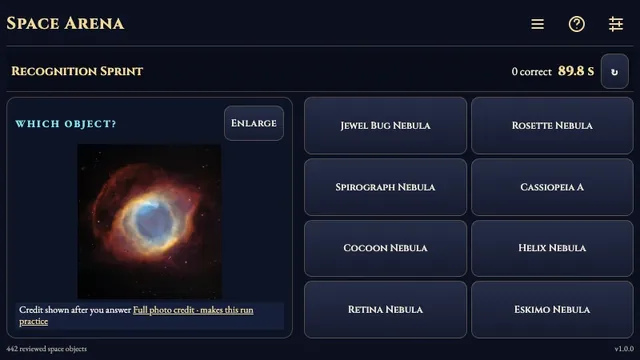
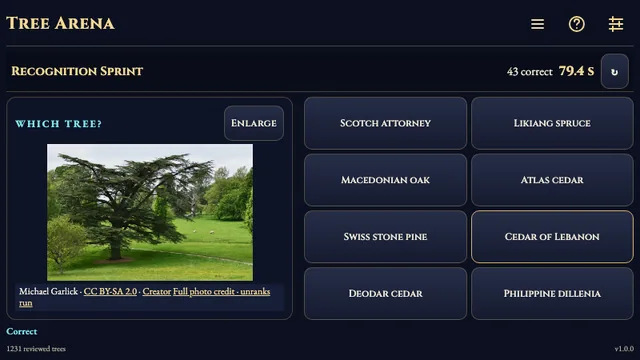
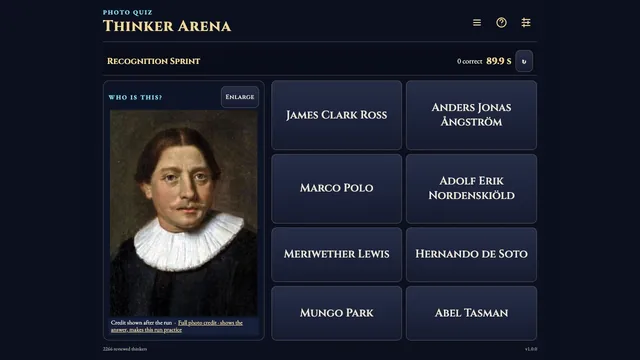
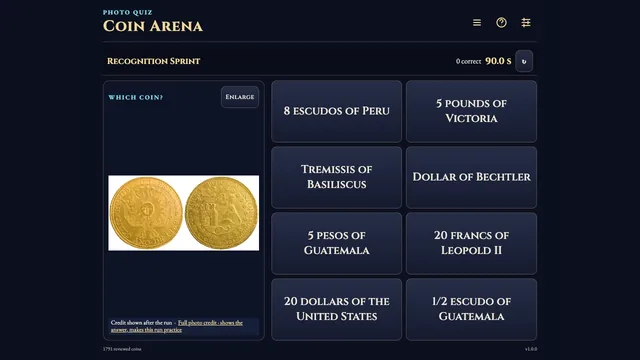
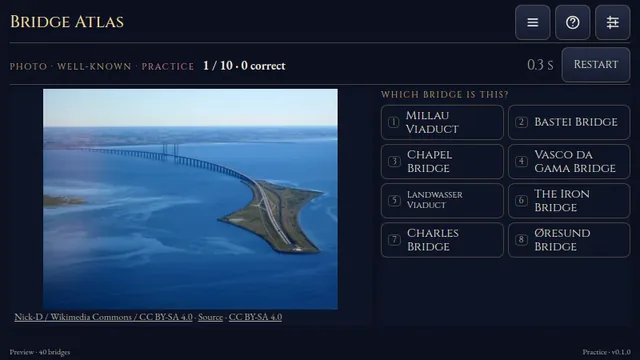
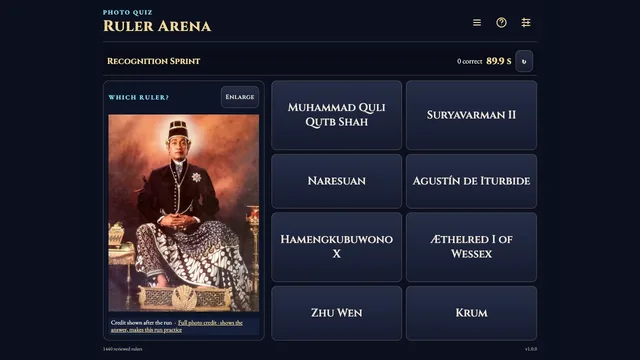
- Recognition Sprint: choose the pictured mammal from eight names, mostly related mammals. You have 90 seconds and one wrong answer ends the run. Most correct answers wins; the time of the last one breaks ties.
- Latin Names: choose the scientific (Latin) name of the pictured mammal from eight, mostly of related mammals. Ten photographs; a wrong answer scores nothing. Most correct answers wins, then the faster total time.
- Name Search: identify ten photographs. Type part of a common or scientific name, a former name or an alias and choose the mammal from the list. A lesser-known mammal of the same genus also counts. Correct answers rank first, then faster time.
- Where It Lives: each named mammal comes with six of thirteen regions of the world. Exactly one is a region where it lives in the wild; the other five have no record of it. Complete ten questions.
- Mammal Family: choose the family of the named mammal from eight, each shown with two of its best-known mammals. Ten questions; most correct answers wins, then time.
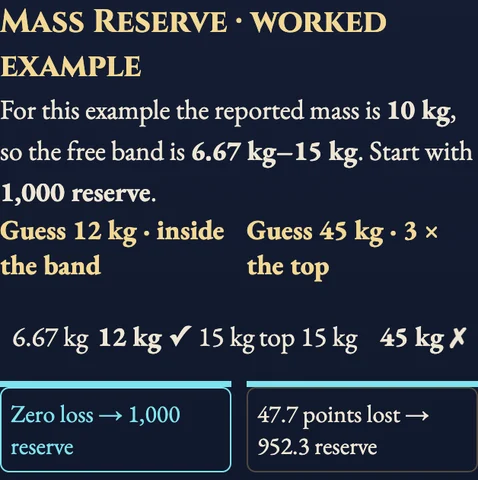
- Mass Reserve: estimate the adult body mass, from a gram to two hundred tonnes. You start with 1,000. A guess within one and a half times of the reported mass costs nothing; outside that band you lose more the further off you are, up to 100 per mammal when ten times too heavy or too light. Ten estimates; highest reserve wins, then time.
- Matching: select a photograph, then its mammal name, or drag one onto its partner. Match all ten pairs. Each wrong pair adds three seconds; fastest adjusted finish wins.
Controls
| Input | Action |
|---|---|
| Tap / click | Choose answers, regions, families and matching pairs |
| Drag | Drag either side of Matching onto its partner to make a pair |
| Type a mammal name | Filter the Name Search list; Enter chooses a unique result |
| Mass estimate | Enter an estimate in grams, kilograms or tonnes; a number pad supports controllers |
| Enlarge | Inspect the photograph while the clock keeps running |
| 1–8 | Choose an answer in the pick-one competitions; in Where It Lives select a region, then the same number or Enter confirms |
| Standard controller | D-pad navigates controls; A selects, Y opens Rules; in the Name Search list, left and right jump between first letters |
Tips
- Look at the teeth and feet Hooves, claws, flippers and wing membranes sort most mammals into their order before the name matters.
- Read the genus Latin Names offers relatives, so the first word is often shared; the second word decides.
- Think in tenfolds Mass Reserve forgives half again either way; getting the right power of ten matters far more than the last digit.
Good to know
Every photograph retains its creator, chosen licence, original title and source links. Creator credits appear beside the photograph; Full photo credit opens the complete attribution and sources. Opening full credits during a question, leaving the tab, restoring an unfinished run or a mid-run photo-loading interruption makes that attempt practice. This is a quiz: nothing in it is advice on handling wild or domestic animals.
Watch how to play
Questions
Why are not all 6,700 mammals here?
A mammal joins only with a photograph that two independent reviews both accepted as clear and correctly named. Many small rodents, shrews and bats have no such photograph yet.
Why do fewer mammals appear in some competitions?
A mammal joins Where It Lives only with at least 100 GBIF records and a clear set of regions, and Mass Reserve only when COMBINE reports a measured adult mass. Mammals recorded nearly everywhere are not asked.
Where do the facts come from?
Names come from iNaturalist and English Wikipedia, families and where each mammal lives from GBIF occurrence records, and adult body masses from COMBINE (Soria et al. 2021).