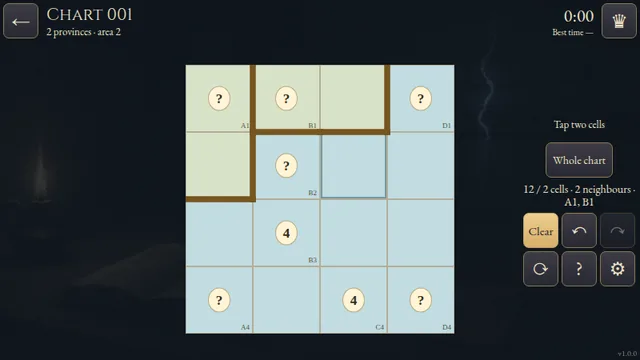
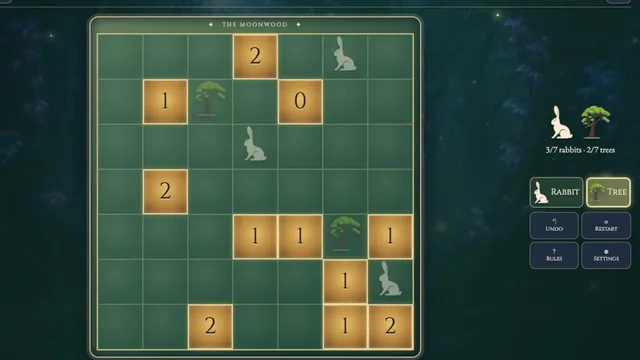
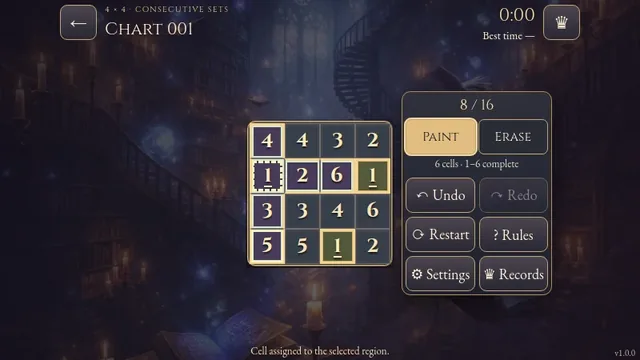
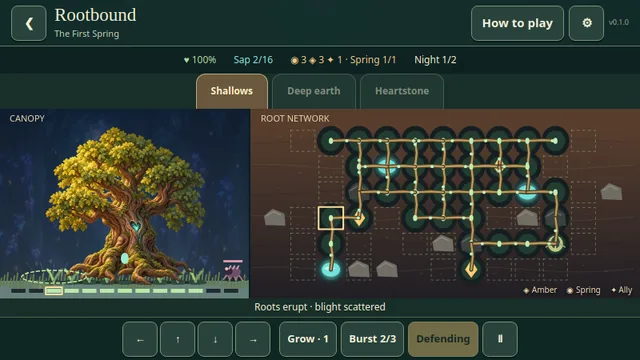
About Tasukuea
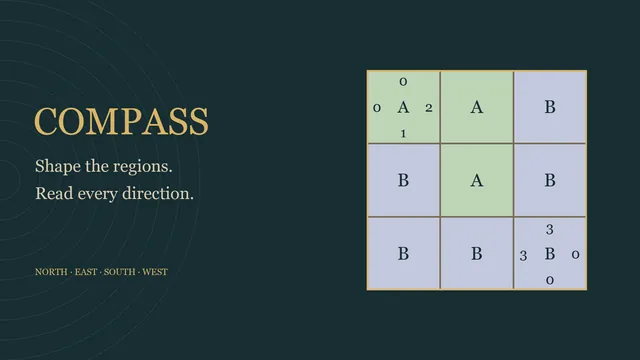
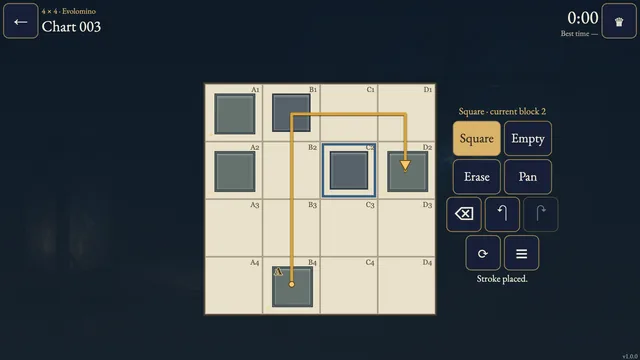
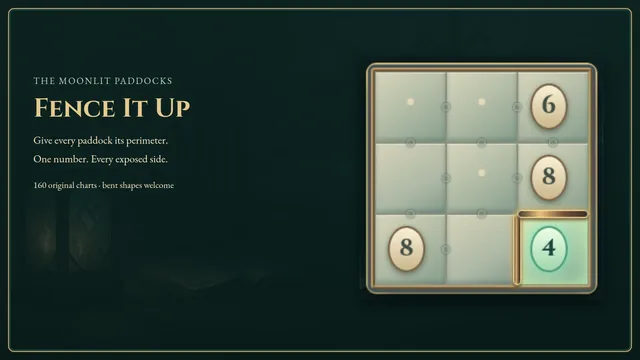
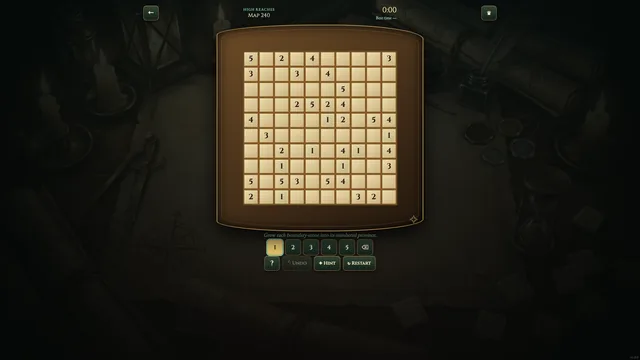
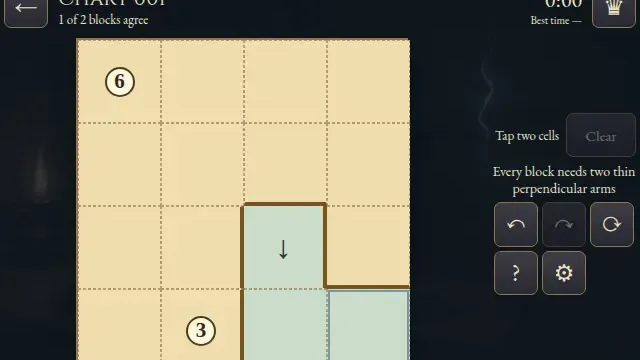
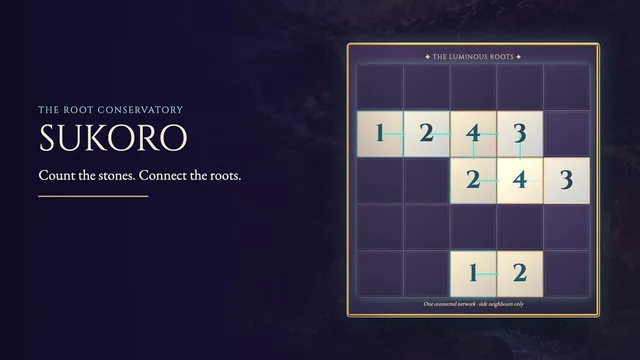
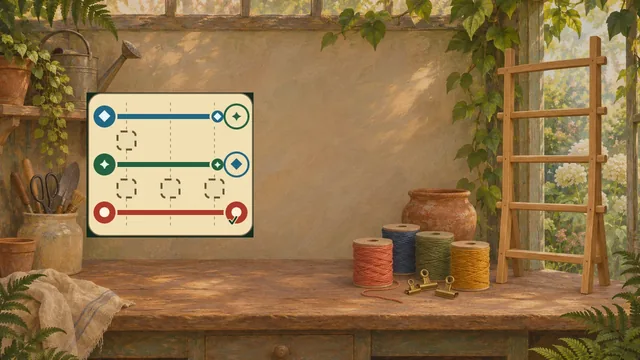
Mark square garden beds beside area clues while leaving connected pale walks. Combine whole square areas, satisfy question marks and find one unique garden plan in each of 160 original compact charts.
How to play
- Goal
- Shade separate squares whose total areas match neighbouring clues, and keep the pale floor connected.
- How it ends
- The chart is complete when every shaded patch is a square, every clue is satisfied and all pale cells connect; Undo and Clear repair placements.
- Record
- Your first unassisted solve of each chart is kept in this browser; verified solves under twenty-four hours compete for fastest-time records. Replays are practice.
- Every edge-connected shaded patch must be a filled grid-aligned square. Separate squares may touch at corners, never along an edge.
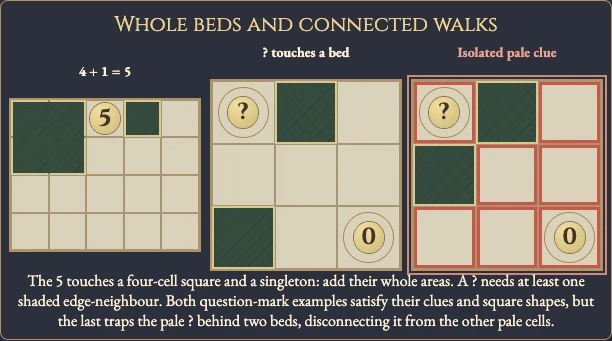
- A numbered pale cell adds the whole areas of the distinct shaded squares touching its edges. A 2×2 square contributes four, even when only one of its cells touches the clue.
- A question mark needs at least one shaded edge-neighbour. Zero has none. All numbered and question-mark cells remain pale.
- Keep every non-shaded cell connected by edges. Squares without a neighbouring clue are allowed. Unknown cells count as pale at completion; pale dots are optional notes.
- Choose Shade, Pale or Clear, then tap or paint a stroke. Undo withdraws one committed stroke. A cancelled stroke leaves your earlier marks intact.
Controls
| Input | Action |
|---|---|
| Mouse / touch | Choose Shade, Pale or Clear, then tap or paint cells |
| Arrows + Enter / Space | Move the cursor and paint using the selected ink |
| 1 / 2 / 3 | Select Shade / Pale / Clear |
| Delete | Clear the cell under the cursor |
| Z / Y | Undo / Redo |
| Escape | Cancel a held stroke, close a dialog or return to the atlas |
| Gamepad | D-pad moves; A paints; X clears; Y undoes; shoulders choose ink; B returns; Start settings; Back rules |
Tips
- Count whole beds A 2×2 bed contributes four to every edge-adjacent clue. Two touching edges still count that square only once.
- Preserve walks A locally valid square can trap a pale clue. Leave a continuous edge-connected floor.
- Use pale notes Mark a proved walk with a pale dot. These notes help deduction without changing the ranked shaded answer.
Good to know
All 160 charts are open. Progress and the original clock survive reload; resumed solves complete locally. Every chart has mixed square sizes and a connected-floor deduction. Replays preserve your first time.
Watch how to play
Questions
Can two squares touch?
They may touch at a corner. Edge-touching shaded cells form one component, which must itself be a filled square.
Must a square touch a clue?
No. A square without any clue neighbour is legal.
What does a question mark mean?
It must touch at least one shaded cell along an edge; it does not specify the total area.
Can I shade a clue?
No. Numbered and question-mark cells are fixed pale cells.
Can replay improve my first time?
No. The first completed time is retained; replay is practice.