About Sukoro
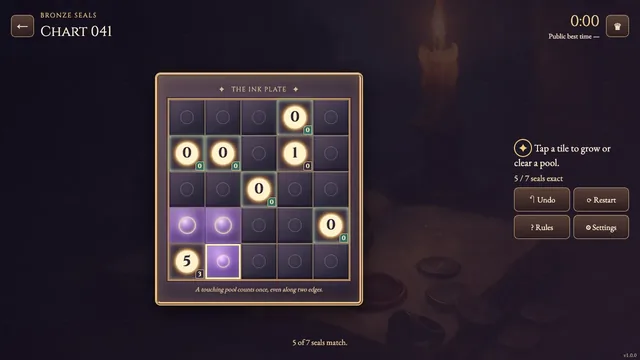
A moonlit conservatory holds 160 charts of numbered rune stones. Each digit counts the numbered stones touching its sides, while roots join every stone into one network.
Open small seedling charts before the seven-by-seven ancient groves. Each puzzle has one solution.
Your first solve time stays in this browser. An uninterrupted first finish can claim the named best shown beside the clock and on the atlas card.
How to play
- Goal
- Place numbers 1 through 4 in some squares; each number equals its count of orthogonally adjacent numbered squares, equal numbers do not share an edge, and all numbered squares connect by edges.
- How it ends
- A chart blooms when the placed numbers and every given obey those rules as one connected network; there is no loss.
- Record
- Your first solve time is kept for each chart, and the fastest verified first solve appears with its holder.
- Place numbers 1 through 4 in some squares. Each number equals the count of numbered squares directly above, below, left and right of it. Diagonals do not count; a blank square counts as none. Equal numbers cannot touch by a side, and every numbered square must connect to the others through side-touching numbered squares.
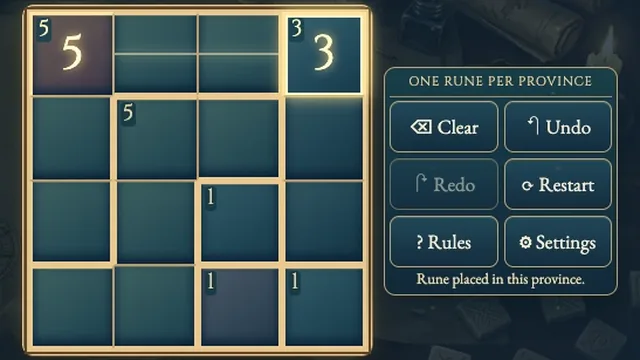
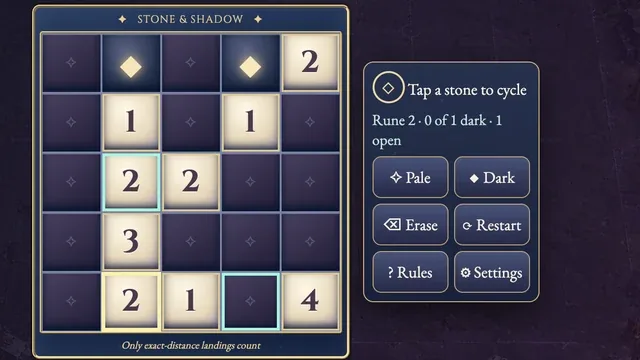
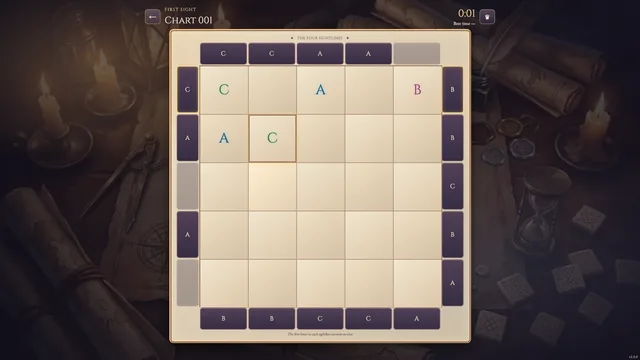
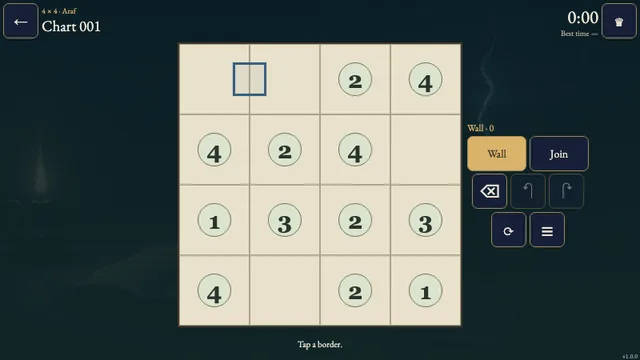
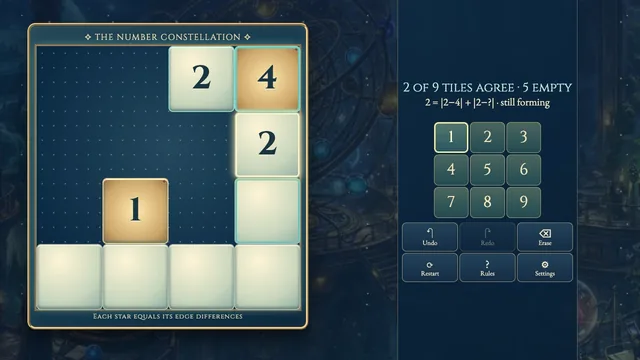
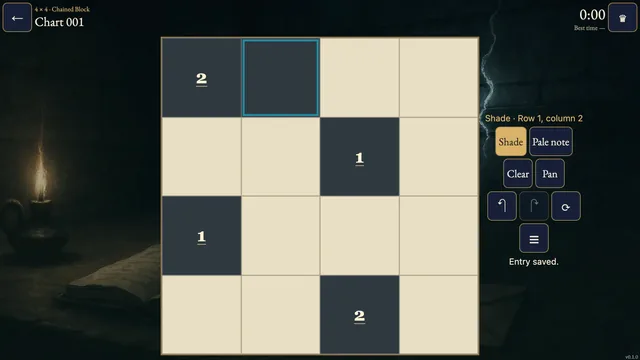
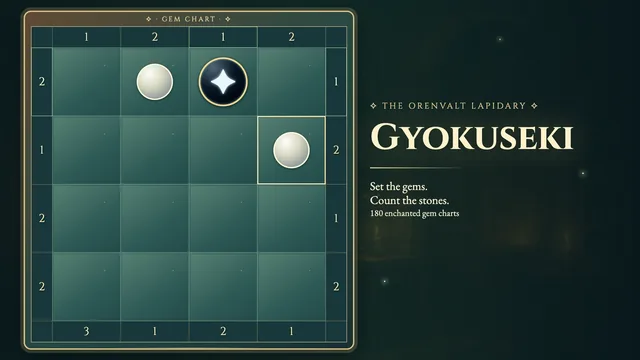
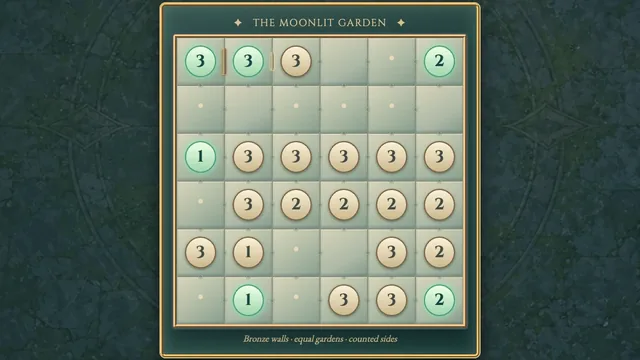
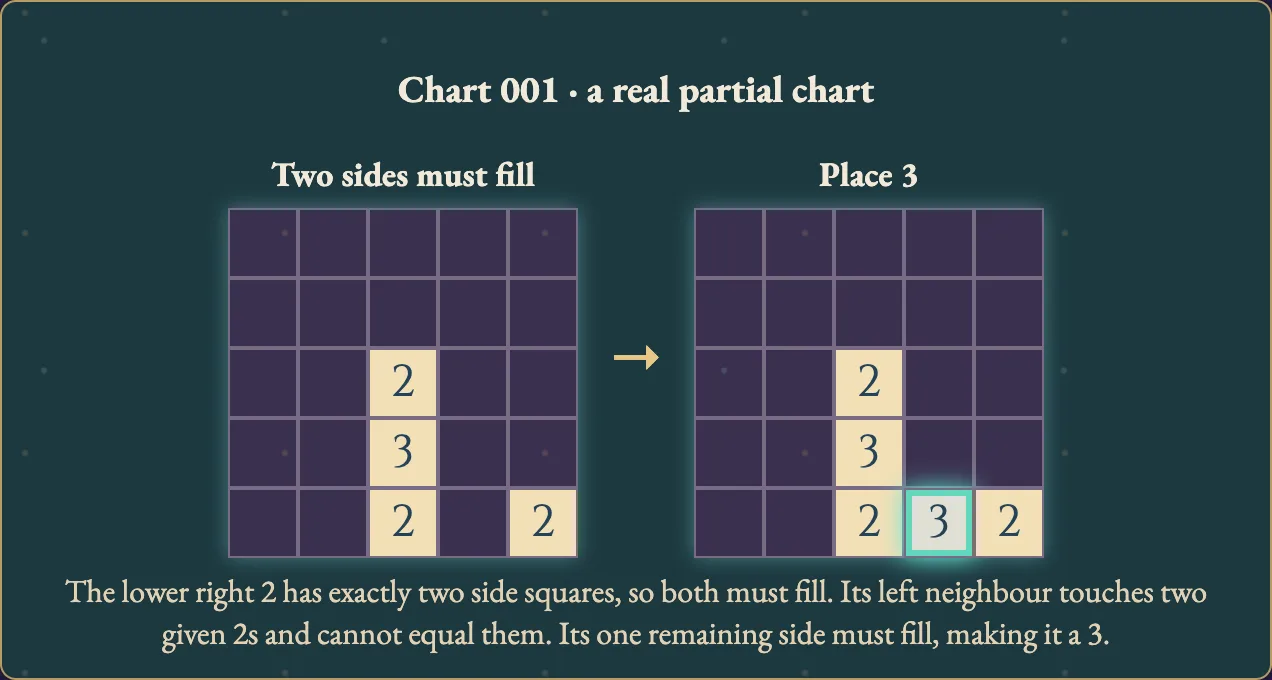
- The worked picture is the real first step of Chart 001. The lower right given 2 has only two side squares, so both must hold stones. The square to its left touches two given 2s and cannot equal them; its one remaining side must fill, so it takes 3. Most of the chart remains for you to deduce.
- Tap a square to cycle blank, 1, 2, 3, 4, blank; or select it and tap a number on the rail. Given stones stay fixed. Undo restores one entry, and Restart clears entries while the first clock continues. A chart blooms when all side counts, unequal neighbours and the one connected network agree. Empty squares need no X. There is no loss; a replay is untimed practice.
Controls
| Input | Action |
|---|---|
| Tap / click a square | Cycle blank → 1 → 2 → 3 → 4 → blank |
| Number rail / Erase | Set or clear the selected square directly |
| Arrow keys | Move focus across the grid |
| 1–4 | Enter that number in the focused square |
| 0 / Backspace / Delete | Clear the focused square |
| Undo / Z | Restore the previous entry |
| Restart / R | Clear entries without resetting the first-solve clock |
| Escape | Close a panel or return to the atlas |
Good to know
Both the unequal-neighbour and connected-network rules matter for every chart. Progress saves in this browser; only the sound preference is shared with other games.