About Sukima
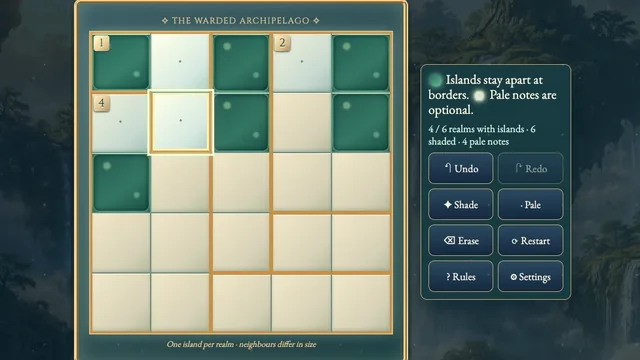
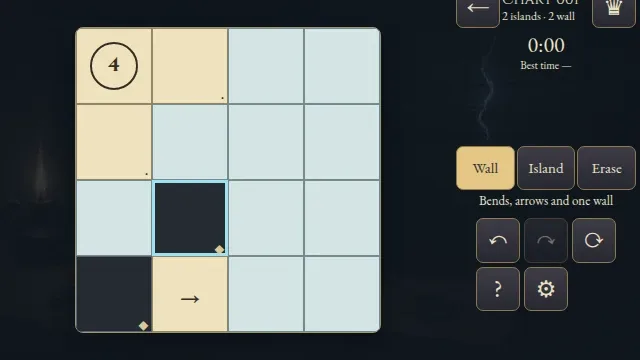
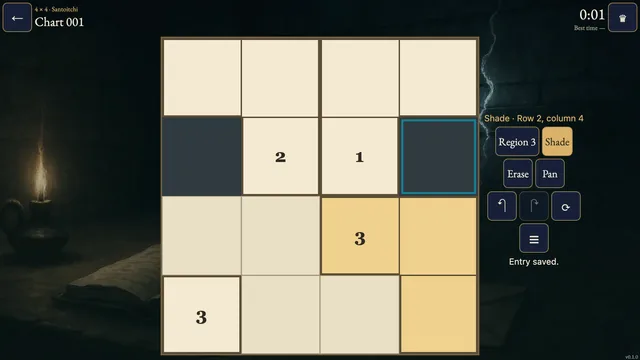
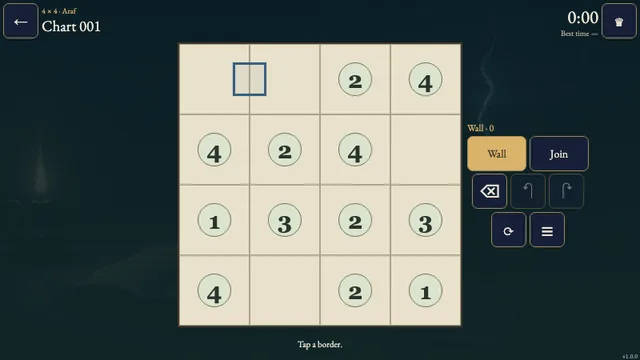
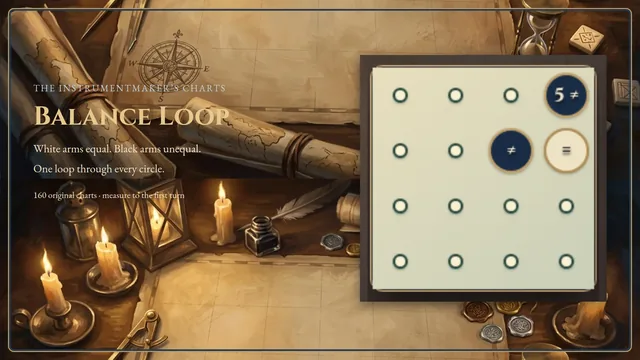
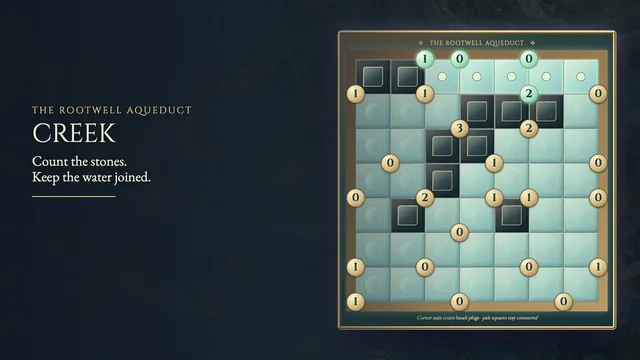
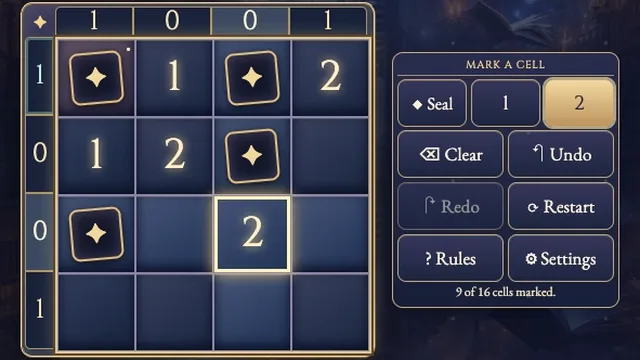
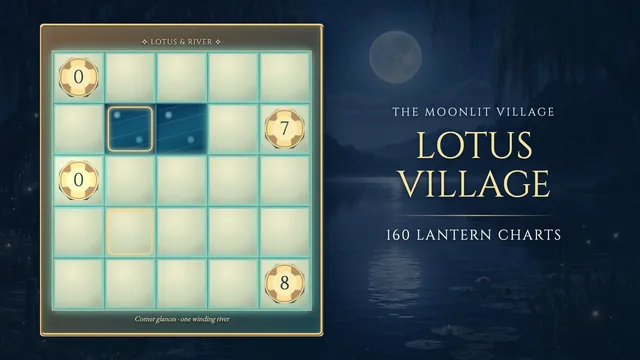
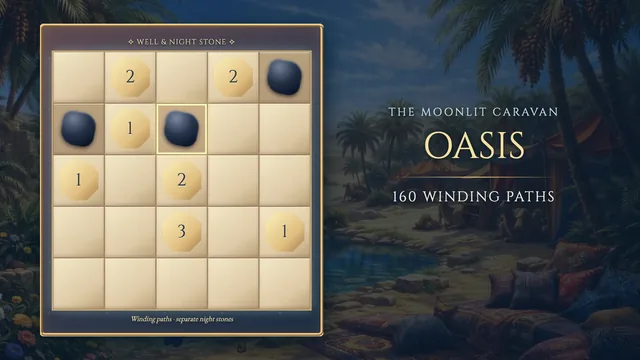
Arrange straight or bent three-cell pieces around the printed circles on a quiet rune table. Each piece has one circle, and every two-by-two area retains a gap—even where different pieces meet.
All 160 original charts are open: twelve introductory four-by-four charts, 68 five-by-five charts and 80 six-by-six charts across four shelves. Each has one checked partition into pieces.
Your first finish keeps its time for that chart. An uninterrupted verified first solve under twenty-four hours can claim the named fastest time; later plays are practice.
How to play
- Goal
- Enclose every printed circle in its own connected three-cell piece, with a gap in every 2×2 area.
- How it ends
- The chart finishes when every circle has one legal piece; Undo and Erase allow corrections while solving.
- Record
- Your first unassisted finish keeps your time for that chart; later plays are practice.
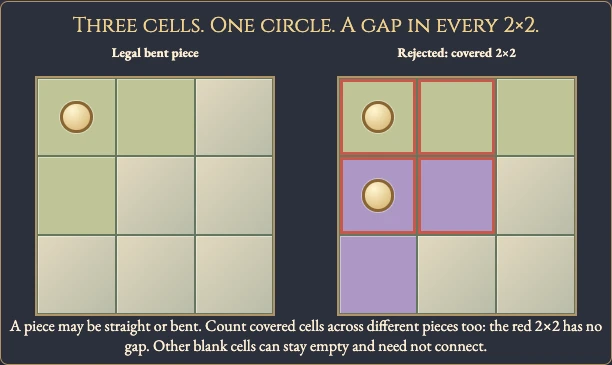
- Make one piece around every printed circle. Each piece contains exactly three distinct cells joined through shared edges, with exactly one circle. Both straight and bent pieces are legal.
- Pieces cannot overlap or cover fixed black cells. Different pieces may touch along edges or corners. Every sliding two-by-two area needs an uncovered cell, counting covered cells across all pieces together.
- Drag through three connected cells and release, or tap three cells and press Place. The gold draft stays separate from committed pieces. Erase removes the whole piece. Crosses are optional gap notes; other blank cells can remain empty and need not connect.
- Undo withdraws a pending draft before earlier placed pieces. Escape, an interrupted drag or an extra finger withdraws the draft. Restart clears your pieces after confirmation and keeps the original first clock running.
Controls
| Input | Action |
|---|---|
| Mouse / touch | Drag three connected cells and release, or tap three cells and press Place |
| Arrows + Enter / Space | Move the cursor and select a draft cell |
| P | Place the selected three-cell piece |
| Delete | Erase the whole piece under the cursor |
| Z / Y | Undo / Redo |
| Escape | Cancel a draft, close a dialog or return to the atlas |
| Gamepad | D-pad moves; A selects; Y places; X erases; shoulders Undo/Redo; B cancels or returns; Start settings; Back rules |
Tips
- Start at a constrained circle Black cells and board edges can leave a circle with only one connected three-cell piece.
- Count both pieces together Before placing a neighbour, check whether their combined cells would fill a two-by-two area.
- Keep pieces distinct Touching pieces stay separate. Erase removes all three cells belonging to the selected circle.
Good to know
All 160 charts are open. Reload preserves the original clock and exact pieces; resumed solves finish locally. Replays preserve your first time.
Watch how to play
Questions
Must every cell belong to a piece?
No. Spare cells remain uncovered, and those gaps do not need to connect.
Must every piece be straight?
No. Straight and bent three-cell pieces are both legal.
Can pieces touch?
Yes, along edges or corners. They cannot overlap, and together they cannot cover a complete two-by-two area.
Do black cells count as gaps?
Yes. A fixed black cell stays uncovered and satisfies the gap requirement in any two-by-two area containing it.
What is Best time versus Your time?
Best time is the named online best. Your time is your saved first finish for that chart in this browser.
Can replay improve my first time?
No. Your first completed time is retained; replay is practice.