About One Room One Door
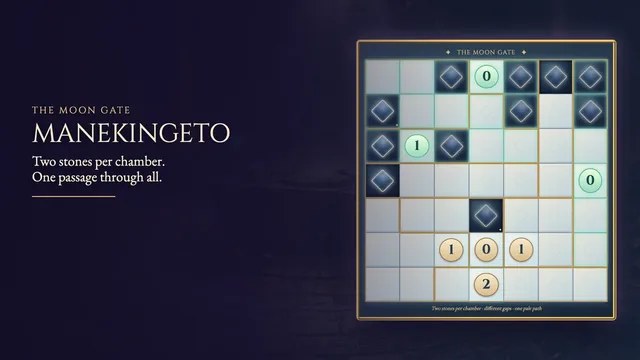
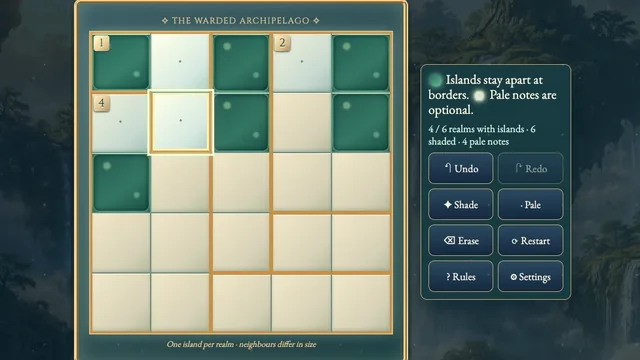
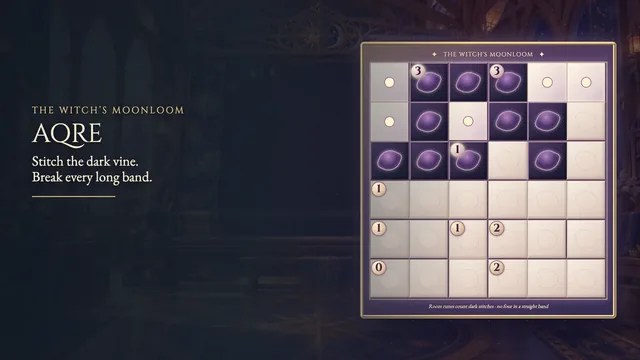
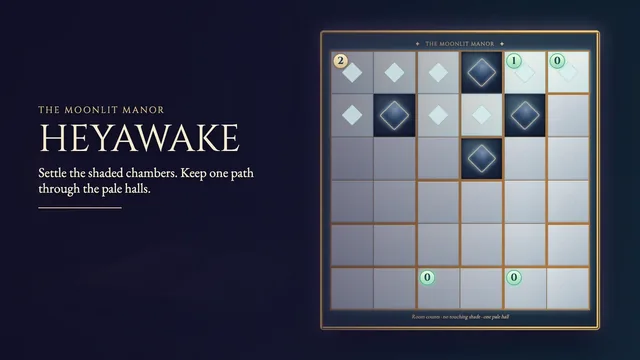
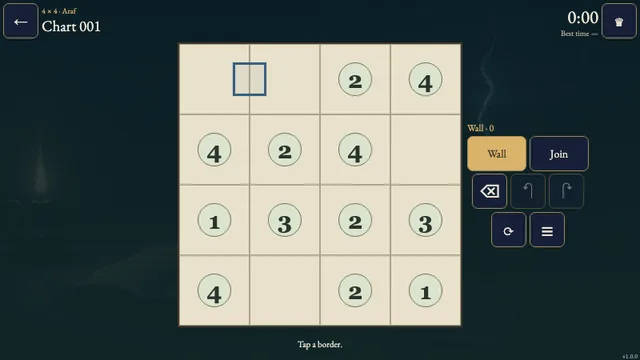
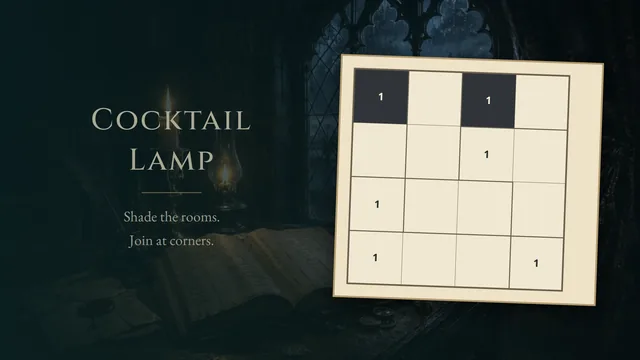
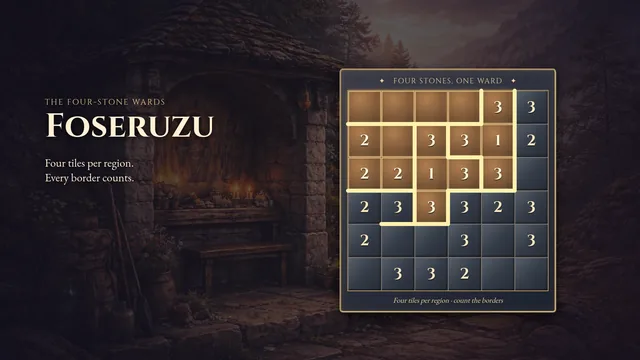
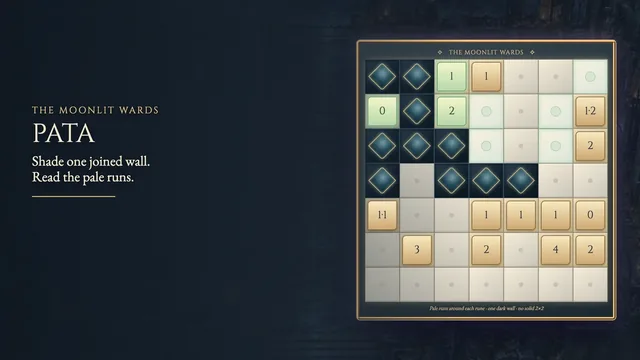
Restore the floor plan of a warded manor. Shade the numbered room quotas while keeping a connected pale route through its rooms.
All 160 original charts are open, from four by four to six by six. Each has one checked shaded pattern.
Your first completed time stays with each chart. An uninterrupted first solve on the game page can claim the named best; replay is untimed practice.
How to play
- Goal
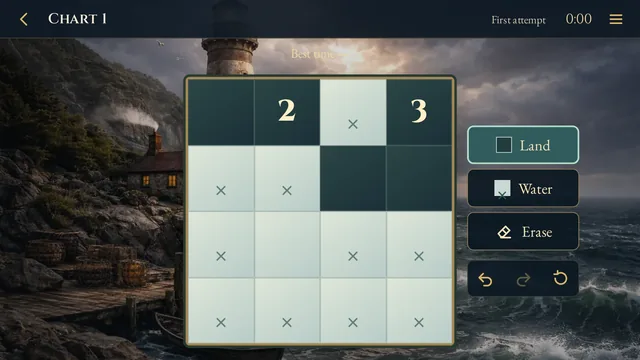
- Shade the room counts, keep shade from touching, and connect the pale floor through at most one doorway between each pair of rooms.
- How it ends
- The chart is won when counts match, shade never shares an edge, pale cells connect both inside each room and across the manor, and no room pair has two doorways; there is no loss, and Undo repairs marks.
- Record
- Your first unassisted solve of each chart earns a fastest-time record; replays are practice.
- Shade as many tiles as each room number requires. The numbered tile may itself be shaded. Shaded tiles never share an edge, even across walls; diagonal touch is allowed.
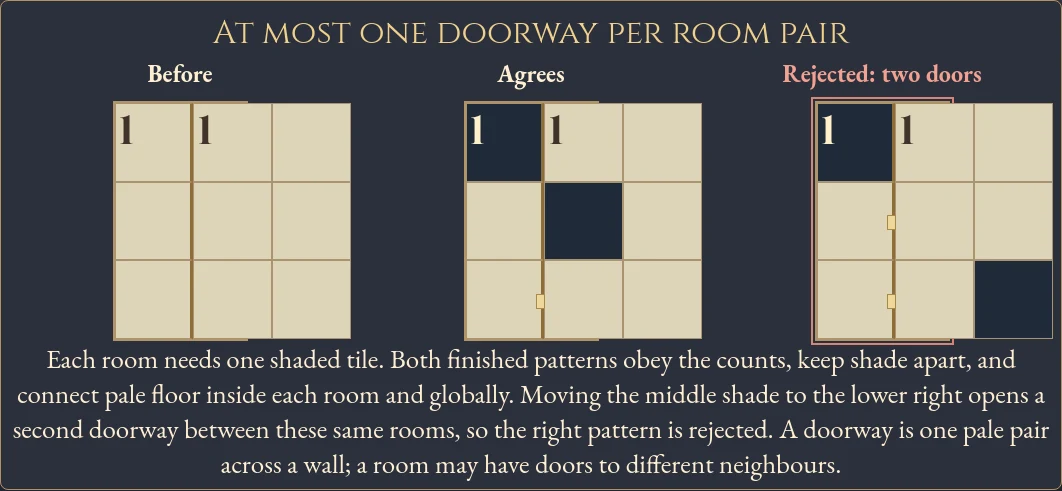
- Pale floor connects within each room without leaving it, and across the whole manor. Each neighbouring pale pair across a wall is one doorway. Between the same two rooms, at most one doorway is allowed, counting all shared wall segments together.
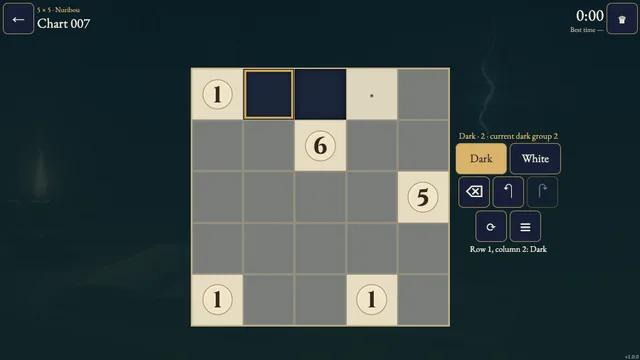
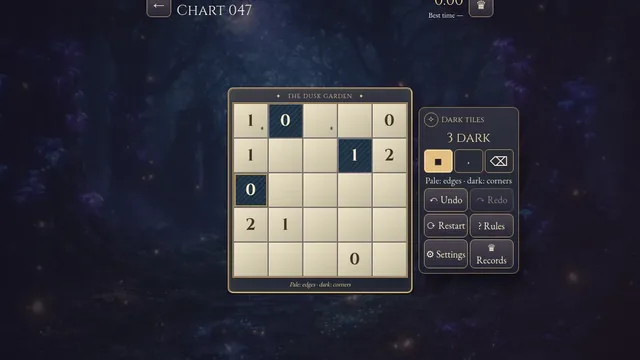
- A room may have doors to different neighbours; some neighbouring room pairs may have none. Choose Shade, Pale or Erase and tap or paint. Dots are optional: blank tiles count as pale at completion. Undo repairs marks; Restart clears them while the original clock keeps running.
Controls
| Input | Action |
|---|---|
| Tap / click / paint | Apply the selected mark to tiles |
| Arrows; Enter / Space | Move the cursor; apply the selected mark |
| 1 / 2; Delete / Backspace | Select Shade / Pale; erase a tile |
| Z / Y; Undo / Redo | Withdraw or restore marks |
| Escape | Close a dialog or return to the atlas |
| Restart | Clear ink after confirmation; retain the first clock |
Tips
- Watch narrow rooms A shade between two pale sections would split the room, even if those sections reconnect outside.
- Count room pairs Each pale pair crossing a shared wall is a separate doorway.
- Numbers are labels A printed number describes its whole room and may lie under shade.
Good to know
All charts are open. Progress saves in this browser; a reloaded attempt finishes locally on its original clock.
Watch how to play
Questions
Does every neighbouring pair need a door?
No. At most one is permitted; zero is allowed when the global pale floor still connects.
May a room have several doors?
Yes, to different rooms. The limit is per pair, not per room.
Do I have to add pale dots?
No. Dots are optional notes and blank tiles count as pale when finishing.
Can replay improve my first time?
No. Your first completed time is retained; replay is untimed practice.