About Mythology Arena
Nine competitions on 7,168 gods, goddesses, heroes, creatures, spirits, places and objects of 29 traditions: Greek, Roman, Norse, Celtic, Slavic, Egyptian, Mesopotamian, Persian, Hindu, Buddhist, Chinese, Japanese, Aztec, Maya, Inca, Yoruba, Polynesian and more. 2,240 of them are shown in real artworks from Wikimedia Commons — statues, reliefs, papyri, temple sculpture, prints, paintings and codices — never in drawings made for the game.
Play the 525 famous figures, everything at once, one mythology or one part of the world. Mythologies, kinds of being and what a god rules over come from Wikidata (CC0) and English Wikipedia and are asked only where both agree; counterparts such as Zeus and Jupiter only where both name the pair.
How to play
- Goal
- Know the figures of the world’s mythologies: how artists showed them, which tradition tells of them, what they rule over and who matches them in other pantheons.
- How it ends
- Finish ten questions, ten pairs or five hidden names, run out the sprint clock, or make one sprint mistake.
- Record
- Best score, fastest Matching finish or fewest wrong letters, with time and the player’s name.
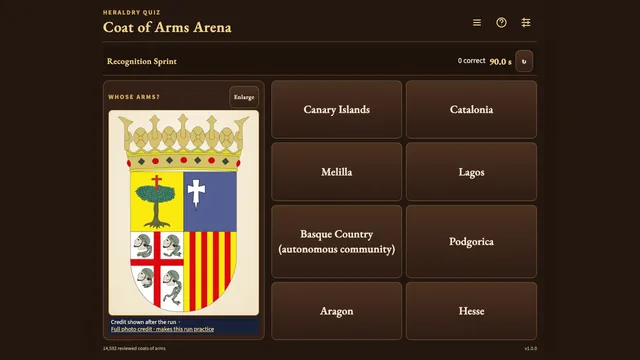
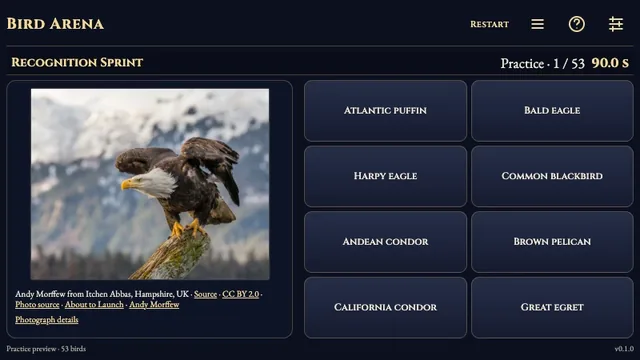
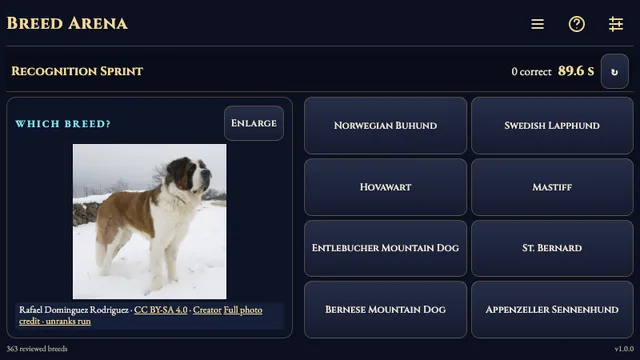
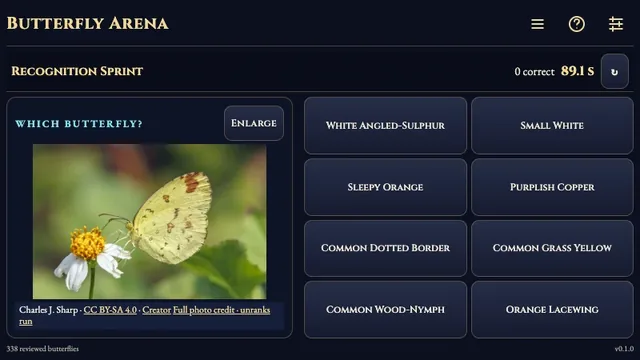
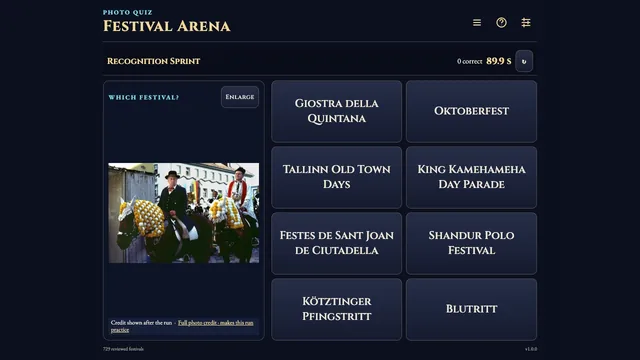
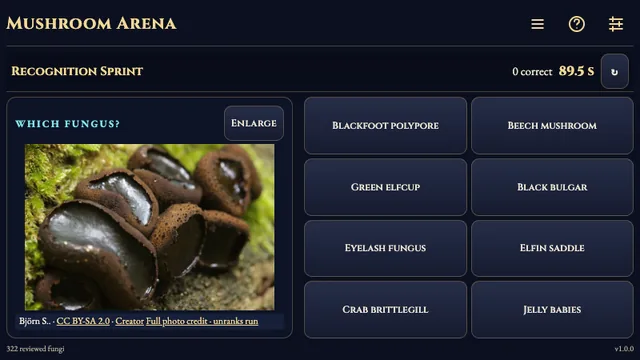
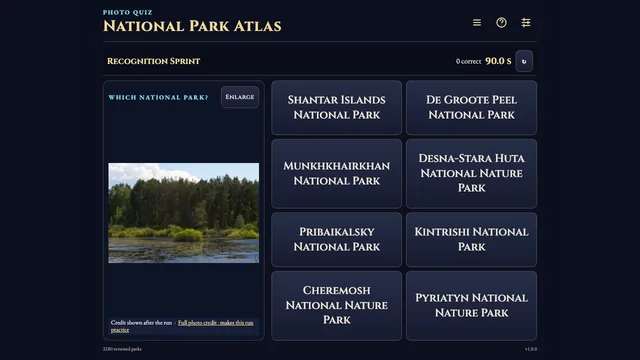
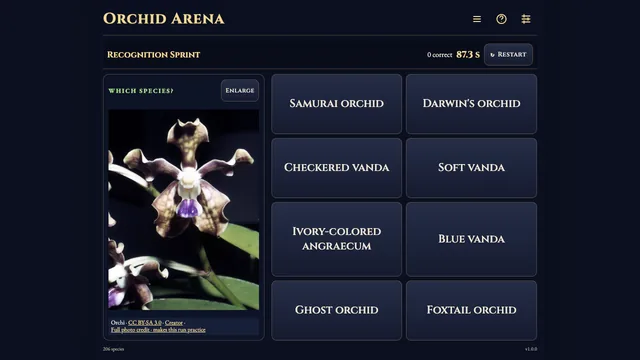
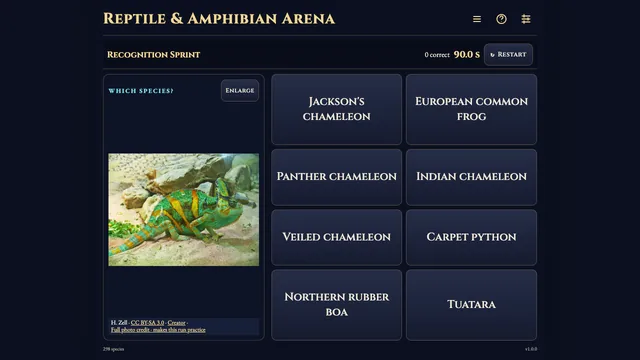
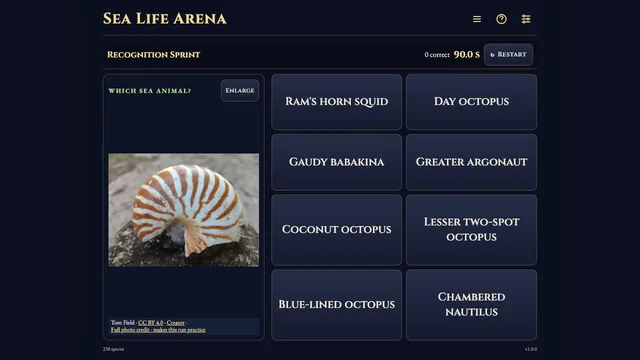
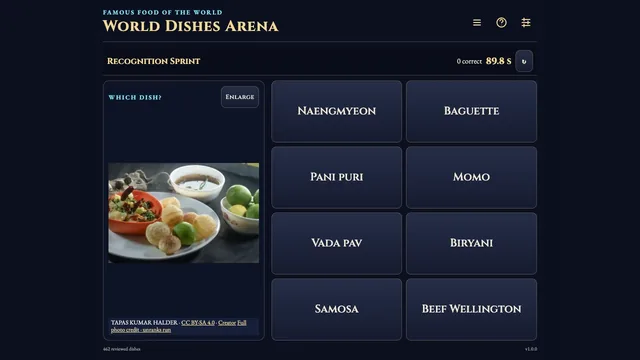
- Recognition Sprint: choose the figure in the artwork from eight names, from the same mythology where possible. You have 90 seconds and one wrong answer ends the run. Most correct answers wins; the time of the last one breaks ties.
- Figure Round: the same eight-name choice at your own pace, ten artworks, each answer revealed. Most correct answers wins, then time.
- Name Search: identify ten artworks. Type part of a name or another known name and pick from the list; close spellings are offered. A figure the sources call the same being (Zeus and Jupiter) also counts. Correct answers rank first, then faster time.
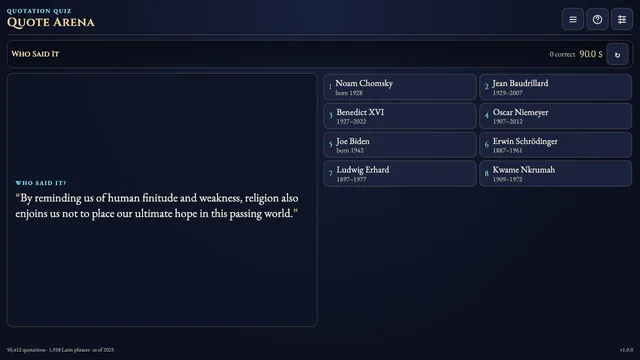
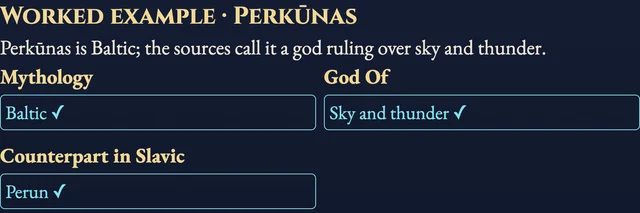
- Mythology: choose the tradition of ten named figures from eight, the nearest in the world first. A figure told of in two traditions accepts either. Most correct answers wins, then time.
- God Of: choose what each of ten gods and goddesses rules over. Any sourced domain counts. Most correct answers wins, then time.
- Being: choose god, goddess, hero or mortal, creature, spirit, place or object for ten names. Any sourced kind counts. Most correct answers wins, then time.
- Counterpart: for ten figures, pick the one of eight names from another mythology that the sources call the same or an equivalent being. Most correct answers wins, then time.
- Matching Table: select an artwork, then its name, or drag one onto its partner. Match all ten pairs. Each wrong pair adds three seconds; fastest adjusted finish wins.
- Name Hangman: five hidden names of up to four words, one at a time, with the artwork as the clue. Guess letters; right letters are free, each wrong letter counts. Fewest wrong letters wins, then time.
Controls
| Input | Action |
|---|---|
| Tap / click | Choose names, mythologies, domains, kinds and matching pairs |
| Drag | Drag either side of Matching Table onto its partner to make a pair |
| Type a name | Filter the Name Search list; Enter chooses a unique result |
| Letters | Guess letters in Name Hangman with the keyboard or the on-screen keys |
| Enlarge | Inspect the artwork while the clock keeps running |
| 1–8 | Choose an answer in the pick-one competitions |
| Standard controller | D-pad navigates controls; A selects, B goes back, Start opens Settings, Y opens Rules; in the Name Search list, left and right jump between first letters |
Tips
- Read the attributes A thunderbolt, trident, caduceus or owl names a Greek god as surely as a label; an elephant head is Ganesha, a jackal head Anubis, an ibis head Thoth.
- Interpretatio Romans matched their gods to Greek ones and Greeks to Egyptian ones: Zeus–Jupiter, Hermes–Mercury–Thoth, Aphrodite–Venus, Odin with Mercury in Roman eyes.
- Names travel Buddhist figures carry Sanskrit, Chinese and Japanese names (Avalokiteśvara, Guanyin, Kannon); Name Search accepts the other known names.
Good to know
Every artwork retains its creator, licence, original title and source links. The creator credit appears beside the artwork; full credits open the complete attribution and sources. Opening full credits during a question, leaving the tab, restoring an unfinished run or a mid-run picture-loading interruption makes that attempt practice.
Questions
Why do only some figures have a picture?
Only real artworks are shown, and each passed two independent reviews that it depicts the named figure and reads at quiz size. Figures without one play in Mythology, God Of, Being and Counterpart.
Why are the Bible's figures and Tolkien missing?
The game covers mythologies and the traditional stories of polytheist faiths; figures of the Abrahamic scriptures and of modern fiction are out of scope.
Why can't I pick some mythologies?
A competition opens in a collection only with at least 30 qualifying figures; smaller traditions play inside their part of the world and in All.
Where do the facts come from?
Names, mythologies, kinds, domains and counterparts from Wikidata (CC0) and English Wikipedia; artworks from Wikimedia Commons, each credited.