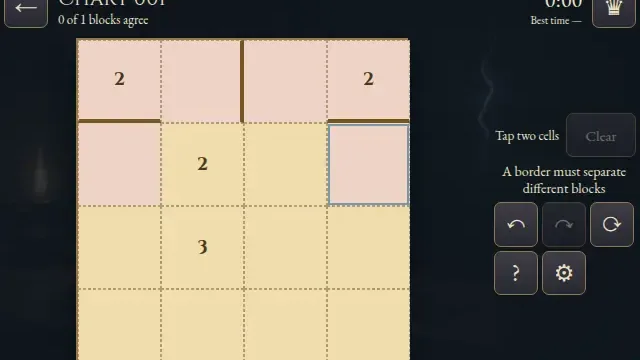
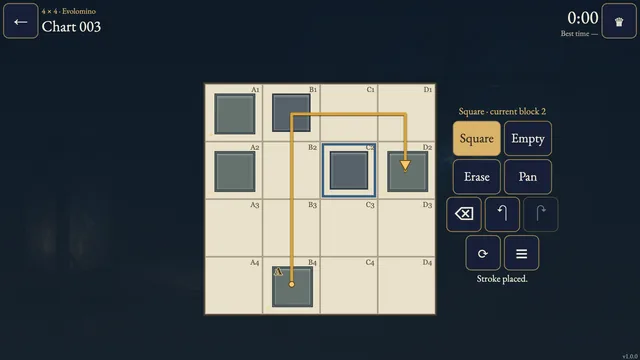
About Square Jam
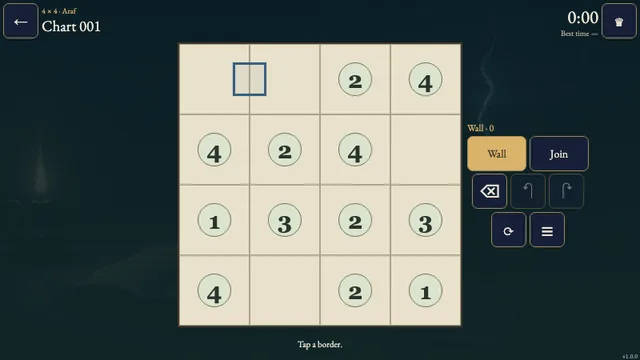
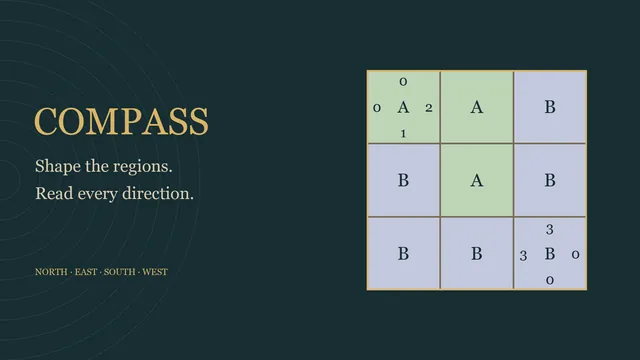
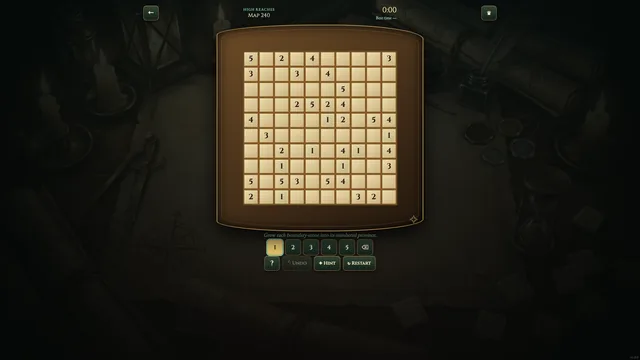
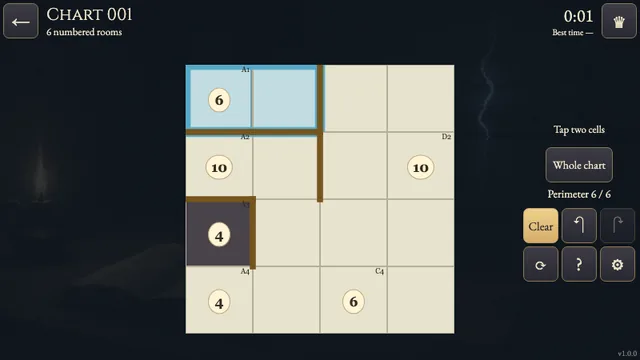
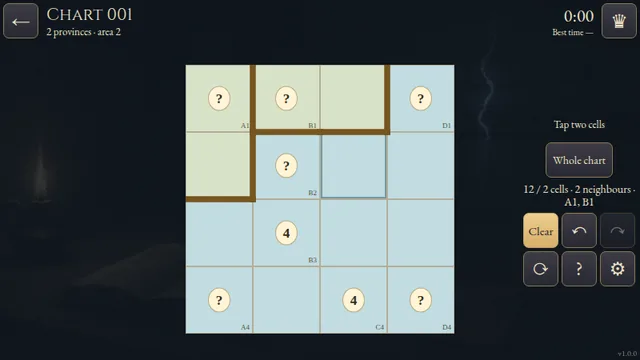
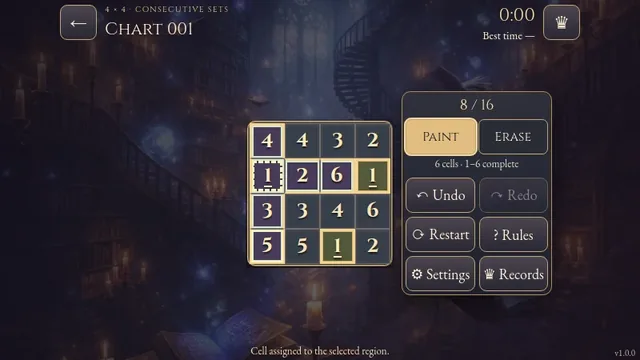
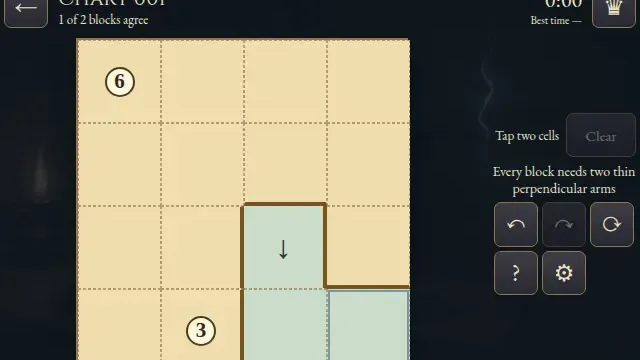
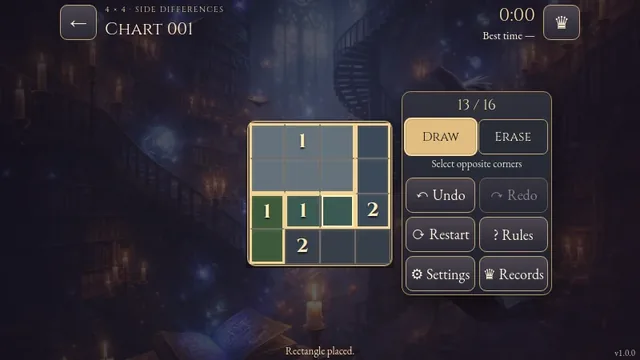
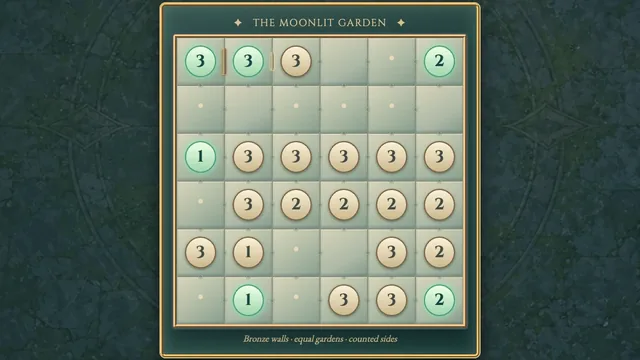
Cover a numbered floor with squares whose side lengths fit every clue. Squares may contain several matching numbers or none, but four different squares must never meet at one point. Explore 72 original charts, from compact 6×4 floors to 7×7 halls, with distinct geometric answers.
How to play
- Goal
- Cover the whole board with non-overlapping squares; every printed number equals its square's side length, and four different squares never meet at one point.
- How it ends
- The chart is won when every cell belongs to a valid square; Erase and Undo repair placements without losing progress.
- Record
- Your first unassisted solve of each chart is kept in this browser; verified solves under twenty-four hours compete for fastest-time records. Replays are practice.
- Cover every cell with a grid-aligned square; a number gives its square’s side length, never its area.
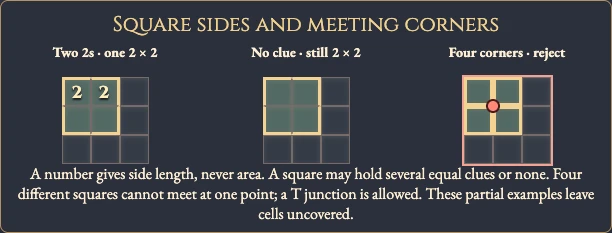
- A square may hold zero, one or several clues. All clues in the same square must equal its side length.
- Four different squares cannot meet at one point. T junctions and equal-size neighbours are allowed.
- Tap opposite corners or drag to draw a square. Tap the same cell twice for a one-cell square. Erase removes a whole square; Undo repairs a placement.
Controls
| Input | Action |
|---|---|
| Mouse / touch | Choose opposite corners or drag between them; tap the same cell twice for a one-cell square |
| Arrows + Enter / Space | Move the cursor and choose or confirm a corner |
| Delete | Erase the whole square under the cursor |
| Z / Y | Undo / Redo |
| Escape | Cancel a draft, close a dialog or return to the atlas |
| Gamepad | D-pad moves; A chooses or confirms; X erases; B cancels or returns; shoulders Undo/Redo; Start tools; Back rules |
Tips
- Count the side A 3×3 square needs clues of 3, not 9. Every clue inside must match.
- Keep blank candidates An unnumbered square is legal and may be necessary to cover the floor.
- Inspect meeting points Three regions may meet at a T junction; four separate squares may not.
Good to know
All 72 charts are open. Progress and the original clock survive reload; a resumed completed time is saved only in this browser. Every chart includes an unnumbered square and repeated matching clues.
Watch how to play
Questions
Must every square contain a number?
No. Squares may contain no clue, one clue or several equal clues.
Can neighbouring squares have equal sizes?
Yes. Their side lengths may be equal; only a four-square meeting point is forbidden.
Can a square contain different numbers?
No. Every printed number inside equals that square’s side length.
Can replay improve my first time?
No. Your first completed time is retained; replay is practice.