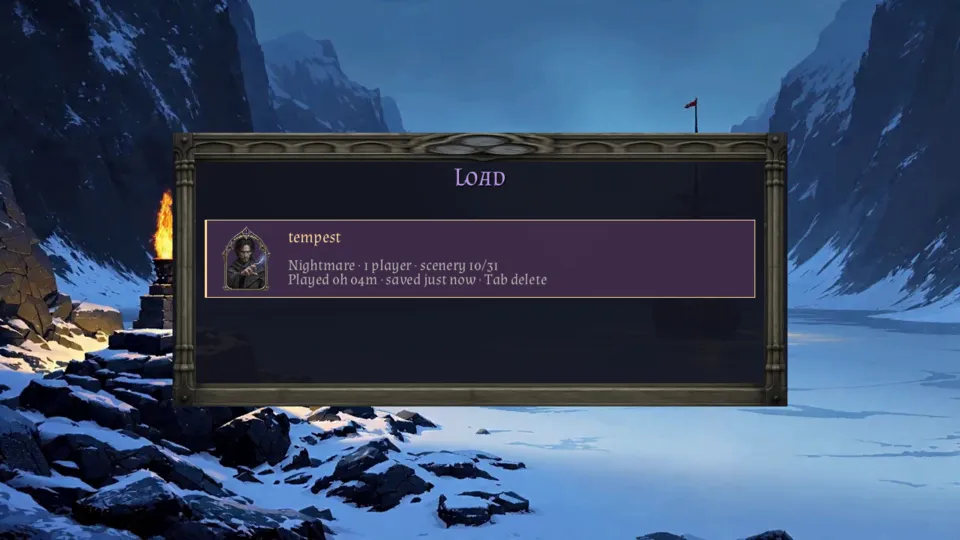
The toll-master of the thyrn-mouth
Scenery 9 of 31 · Thyrnvold, the Thyrn-Mouth narrows. Alone · Nightmare · Tempest.
Fight from range and walk out of every ground tell. In the tests, the dodging style never fell below 95% health; the close-in style dropped to about 53% in six of the ten builds.
What you hold
Alone at scenery 9 you have had three boss drafts (after sceneries 3, 5 and 7), so you hold five spells: your two starting spells plus one per draft. A draft spent on an upgrade ranks a spell up instead of adding one. Every tested draft order held five.
- Tap: Called In. A heavy storm drop: press once to throw it, again to bring it down on its shadow. 1 charge, back every 36 s.
- Hold: Errand line. A light storm beam that arcs from the first body to up to 2 more. You cannot move while it runs.
Each draft deals four cards. Card one is always one of the Tempest's own spells. From the third draft on, one card upgrades a spell you already hold. No card is promised, so follow this rule: At each boss draft take, in this order: a new damage, control or summon spell; if none is offered, an upgrade of a damage, control or summon spell you hold; if neither, any new spell. Between two equal cards, take the Tempest's own. The build we used:
Card one was the pick in 23 of the 30 tested drafts, and Overhead ended up in nine of the ten builds. All ten cleared. The fastest build was The handover, Vesper and Fork, at 153–194 s. The slowest was Fork, Hedge and Overhead, at 242–338 s.
Talents
You have 8 points, and the runs put all of them into the Errand tree. The talent screen accepted every purchase, in this order:
- Reach of the Arc ×2: beam spells reach 3% farther per point.
- The Current Quickens ×2: your channels deal 3% more damage per point.
- Thin Frame ×1: +2% maximum health per point.
- Called Back Sooner ×1: beam spells recharge 3% faster per point.
- Footing ×1: statuses from enemy attacks and ground effects wear off 2% sooner per point.
- Far Side ×1: arc hops that land farther from you than the previous one deal 4% more damage per point.
Talents are your choice. Each point went into the deepest open row, a new talent before a second rank; rows open at 5, 10 and 15 points in that tree, the ultimate at 20.
The fight
What goes wrong
- No run was lost. The close-in style fell to 53–54% in six builds, the build we used among them; the ranged style did so once. The dodging style never went below 95%.
- On Nightmare he ignores every control status: mark, weaken, slow, root and stun. Called In's stun does nothing to him, but its 190 damage still lands.
- Nightmare has no pause. Alone, going down ends the fight as Defeated, and you retry the room with full health.
Tested
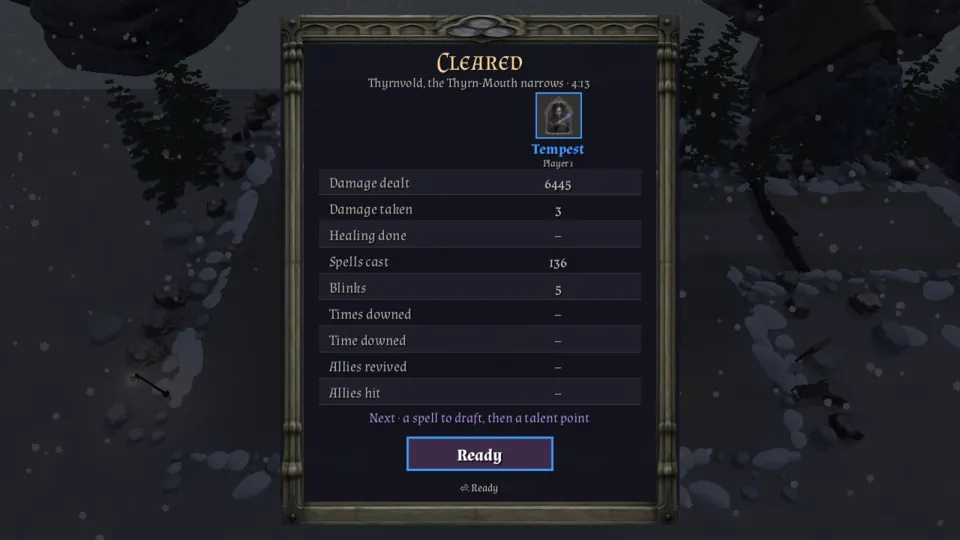
We ran 60 automated fights on the shipped rules, with legal talent purchases: ten draft orders, three play styles and two skill levels. All 60 cleared, and none went down. The fastest took 153 s and the slowest 338 s. The lowest health in any run was 53%. The build we used took 186–249 s. These were automated test runs, not human play.
Screenshots
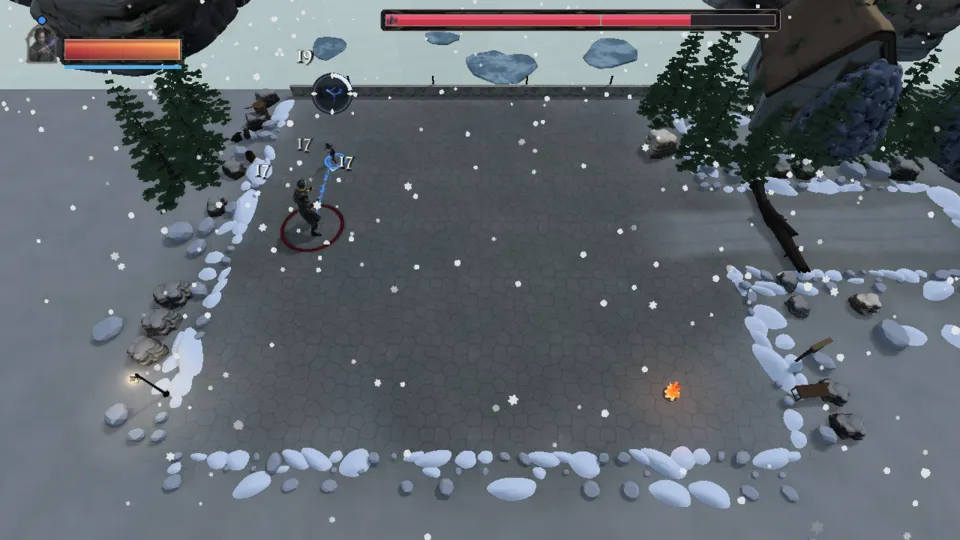
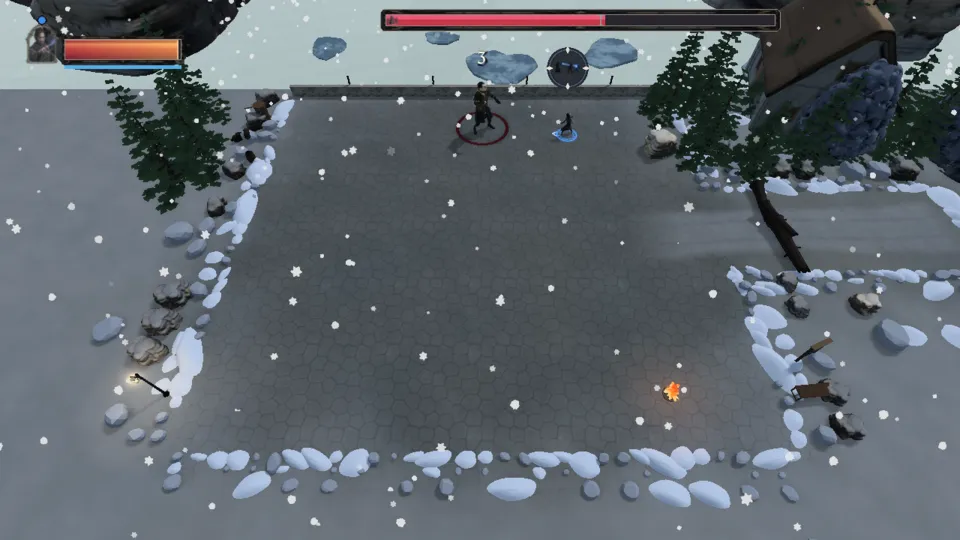
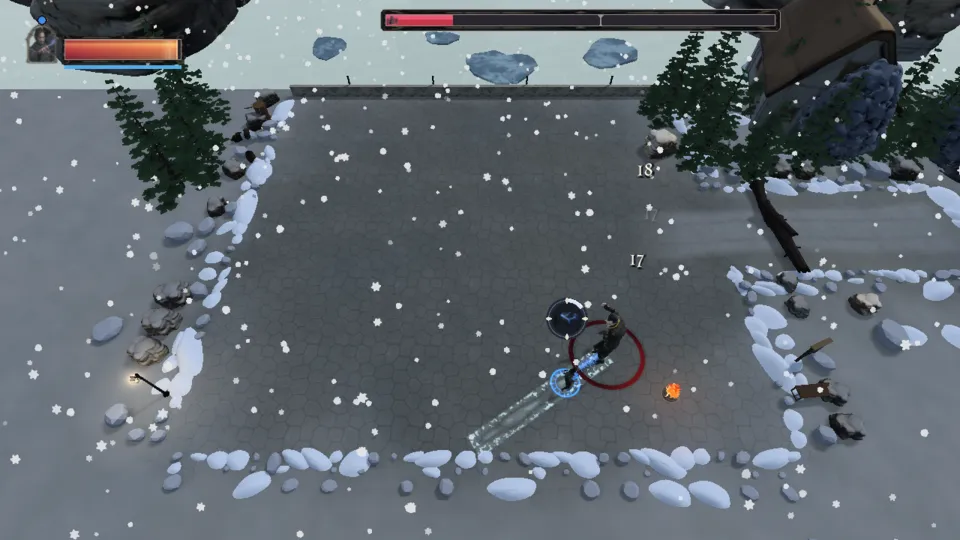
One complete fight in the current build, played by an automated test player with the game's normal controls: the Tempest alone on Nightmare, holding the build used above. The fight took 4 min 13 s of game time.