About the video. Played by an automated player through the game's own film mode; the narration is a synthetic voice, with English captions. Light spoilers. One real village in version 0.27.120 (seed 7). Council hands are dealt at random, so your plans may differ; the event rules and the build arithmetic are the same in every village.
Why year 1
Each spring the council deals an event draft, but only if no event is still waiting. An event you choose in spring of year 1 can be held from Summer of year 1 until the end of Spring of year 2; if it is still waiting when that spring council meets, year 2 gets no new draft, and if it is not held by the end of that spring it lapses. An event you have drafted is never offered again. So the event that pays most is the one you can actually hold before the first winter ends.
Which event a new village can hold
A new village has four families, 2000 pennies and 3 house permits. The event panel after the first council offered these four:
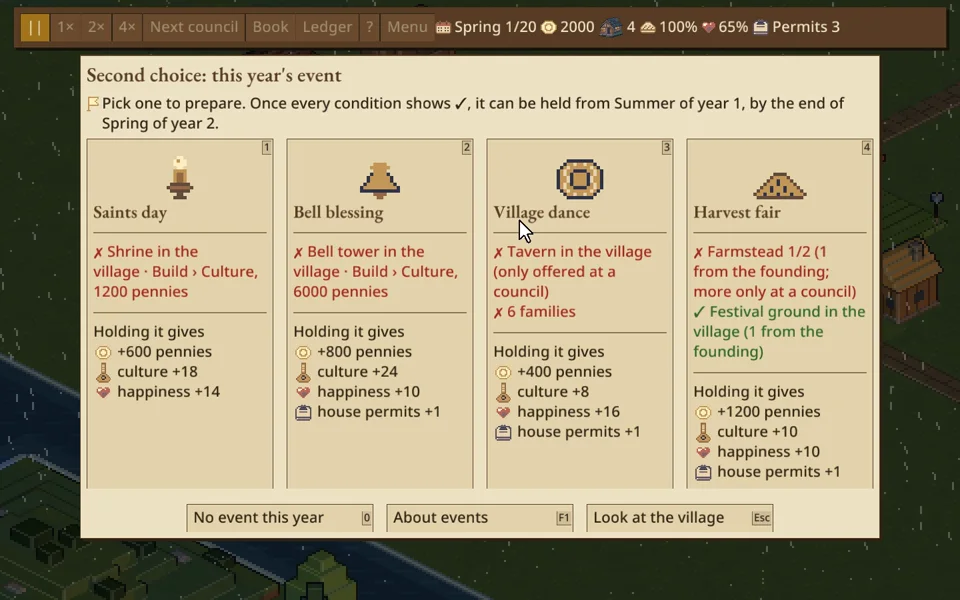
| Event | Needs | In year 1 |
|---|---|---|
| Saint’s day | A shrine (Build › Culture, 1200 pennies) | Yes. Affordable from the start and quick to build. |
| Bell blessing | A bell tower | No: the tower costs more than the whole starting treasury. |
| Village dance | A tavern and 6 families | Only if a council offers a tavern plan, and only with two more houses filled: see Village dance in the first autumn. |
| Harvest fair | A second farmstead (the village starts with one) and the festival ground (already there) | Possible by autumn when the spring council offers a farmstead plan: see Harvest fair in the first autumn. The plan must come from a council and stand near a field. |
Steps
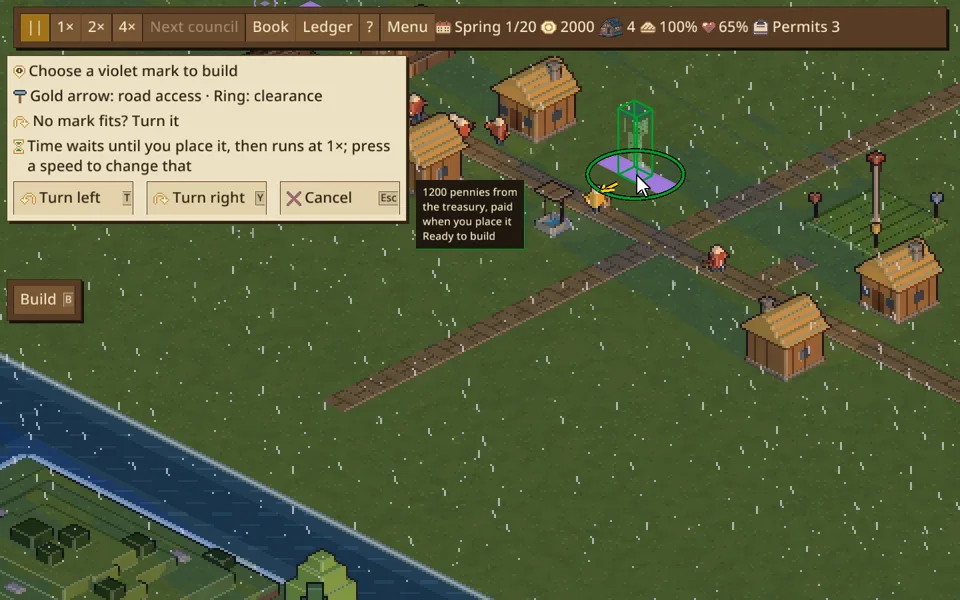
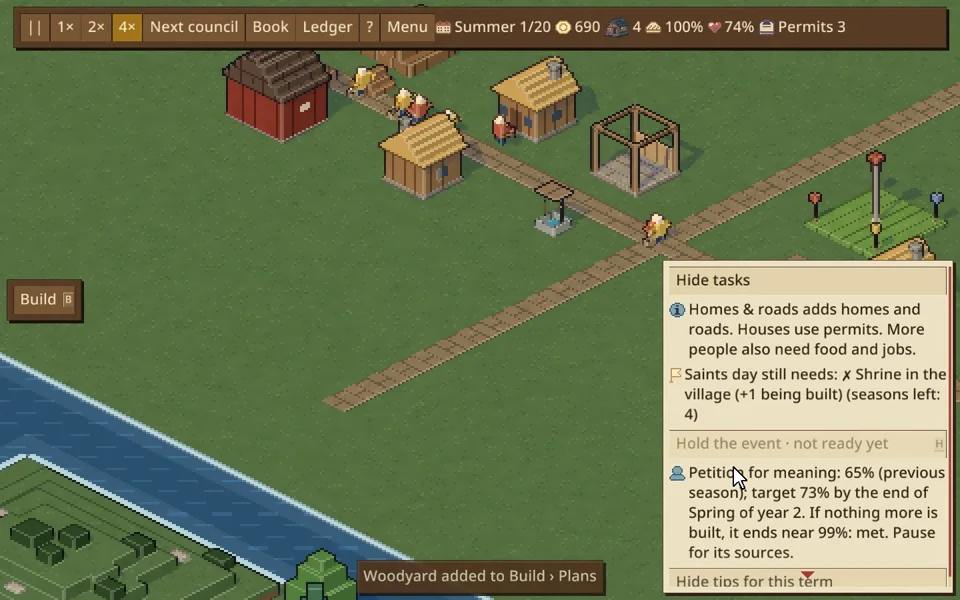
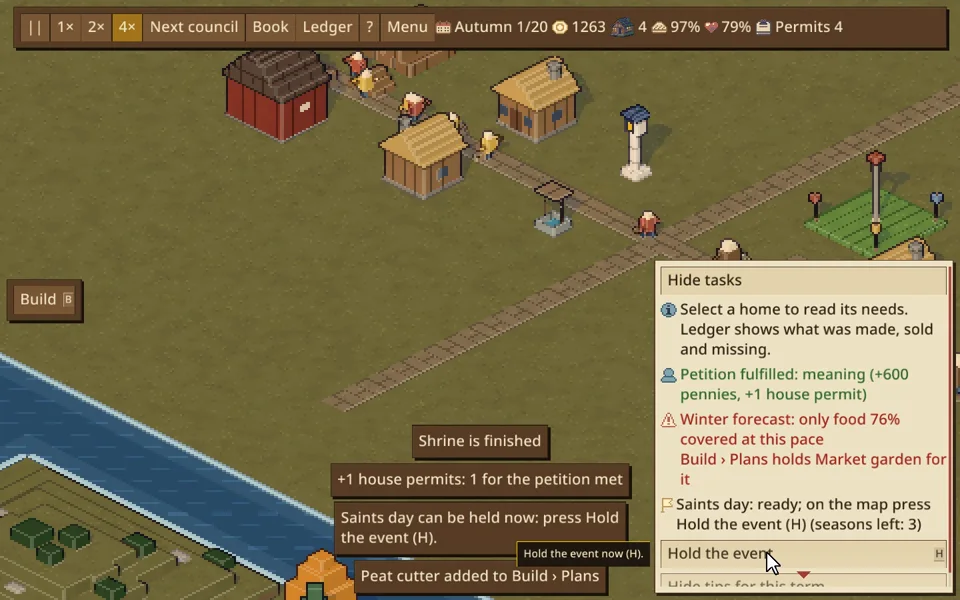
Why the shrine stands by autumn
Builders work once, at the end of each season: 8 points plus 2 per family, so 16 with four families. The shrine is 20 points of work: 16 at the end of spring and the last 4 at the end of summer. Roads and channels are always built first, then buildings in the order you placed them, so a road or an earlier site would take the shrine's points and push it into winter or later. Its materials are paid from the treasury as it is built (116 pennies in this village), so keep a little in hand after paying for it.
What you get
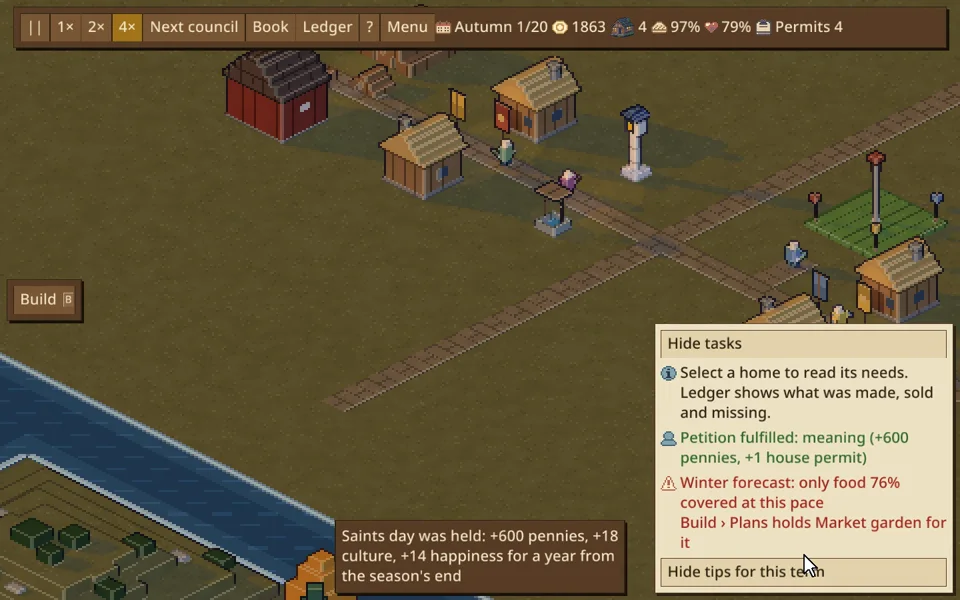
- From the event: 600 pennies, 18 culture, and +14 happiness for a year from the end of the season.
- From the shrine itself: it met the year's petition for meaning, which paid another 600 pennies and a house permit at the end of summer.
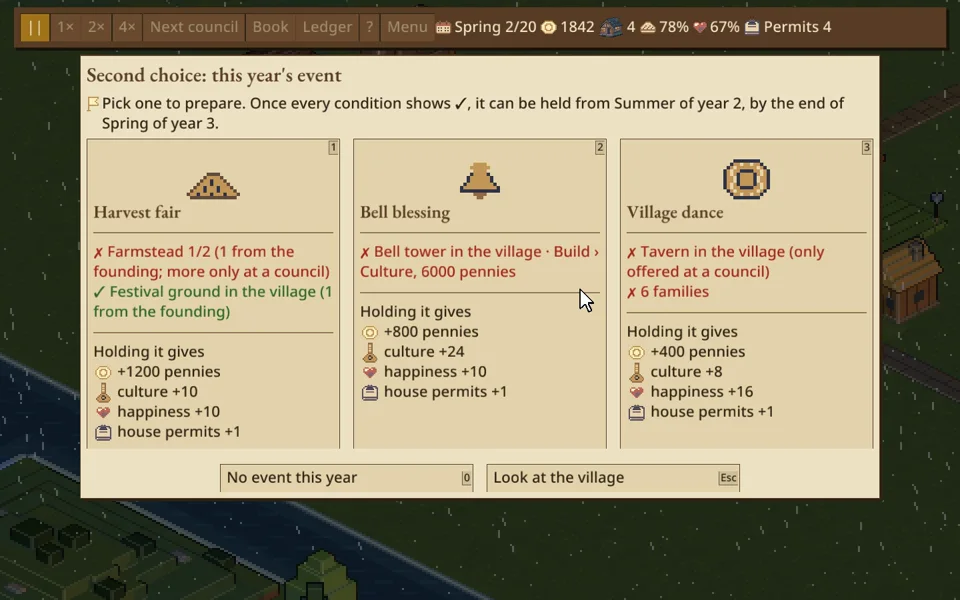
- Next spring: with nothing waiting, the Spring council of year 2 deals a fresh event draft, here Harvest fair, Bell blessing and Village dance. Saint’s day is not offered again.
What can go wrong
- A road or a house placed before the shrine. It is built first and the shrine finishes a season later. Place them after the shrine, or after the event.
- An empty treasury. If the treasury cannot pay the next materials, the shrine stops for the season.
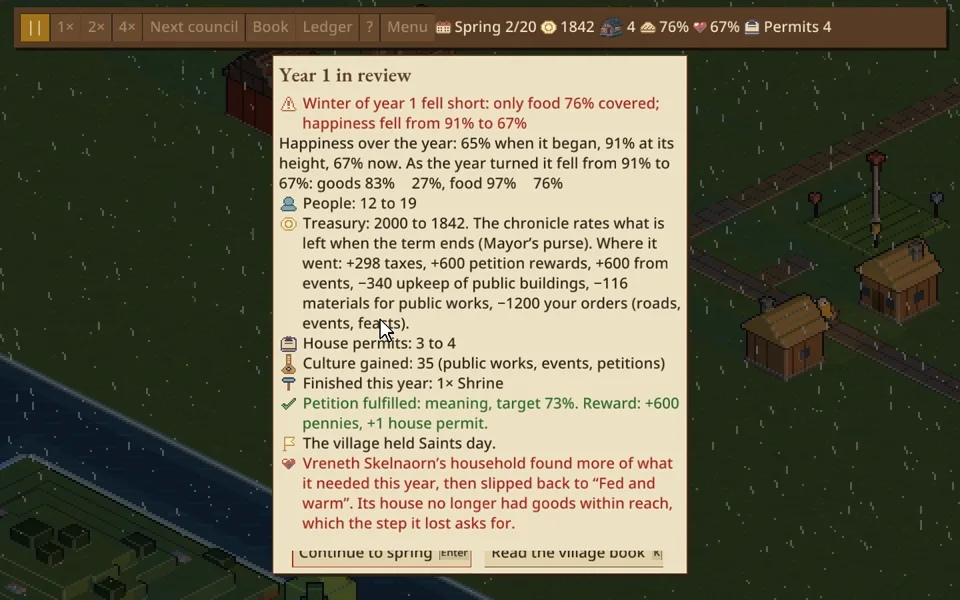
- Food and warmth. This village spent everything on the event: the winter fell short (food 76% covered) and happiness fell from 91% to 67% at the review. In your own village, take a food plan at the summer or winter council and place it once the shrine stands.
Holding events counts toward the goals Festival season (3 events) and Every year a feast (6): one event a year from year 1 is the steady way to both.