Act II begins where the last act's trail leaves off: Kaldrin Farwarden, at the Scarp Picket, is holding the bearing that A Bearing Nobody Filed left behind, and no returning crew has given her more than a glimpse of what lies along it. From there the road runs through a handful of zones, and what the hero finds in each is told in pieces.
The main path in order: the fallen palisade at Dreskneld, the abandoned settlement of Tornkeld, the Sunken Cut country of Threvdren, and last the high promontory of Vrelskarr and the cut beneath it. Everything else in the act is a side story, told on its own page.
Dreskneld: the line that nobody held
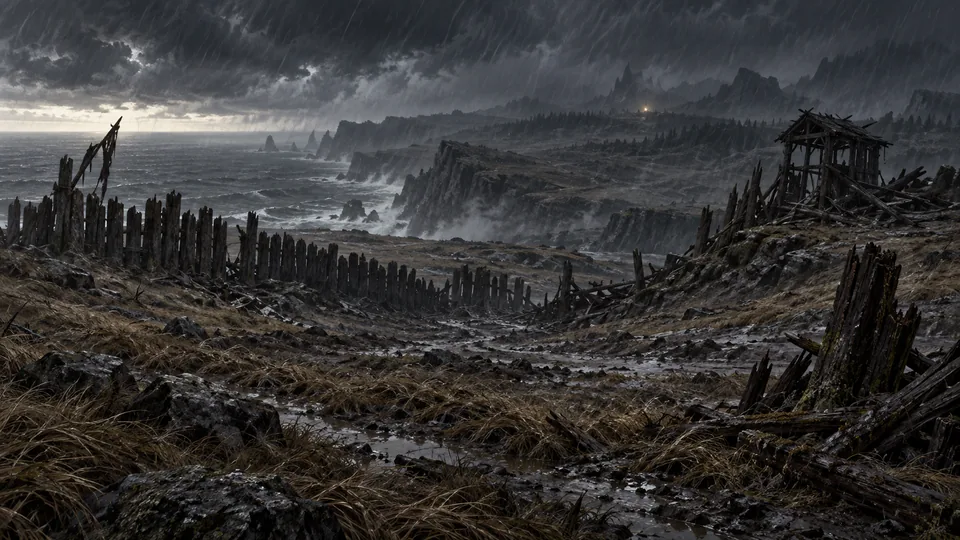
Kaldrin wants one thing: an account from the ground itself. No crew that has gone down the bearing has given her more than a glimpse, and the last of the chalk marks is fading. She sends the hero to the Fallen Line, the palisade at the end of the bearing, in The Fallen Line.
The hero surveys the scorched timber and walks the fallen works, and what they find is built ground: courses of wall, a gate, a line far longer than a crew could chart in a day. Nothing has been taken. The timber is scorched on its inside faces, and on a wall that long there are no bodies at all.
Kaldrin copies the report below the Picket's roster so that the next crew leaves with a written warning instead of the last fading chalk. The whole of it is worth keeping: Built ground. Courses, a gate, a line longer than a crew could chart in a day — and nothing taken. The timber is scorched on the inside faces, with no bodies on a wall that long.
Her summing-up is the first real statement of the act's mystery: Whatever put it down was already past it, and whoever held it did not fall there. Those are two different disasters, and the chart shows neither.
Whatever brought the line down had already moved on, and the people who held it were not lost on it.
Tornkeld: a decision taken by everybody
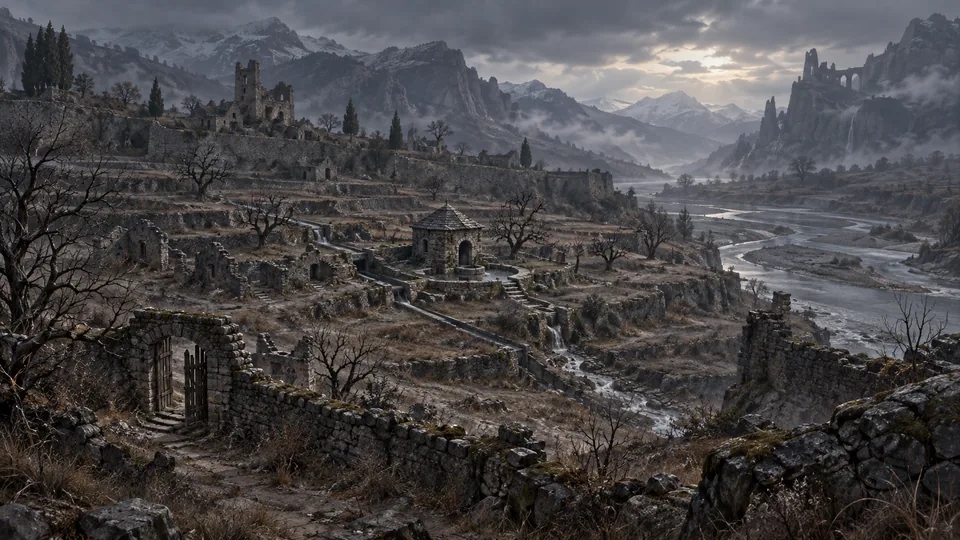
Beyond the palisade lies a settled place with no one in it. Skennor Gatewarden keeps the watch at the Well-Road Waymark, and she gives the hero a chain of four quests, beginning with Doors Standing Open.
Others work around the settlement too. Vetra Ironmend, who reads stone better than Skennor does, is found at the Tinker's Camp, and Brekva Tollwright and Aluvi Threlveld hear the hero's side findings and write them down. Side errands around the settlement, from the scavengers stripping it to the hens that still come when you crouch by the wall, are told on the side page.
Doors Standing Open
Skennor's first question is whether this looks like a raid. She wants the hero's own eyes on it before the hero says anything. She sends the hero to survey the Terraces and to look at the Hollow Gate for themselves. Doors are open, hearths are cold, nothing is broken. Skennor says it back to you and gives her verdict: It does not look like a raid. It looks like a decision, taken by everybody, in about a day.
What Grew Without Them
Something has been eating a whole settlement's harvest for a season, up on the Terrace Crown, and it is not afraid of people. In What Grew Without Them the hero surveys the crown and kills the Rootbreaker, which has eaten the harvest undisturbed and no longer fears people.
Skennor's comment on the harvest: There was nobody left to mind the rows the same week the rows stopped being minded.
The Name Cut in the Lintel
The Name Cut in the Lintel sends the hero to the Well-House, to take a clean rubbing of the lintel over the door, working chalk across shallow cuts until strokes weathered almost to nothing show again. The whole cut resolves at last: TORNKELD.
Skennor listens to the name said out loud and is quiet for a moment. Tornkeld. Right. Now it is a settlement again and not a site.
The Stone They Meant to Lift
The last step turns from the village to its water. Skennor sends the hero to inspect the Channel Bank and then to ask Vetra Ironmend, who reads stone better than she does, what it means that the settlers capped their own water and walked downhill.
The channel still runs beneath the terraces. The well was capped to keep the water out of the hollow, not because the spring failed. Vetra reads the channel and the cap together: Nobody caps a well they are fleeing. They shut the place up like a house for a season and the season never ended.
He follows the channel's fall toward the Sunken Cut and marks it on the crew map. The spring is still moving; it was the settlement that left it. That ends Skennor's chain.
Threvdren: the shift that never ended
The water has gone under, and so the story goes down after it. Vetra, at the Tinker's Camp, begins Downstream of the Well: The spring didn't stop; it went under.
He tells the hero to take a draught against the foul air and to survey the Sunken Cut and find out where Tornkeld's water goes.
A side quest on the Vrelskarr ridge says the Cut's stone and the footing on the Watch are the same work: the same courses, the same fitting, the same hand. It is not needed for the main story.
The hero comes back and reports. Vetra's response is that the air down there is wrong in the way that does not smell of anything, and that he would rather the hero came back saying so than not saying it. Vetra's chain continues underground.
They Are Not at Tornkeld
Something holds the narrows. Whatever it is chose the narrows. In They Are Not at Tornkeld the hero kills two Forge-Revenants that hold the Sunken Cut and inspects what remains where they stood. They carry Tornkeld-pattern tools and marks, but this is not kin come home.
Vetra's verdict, when the hero tells him what the tools are: Not scavenged. Carried. Whatever is down there walked out of Tornkeld on its own feet and still keeps a shift. Scavengers do not keep a shift.
Whose Ground It Was
The last step of the chain brings the hero back up the cut to Tornkeld. Vetra sends them to Skennor, who wardens the border and who will know what is at risk if something comes up the channel in Tornkeld's marks, and then back to the Well-House once more. There the tools in the store turn out to be the same pattern as the ones down the cut, down to the haft binding.
In Whose Ground It Was, Skennor does her arithmetic while the hero is still talking: Tornkeld's tools, Tornkeld's empty hollow, a settlement that shut its own well and walked downhill four years ago. She does not say the conclusion out loud, and neither does the hero.
Vrelskarr: the relief that never went
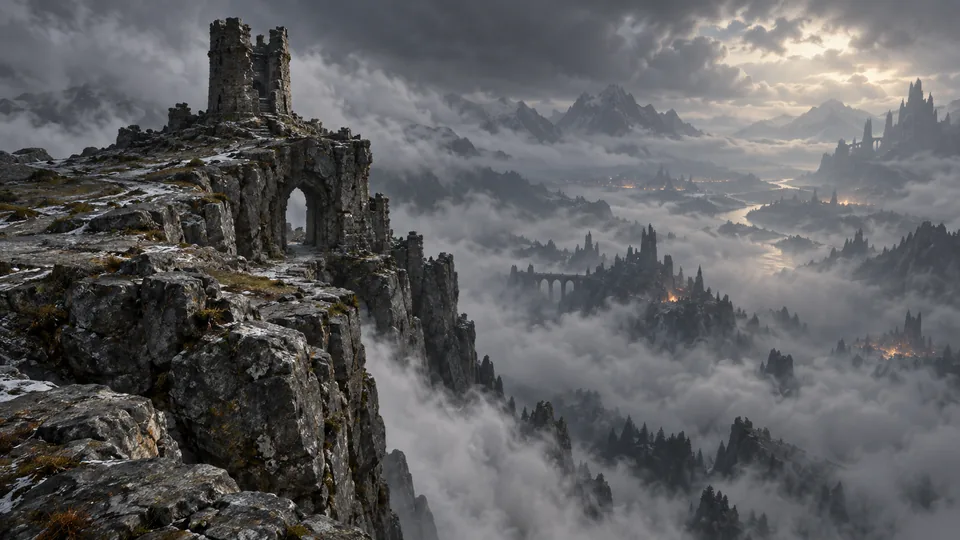
Beyond Tornkeld the road climbs. Fenneth Farwarden keeps the watch at the Watch-Road Waymark, on the first high ground since the scarp, and she gives the hero a chain of four quests, beginning with What the Watch Sees. It moves from a view, to a hostile prospector, to the camp's book, to a man left on a stair.
The high ground also fills up with side work, and some of it touches the main path closely. Surveyors on the ridge sight on a steady red glow below the Watch in The Glow Reads Clearer and Watching the Same Thing, and conclude that whoever laid the Old Footing sighted on the same glow. Threnna Stockhand, who keeps the book at the camp, is the source of Where the Climb Gave Out, about climbers caught on the way home. All of these are on the side page; none are needed to reach the end of the main path.
What the Watch Sees
Fenneth begins with the view. In What the Watch Sees the hero surveys the Watch and inspects the Old Footing. From up here the coast behind you is charted and what lies in front of you is on nothing anybody has drawn. First high ground since the scarp,
Fenneth says, and the first place on this coast where a Trade chart runs out mid-page.
The Old Footing carries a quieter clue: its courses are worn on their inside faces, which is wear from use rather than weather. This ground was used, not merely left.
The Living Answer
Something still walks the switchback. In The Living Answer the hero surveys the Far Switchback and puts down the hostile prospector called the Glowchaser, one of the sweep-crew who stopped returning reports.
The Glowchaser was a person a season ago, Fenneth says, and some of it still is. It is still walking the switchback because that is where it was walking. You did not need to be told which switchback. Nobody ever does.
Killing it answers what became of the sweep crew's missing hand.
The Roster Nobody Closed
Fenneth sends the hero to Threnna Stockhand, who keeps the book at the Relief Camp. In The Roster Nobody Closed the hero asks about the unclosed line and inspects the camp's book.
Threnna finds the open line without looking it up: a name, a posting, a date sent, and nothing in the returned column. No date returned, no line ruled under it, no relief entered against it. The book has three more lines like it, all older, and all closed later in a different hand. This one was never closed at all.
The Unrelieved
In The Unrelieved the hero surveys the Hollow Stair and the Stepped Gallery below it, then finds the Unrelieved and ends his watch. He was sent down the Stair to hold a relief-point, and the relief never went.
The Underwatch: the post that was held
The gallery at the foot of the Stair, in the zone called the Underwatch, is where the hero finds him. The Stepped Gallery holds the Unrelieved, and the fight there is the act's boss.
At first it fights on standing orders: spear-sweeps and a one-body shield-line, the shape of training rather than rage.
Past half its health, scorching stops being cosmetic, and cracks of red-orange light open down its arms and chest. It throws embers and scorches the stair floor where it plants its feet.
Near death the discipline goes. Three registers of drilled order break at once, and it throws itself at whoever is closest, guttering, the coal finally burning down.
When it is over, Fenneth gives the epitaph: Sent down the Stair to hold a relief-point, and the relief never went. The book says who sent him and the book says nobody was sent after. He held it anyway, for a season, and now he has been relieved by you.
That is the end of the act's main path.
Where the act leaves you
Three fights mark the main path. The Rootbreaker on the Terrace Crown is a creature that ate the harvest undisturbed and lost its fear of people. The Glowchaser on the Far Switchback is what is left of a person who kept walking. The Unrelieved in the Stepped Gallery is a man sent down the Stair to hold a relief-point, for whom the relief never went.
In short, across the Dreskneld Reach: at the Fallen Line nothing was taken and there are no bodies on the wall. At Tornkeld nothing was broken, and the well was capped by people who shut it up like a house for a season. In the Sunken Cut a shift is still kept in Tornkeld's own tools. On the ridge a prospector from the sweep-crew keeps walking the switchback where the work ended, and a sentry holds a stair for a relief that was never sent.
The hero has walked from a fallen line to a held stair: they have given an empty settlement its name, followed its water down to the shift that still keeps Tornkeld's hours, found what became of a sweep-crew hand on the switchback, and ended a watch that nobody had relieved. Skennor does not say her conclusion aloud, Vetra reads the tools, and Threnna finds the open line.
The act's side stories, from the ford at Vronveld to the ridge-camps of Vensvael, are told on the side stories page.