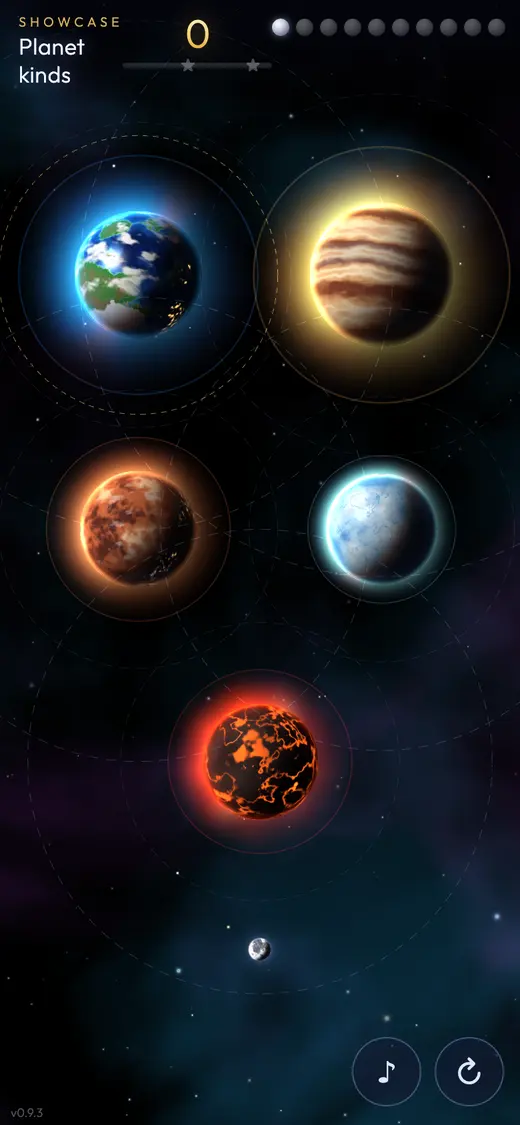
Slingshot each moon into orbit around its target planet to clear the level.
Controls
Capture
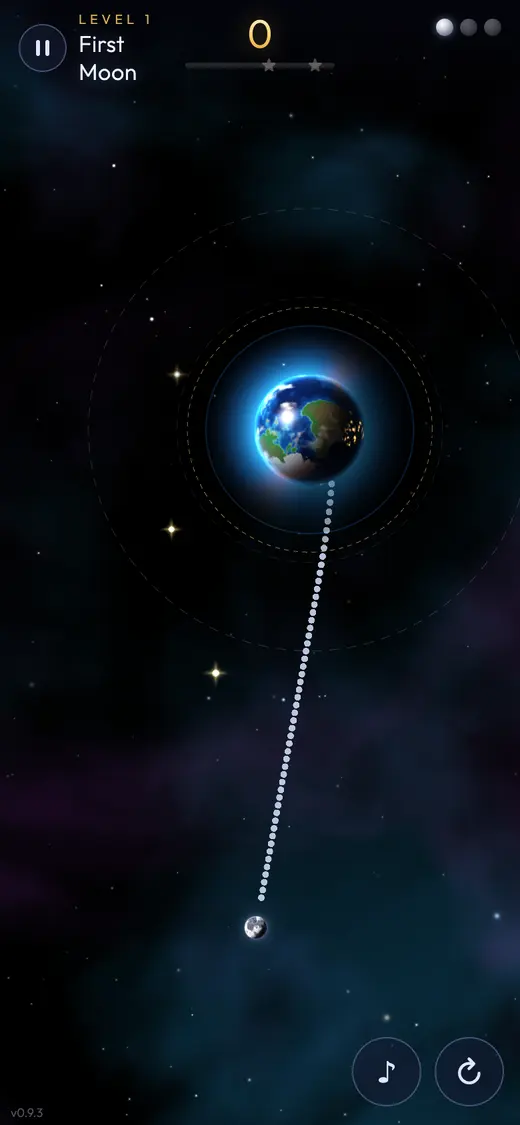
Aim for the target planet’s golden ring. Gravity bends the shot, and skimming the atmosphere can slow the moon enough to settle into orbit.
Failed throws
- Crash: the moon touches a planet's surface.
- Burn: the moon is heating in an atmosphere, and when the heat is full it burns up. Lava worlds heat fastest, gas giants slowest.
- Lost in space: the moon leaves the sky or flies for too long without being caught.
- Black hole: the moon is swallowed.
- Wrong planet: another planet catches the moon.
A failed throw costs a spare moon. If you have none left, the level ends.
Colliding moons
Moons already in orbit must not meet. If two orbiting moons touch, both shatter and the level is lost at once, even with spares left. Moons about to meet glow red. The level is won the moment its last moon is placed, so meetings after that no longer count.
Scoring
- Clear the level
- Clear it and reach the first score marker
- Clear it and reach the second score marker
 Capture
- +100
 Golden orbit
- Up to +200
 Per stardust
- +50
 Per distinct flyby
- +0.5 to multiplier
 Per spare on a win
- +150
Each other planet you swing past adds 0.5 to the starting 1× multiplier on capture and golden-orbit points. Scoring details