Planet kinds differ in three numbers: how hard they pull, how deep and draggy their air is, and how fast the air heats a moon. The numbers under each kind are the defaults; a level may change a planet's size or position and, rarely, its rules.
 Rocky planetThe baseline world: an even pull and a middling atmosphere.
Rocky planets are the reference every other kind is measured against. The pull is moderate, the atmosphere thick enough to slow a moon that skims it, and a moon that dives into the air heats at the ordinary rate.
Anything that touches the surface is a crash, so the useful space is the band between the top of the air and the end of full gravity, where the golden ring sits.
Starting numbers
The kind's defaults; a level can change them, and then its picture changes with it.
- Pull
- 9
- Gravity reach
- 4.0× the planet's radius
- Atmosphere
- 0.6× the radius deep
- Drag in the atmosphere
- 2.6
- Heating
- 0.04


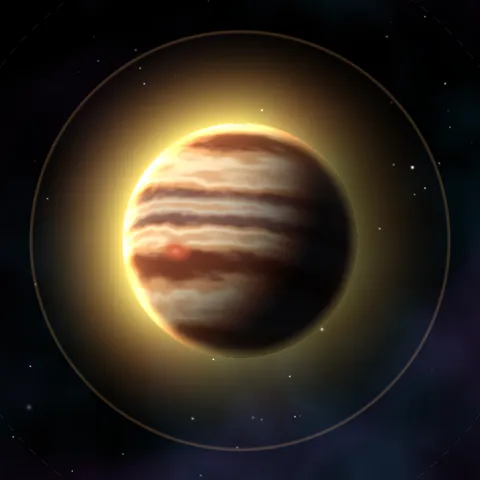
 Gas giantThe heaviest pull in the sky, a deep atmosphere and the slowest heating: a slingshot as much as a target.
A gas giant pulls a moon in from far away: its pull is more than twice a rocky planet's and its reach is a little longer. A throw that merely passes one is bent hard around it, which is what makes it the best planet for a flyby.
Its air is thick, but it heats a moon more slowly than any other kind, so a moon can graze it without burning. Some levels use a lighter giant than the default.
Starting numbers
The kind's defaults; a level can change them, and then its picture changes with it.
- Pull
- 22
- Gravity reach
- 4.2× the planet's radius
- Atmosphere
- 0.8× the radius deep
- Drag in the atmosphere
- 2.0
- Heating
- 0.025


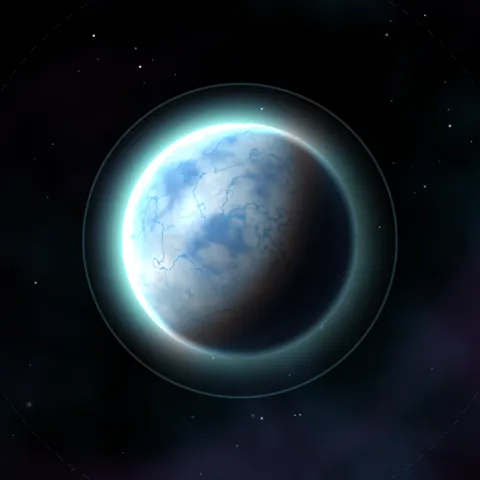
 Ice planetA thin atmosphere and the lightest drag: the gentlest world to be caught by.
An ice planet has the thinnest atmosphere and the least drag of any kind. A moon that arrives slowly is caught with hardly any braking; one that arrives fast is slowed so little that it flies on, so aim for a gentle approach.
Beside a lava planet it is the safe catch of the pair.
Starting numbers
The kind's defaults; a level can change them, and then its picture changes with it.
- Pull
- 9
- Gravity reach
- 4.0× the planet's radius
- Atmosphere
- 0.35× the radius deep
- Drag in the atmosphere
- 1.6
- Heating
- 0.04

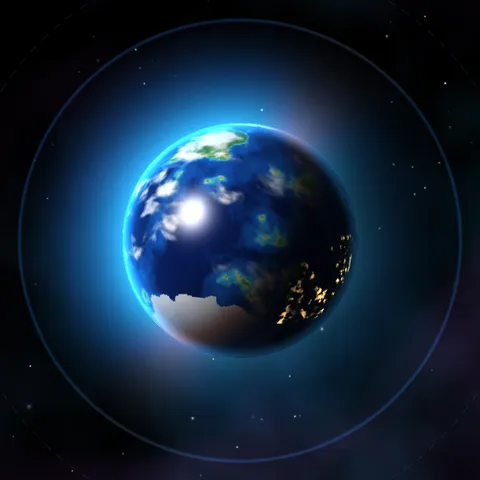
 Ocean planetThe thickest atmosphere and the most drag: it slows a moon more than any other world.
An ocean world's air is the deepest of any kind and drags hardest, so even a quick moon is braked into orbit, and the golden band sits higher above the surface than on thin-aired worlds. Dive too deep and the same drag works as a brake that heats the moon, though more gently than on lava.
It is the first planet you meet, in level 1.
Starting numbers
The kind's defaults; a level can change them, and then its picture changes with it.
- Pull
- 9
- Gravity reach
- 4.0× the planet's radius
- Atmosphere
- 0.9× the radius deep
- Drag in the atmosphere
- 3.5
- Heating
- 0.03

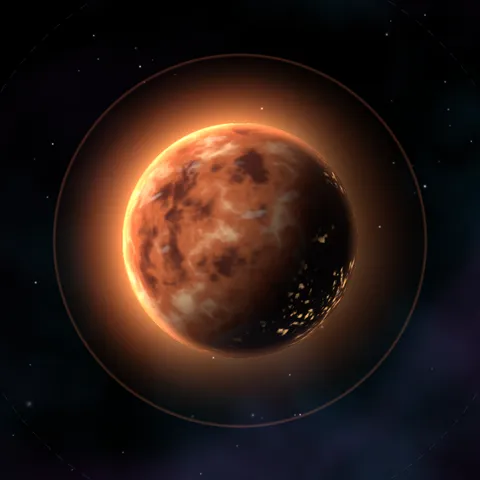
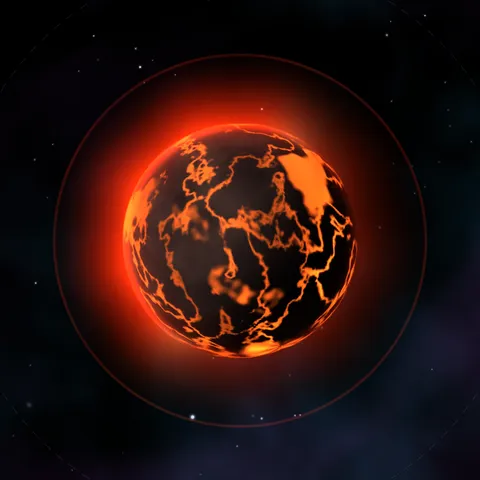
 Lava planetHeats a moon three times as fast as a rocky one: a shallow pass is fine, a dive burns.
A moon moving through an atmosphere gains heat from the drag, and when the heat is full the moon burns up like a meteor. On a lava planet that happens about three times faster than on a rocky one, so the moon has to be caught high in the air or not at all.
A lava planet makes a good gate: its pull is slightly above a rocky planet's and its glow marks the lane you must not dive into.
Starting numbers
The kind's defaults; a level can change them, and then its picture changes with it.
- Pull
- 10
- Gravity reach
- 4.0× the planet's radius
- Atmosphere
- 0.6× the radius deep
- Drag in the atmosphere
- 2.6
- Heating
- 0.12
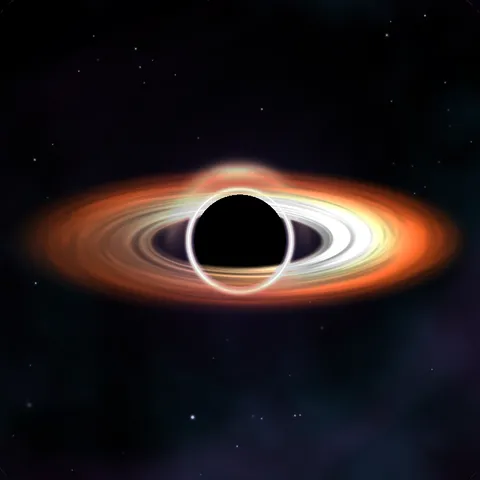
 Black holeNo surface and no air: a long, strong pull that nothing can orbit, and an edge that swallows a moon whole.
A black hole is never a target. Its pull is the strongest in the sky and reaches far, so a throw that passes it is bent hard; that bend is what the black-hole levels are about.
A moon that crosses the glowing edge is swallowed and the throw is lost. Nothing can orbit a black hole, but a close pass counts as a flyby for the score.
Starting numbers
- Pull
- 30
- Gravity reach
- 12× the edge's radius
- Atmosphere
- none

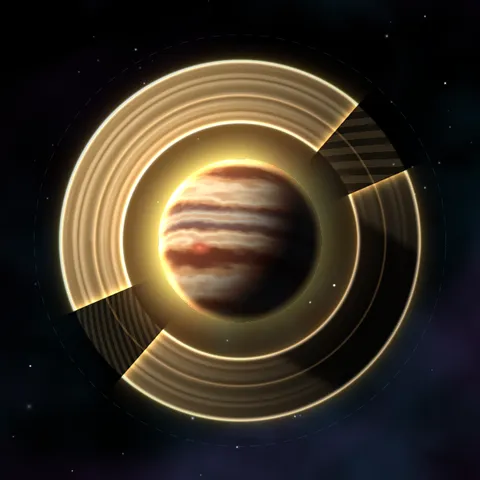
 Ringed planetA solid ring around a planet: touch it and the moon shatters; only its turning gaps let a throw through.
Any planet kind can wear a ring. The band is solid: a flying moon that touches it shatters. The darker cut-outs are gaps, and they turn with the ring, so a throw through a gap is a matter of timing as much as aim.
A moon captured inside the ring stays inside it, and one captured outside stays outside. The planet underneath keeps its own pull, air and heat.

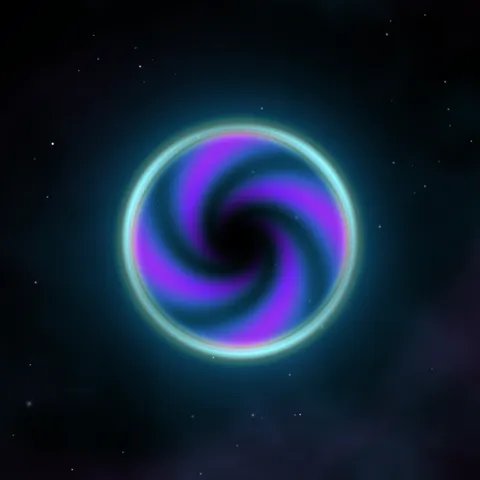
 WormholeTwo linked mouths: a moon that enters one leaves the other at the same speed and heading.
A wormhole is a pair of swirling mouths. A moon that enters either one leaves the other with the same speed, the same heading and the same offset from the centre, so a throw can skip a planet in the way or reach a target from its blind side.
Either mouth works in either direction. A moon that has just come out cannot fall straight back in.