The seat's oathward
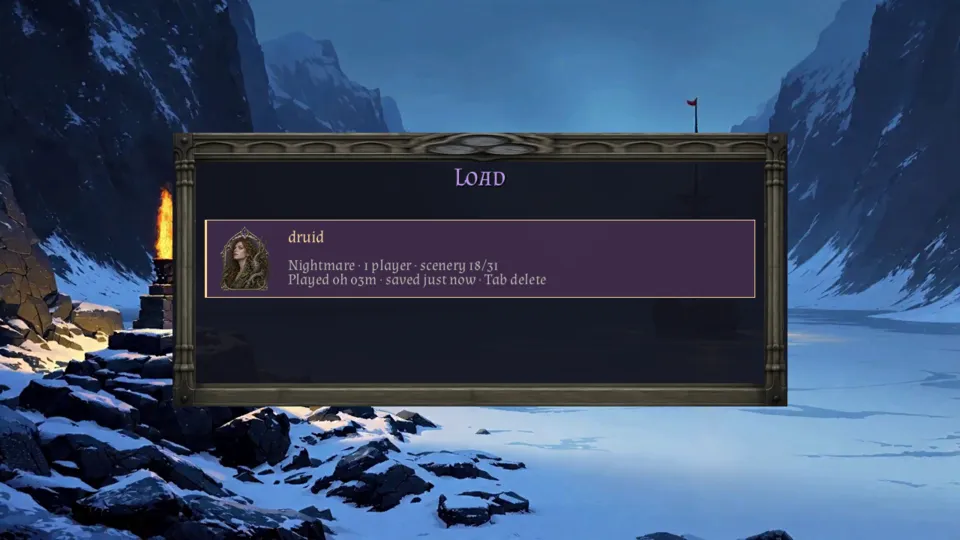
Scenery 17 of 31 · Holdskarr, the Skarr-Seat. Alone · Nightmare · Druid.
Stepping down is the attack that matters. It was the only warned attack that ever caught the Druid. The runs' lowest health came in steps of about a quarter of the bar. When it opens under you, stop channelling and walk.
What you hold
You hold exactly 9 spells: the Druid's two starting spells, plus one from each of the seven boss drafts so far (after sceneries 3, 5, 7, 9, 11, 13 and 15).
- Tap: the ground answers, a Summon. A helper that acts on its own.
- Hold: creeping line, a nature Beam. You cannot move while channelling it.
Each boss draft deals four cards. The first card is always one of the Druid's own spells; from the third draft on, one card upgrades a spell you already hold. The rest are random. The rule: At each boss draft take, in this order: a new damage, control or summon spell; if none is offered, an upgrade of a damage, control or summon spell you hold; if neither, any new spell. Between two equal cards, take the Druid's own.
The build we used:
pinned's root does nothing to the boss on Nightmare, because bosses there ignore all control statuses. Its damage still lands. If the deal differs: all ten draft orders cleared, and none took an upgrade. Splinter was in all 10 builds, and thicket and second season in 8 each. Splinter was also the most-cast spell overall.
Talents
You have 16 talent points, and talents are your choice. The runs put all of them into one tree, It gets into everything (Druid talents). Rows in a tree open at 5, 10 and 15 points spent in it, and the ultimate at 20. Each point went into the deepest open row, with a new talent bought before a second rank. In the order bought:
- Wider Mouth ×2: Halt spells cover 3% more radius per point.
- Held Again Sooner ×2: Medium spells recharge 3% faster per point.
- Standing Weight ×1: +2% maximum health.
- The Hold Pays More ×2: your channels deal 3% more damage per point.
- Old Boots ×2: take 5% less damage from pools and burning ground per point.
- As It Widens ×1: 4% more damage while your growth has spread 3 m or more.
- Nothing Left to Touch ×2: 4% more damage per point once your growth has stopped spreading.
- Standing in It ×2: 4% more damage per point to enemies standing on your growth.
- A Second Front ×1: each metre your growth spreads has a 5% chance to open a second front inside it.
- What Counts as Contact ×1: your growth spreads across one more kind of floor.
The fight
What goes wrong
- Losing health in big chunks. The lowest health in each run fell to about 98%, 74%, 51% or 27% of maximum: steps of about a quarter. Seven runs ended a step from death, at 27–29%: three close-range, three mid-range and one wide-berth. All of them still cleared.
- Style matters more than build. The same draft order came out at 98% in one style and 27% in another, so where you stand matters more than which cards you drew.
- Nightmare. Going down alone is a defeat, and the scenery restarts. The boss ignores control.
Tested
We ran 60 automated runs on the shipped rules: 10 draft orders, each played in 3 styles at 2 skill levels, with legal talent purchases. All 60 cleared and none went down. The fastest took 157 s and the slowest 423 s. The lowest health in any run was 27% of maximum. These were automated test runs, not human play.
Screenshots
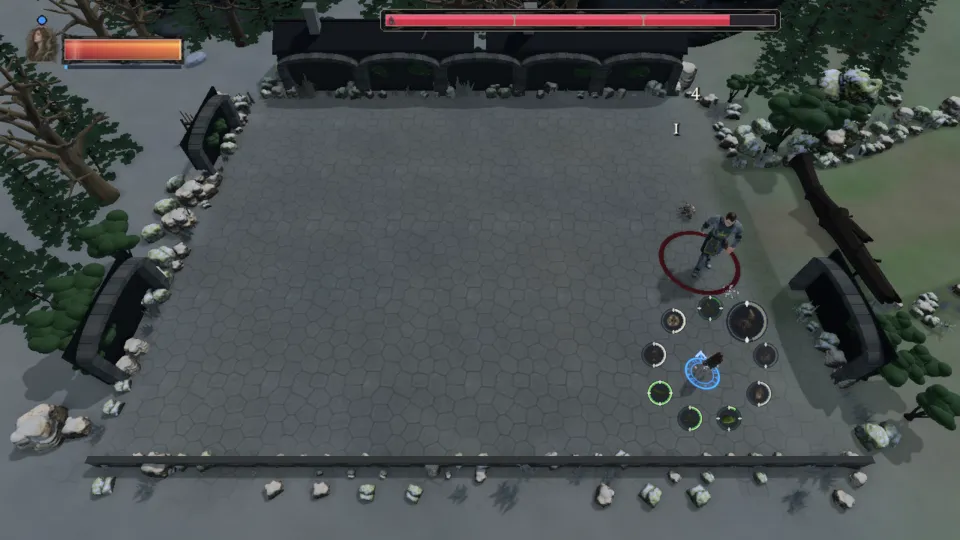
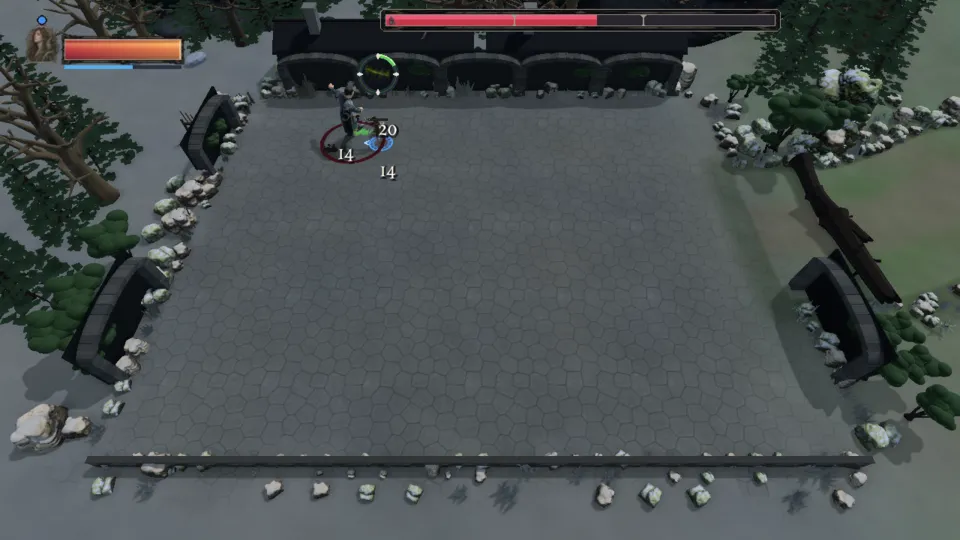
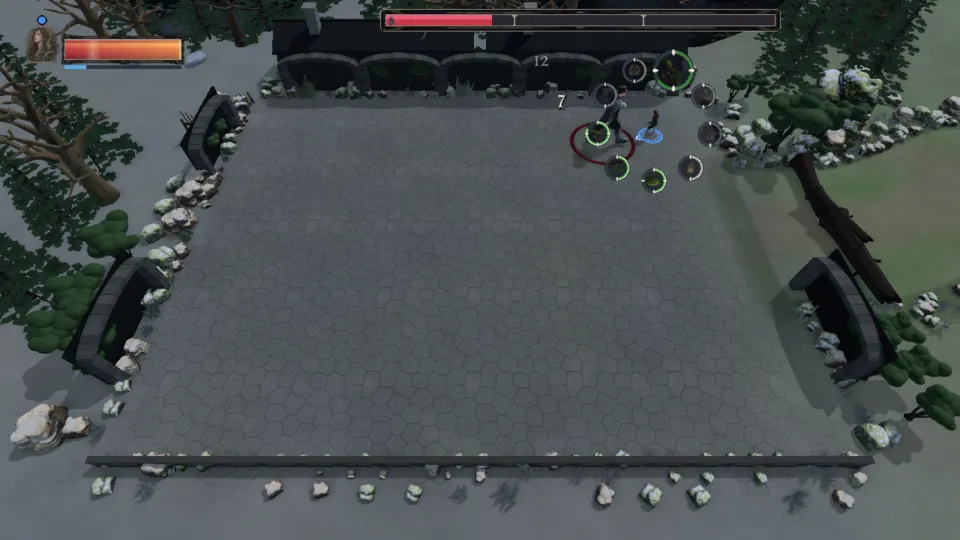
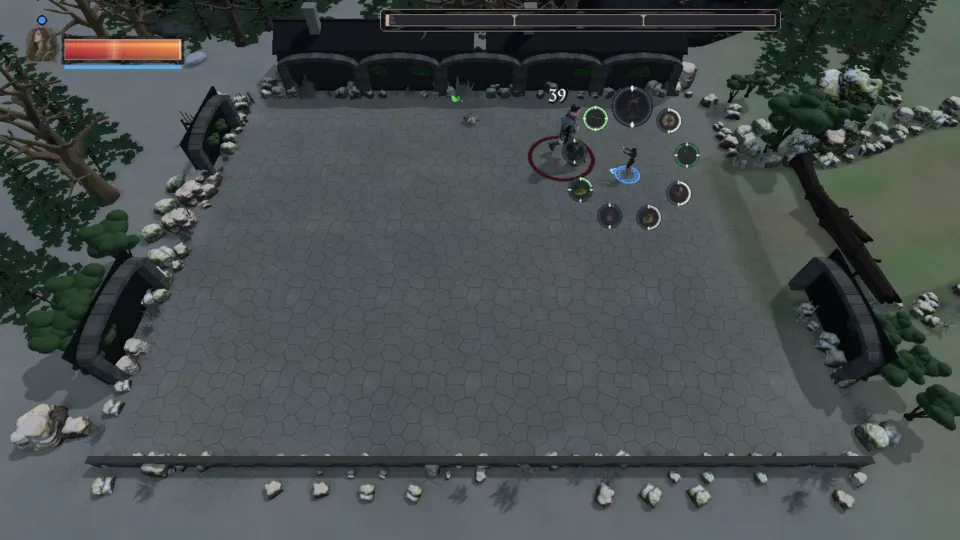
One complete fight in the current build, played by an automated test player with the game's normal controls: the Druid alone on Nightmare, holding the build used above. The fight took 3 min 56 s of game time.